
Last updated November 15, 2026
 Wrought iron
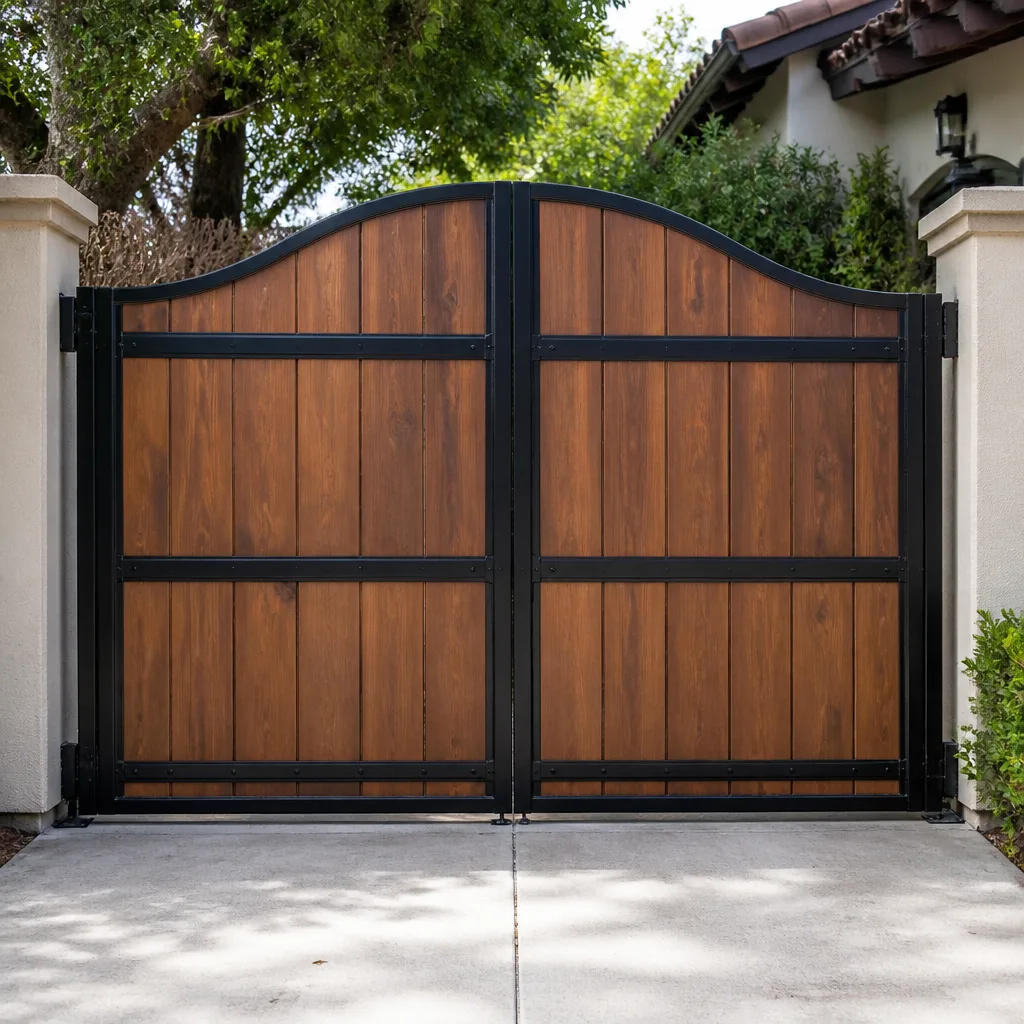 Wood & steel frame
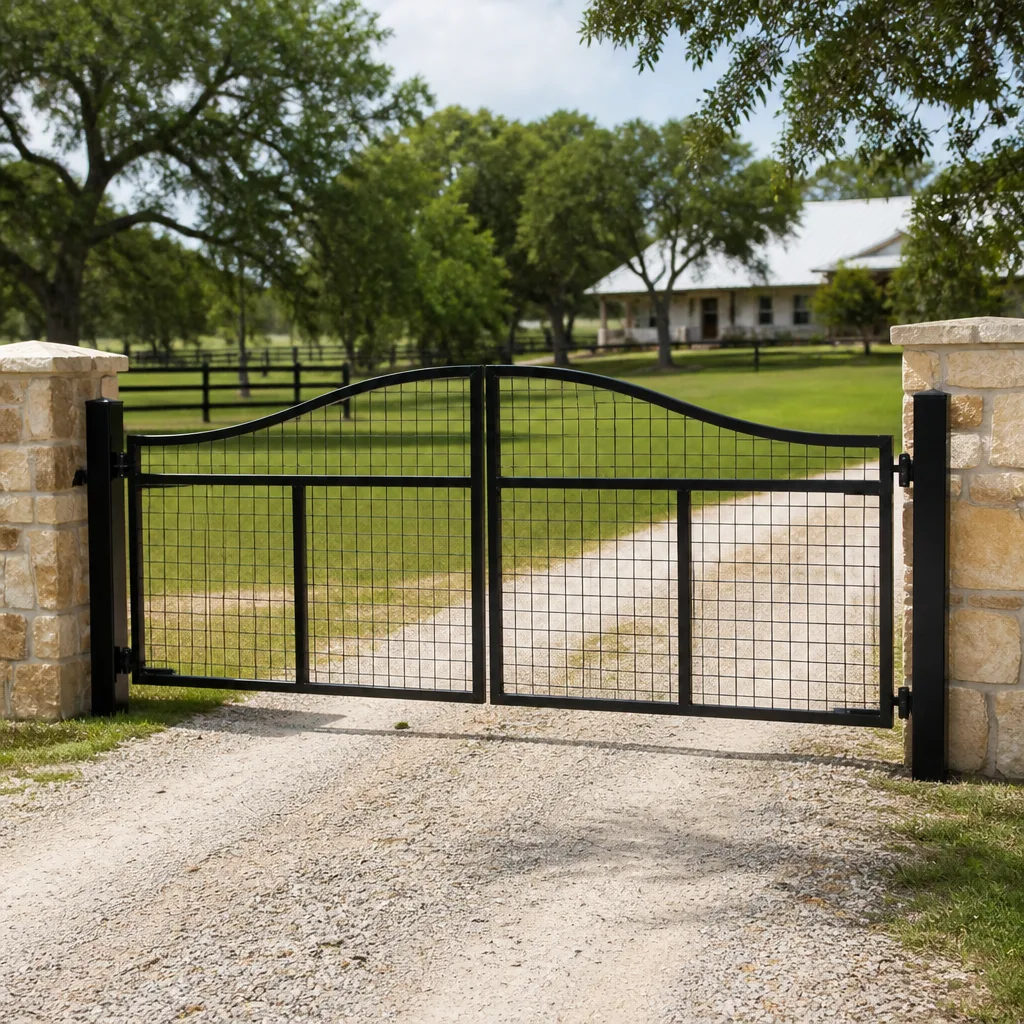 Farm & ranch
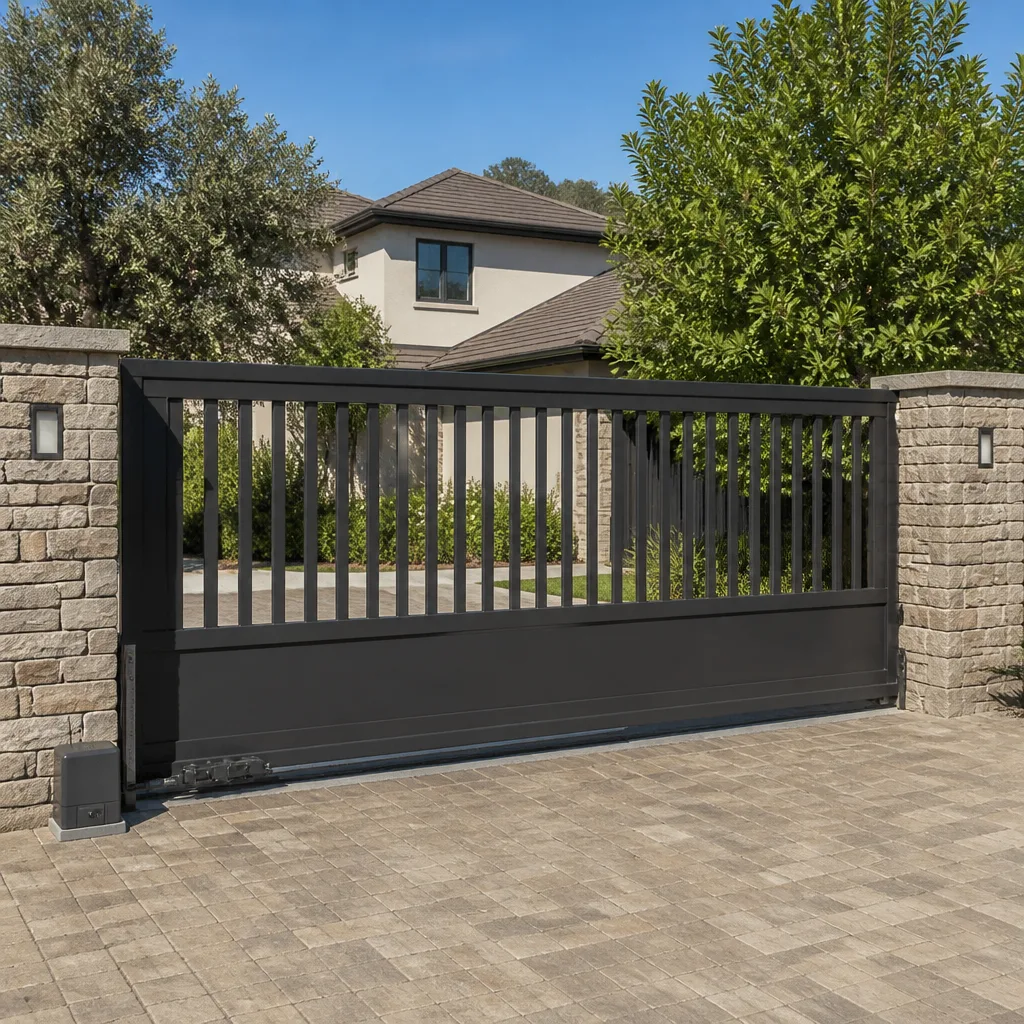 Sliding driveway gates
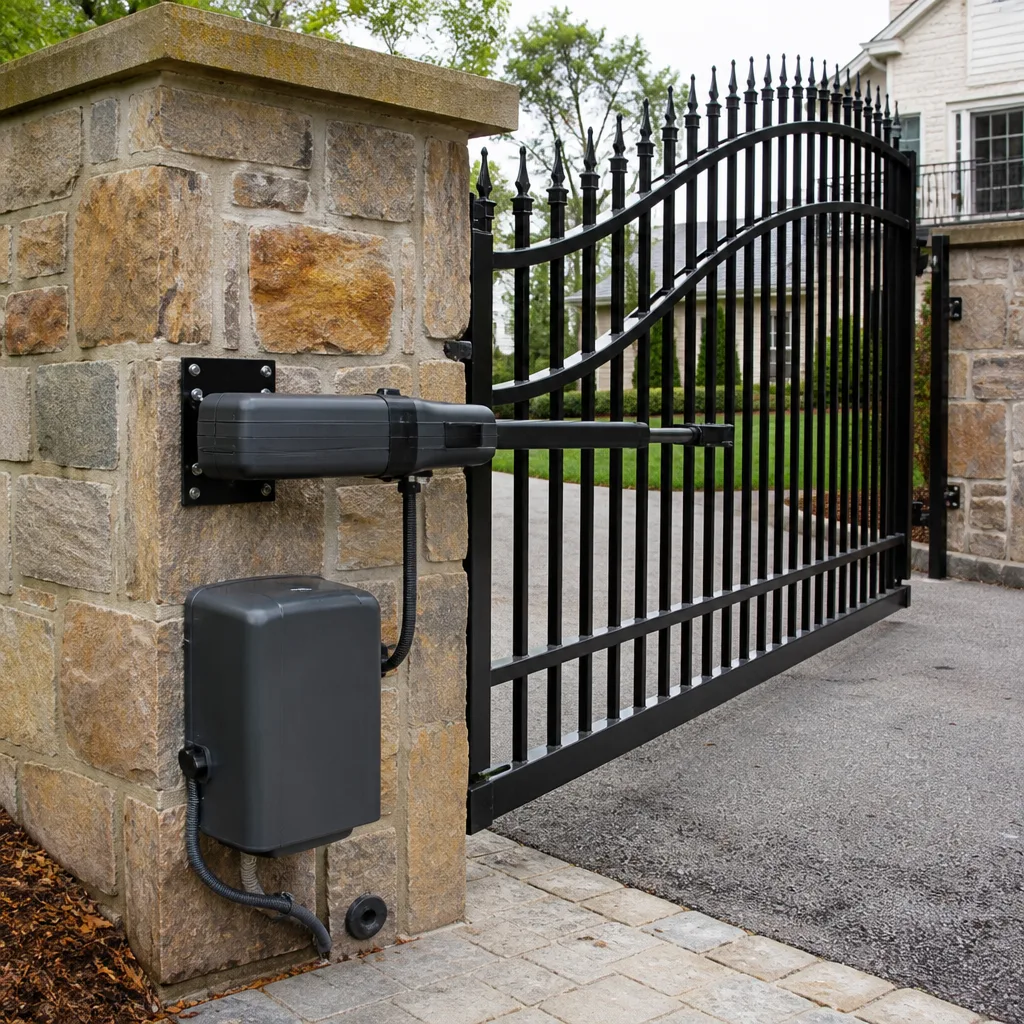 LiftMaster operators
Free on-site gate assessment - hinges, posts, and your LiftMaster or Nice gate operator checked before anything is quoted
The assessment is free and the quote is the invoice.
Get your free estimateThe Complete Guide to Gate Repair in Portland
Most gate calls that get labeled “operator failure” in Portland aren’t operator failures at all. They’re hinge wear, track misalignment, post movement, or safety-loop problems – mechanical and structural issues that a new motor board or gearbox won’t solve. Replacing the operator might get the gate moving again for a few weeks, but if the underlying cause is a sagging hinge or a heaved post, the motor just strains harder against the same problem. The result is a repair that looked correct and failed again. This guide maps the full landscape of gate repair in Portland: the gate types, the failure patterns each one repeats, the operator brands involved, and the point at which a repair job quietly becomes a safety and liability question. Our goal is simple: by the end, you’ll know which category your gate falls into and what actually needs to happen next.
Quick Answer
Gate repair in Portland generally falls into three buckets: mechanical (hinges, tracks, posts, alignment), electrical (operators, control boards, sensors, keypads), and structural (trees, storm damage, post heave from clay soil). The right fix depends on which bucket your gate belongs to, and most misdiagnoses happen when a mechanical problem is treated as an electrical one. A gate-exclusive specialist diagnoses what’s actually wrong on-site instead of assuming the operator is the culprit.
Styles & brands we work with
- Wrought iron
- Wood & steel frame
- Farm & ranch
- Sliding driveway gates
- LiftMaster operators
Table of Contents
- Portland’s Gate Types and Where They Fail
- Why Portland’s Clay Soil Causes Gate Problems That Look Electrical
- Why Nine-Operator Brand Coverage Changes the Diagnosis
- Electric Gate Repair: What Actually Goes Wrong
- How Portland Weather Ages Aluminum and Powder-Coated Steel
- Multi-Unit Properties: When Repair Becomes a Legal Obligation
- How to Diagnose Your Own Gate Before You Call
- Repair or Replace? A Practical Decision Guide
Portland’s Gate Types and Where They Fail
Every gate type in Portland fails in a pattern, and knowing the pattern is often faster than any diagnostic tool. The four types we see most often are swing gates, slide gates, overhead gates, and barrier arms. Each has three recurring failure points. Once you know which gate you have, you’ve already narrowed the diagnosis by half.
Swing gates
- Hinges and hinge posts: the top hinge wears first, causing sag and drag. On heavier wood or steel gates this happens faster than most homeowners expect.
- Operator arm and limit settings: the arm mount loosens, or the open and close limits drift out of position over months of use.
- Safety sensors and photo-eye alignment: misalignment on one side causes the gate to stop or reverse mid-travel.
Slide gates
- Track and guide rollers: debris in the track, worn rollers, or a track that has shifted with the ground underneath it.
- Rack and pinion: teeth wear, rack sections come loose, or the drive gear loses mesh with the rack.
- Control loops and reversal edges: loop detectors fail to see a vehicle, or the reversing edge trips because the gate drags the track.
Overhead gates
- Counterbalance springs and cables: these are high-tension components and are not a safe DIY repair. A trained technician handles them.
- Track guides and rollers: binding causes the operator to stall or reverse.
- Operator and limit switches: cycle count and duty rating matter more on overhead gates than on swing gates.
Barrier arms
- Breakaway bracket: designed to release on impact, but repeated hits leave the arm hanging or misaligned.
- Drive gear and clutch: a slipping clutch means the arm raises slowly or not at all.
- Loop detectors and access control: the arm stops where it shouldn’t because the loop isn’t reading the vehicle.
In Portland neighborhoods like Sellwood, Laurelhurst, and Eastmoreland, swing gates outnumber slide gates, and hinge wear leads the failure list. On commercial properties along the inner east side, barrier arms and slide gates dominate, and loop detector problems are the single most common service call. Gate repair and diagnosis start with matching the gate type to its pattern.
Why Portland’s Clay Soil Causes Gate Problems That Look Electrical
Portland’s clay-heavy soil holds moisture through the winter and shrinks through the dry months, and that cycle moves gate posts. A post that lifts or tilts by even a fraction of an inch throws off gate alignment, which throws off the operator’s limit settings, which makes the operator reverse mid-travel, which the homeowner reads as “the motor is broken.” In our experience, that sequence is the most common misdiagnosis we get called in to correct. The motor is fine. The gate no longer fits the structure it’s mounted to.
Here is how to tell the two apart before anyone touches the operator:
- Disconnect the operator. Many residential operators have a manual release. With the operator out of the way, open and close the gate by hand. If it drags, binds, or won’t sit evenly at the latch, you have a mechanical or post problem, not an electrical one.
- Look for gaps under the post. If the hinge post has lifted with the soil, you’ll typically see daylight or a visible tilt at the base. A gate that used to latch cleanly and now doesn’t is a strong signal.
- Check the latch and stop points. A gate that hits the closing stop late or early by a consistent amount points to alignment drift, not a board failure.
- Look for a pattern. If the gate works in dry weeks and fails in wet weeks, that’s the clay soil moving, not a random electrical fault.
The fix ranges from resetting the post and re-aligning the hinges to a full post replacement if the footing has lost its depth. Portland’s freeze-and-thaw shoulder seasons make proper footing depth critical, and a gate post set too shallow will heave sooner or later. When the diagnosis is post heave, repairing the operator does nothing except burn out the motor faster.
Why Nine-Operator Brand Coverage Changes the Diagnosis
A single-brand dealer often can’t help when the gate is running another system. That sounds like an overstatement until you’re the homeowner calling tech after tech and getting the same answer: “we don’t work on that brand, you’ll need to replace it.” Replacements get recommended not because the original system is beyond repair, but because the tech only stocks one manufacturer’s parts and knows one manufacturer’s control logic.
We work on the gate you have, whatever system is running it, and that changes the conversation. Our technicians have up to 13 years of experience across the major operators, including LiftMaster, FAAC, BFT, Linear, Viking, Ghost Controls, DoorKing, Elite, and Mighty Mule. In practice, a LiftMaster swing gate, a DoorKing barrier arm, and a Ghost Controls driveway gate each have different control boards, different limit-setting procedures, and different safety inputs. A tech who only routinely handles one of those brands will either guess or walk away.
What that looks like during an actual diagnosis:
- DoorKing systems in multi-unit properties often need access control sequencing understood, not just motor repair. If the control board is fine and the entry system is dropping calls, the fix isn’t in the operator at all.
- Ghost Controls and Mighty Mule residential operators are usually serviceable and worth repairing. A single-brand tech who doesn’t stock their arms or boards will default to replacement, which is not always the right call.
- Elite and LiftMaster commercial systems live on properties where uptime matters and replacement means a gate down for weeks. Getting a DoorKing or Elite control board repaired on-site beats swapping it out.
If your gate repair quote recommends a full replacement on the first visit, ask why. The honest answer is either that the operator is genuinely beyond its cycle life or that the diagnosing tech doesn’t know the system. Those are very different conversations.
Electric Gate Repair: What Actually Goes Wrong
Electric gate repair is the single most misunderstood service in Portland’s gate trade, because the symptoms overlap so heavily with mechanical problems. A well-organized diagnostic walk-through gets to the cause faster than any single tool. Here is the order we work in:
- Power and breaker check. Verify the operator has power at the panel and the breaker hasn’t tripped. Sounds obvious, and it’s still the first thing to rule out.
- Manual release and mechanical freedom. With the operator disengaged, confirm the gate moves freely by hand. If it doesn’t, the electric diagnostics pause until the mechanical problem is fixed.
- Control board inspection. Look at LED indicators, error codes, and any signs of moisture or burnt components. FAAC and BFT boards in particular will throw specific codes that point straight at the fault.
- Safety input test. Photo eyes, loop detectors, and reversing edges each feed an input. A single misaligned photo eye will stop a perfectly healthy gate.
- Operator motor and drive test. Once controls are healthy, test the motor assembly, gearbox, and any belt or rack drive. This is where the actual mechanical failure inside the operator gets identified.
- Access and entry systems. Keypads, intercoms, card readers, and phone entry systems are tested last because a failing entry device can mimic a failing gate operator.
Do not open the operator housing or poke at live wiring if you’re not a licensed technician. Operator capacitors, line voltage, and battery backups all present shock hazards, and the panels are not designed to be serviced by anyone outside the trade. Same-day electric gate repair is often possible for straightforward board and sensor issues, but the diagnosis comes first. Call (855) 473-7281 for an exact quote; estimates are free.
How Portland Weather Ages Aluminum and Powder-Coated Steel
Portland sits in the Willamette Valley, which means wet winters, dry summers, and enough humidity in the shoulder months to keep metal surfaces damp for long stretches. That cycle ages gates in predictable patterns, and knowing the pattern tells you whether a gate failure is a finish problem or a structural one.
Powder-coated steel gates in Portland generally hold up well for years before the coating chips or scratches. Once bare steel is exposed, rust starts around the chip and spreads along the weld lines and bottom rails where water sits. A steel gate that “looks fine” one spring can show bubbling paint by the next if water has been getting under the coating at the bottom of the frame. Left alone, that corrosion weakens the corners and rail joints, and the gate starts sagging from structural loss rather than hinge wear.
Aluminum gates don’t rust the way steel does, but they oxidize and pit, and they’re often thinner-walled to keep weight down. A pitted aluminum frame loses stiffness, and stiff gates don’t stay square under their own weight. That’s when you start seeing the gate drag or catch on the latch even though the hinges look tight.
What that means practically:
- Inspect the bottom rail and hinges every spring. Those are the two places where water collects. Scrapes and chips there matter more than anywhere else on the gate.
- Touch up bare metal quickly. A powder-coat touch-up or matching paint on a bare patch is cheap next to repairing the frame weld it eventually costs.
- Watch for finish changes that track the seasons. If the gate looks worse after every wet stretch, that’s not a coincidence. It’s corrosion getting ahead of the coating.
- Weight matters. A steel gate full of water in a hollow rail is heavier than its operator was sized for. That heft shows up as slow operation, motor strain, or reverse-trip behavior long before the rail finally splits.
In Portland neighborhoods close to the Willamette, like Sellwood and the South Waterfront, the humidity lingers longest. Gates there tend to show finish wear first and structural weakness later, so catching the coating damage early is the whole game.
Multi-Unit Properties: When Repair Becomes a Legal Obligation
On a single-family home, a broken gate is an inconvenience. On a multi-unit property, a strip mall, or an apartment community in Portland, a broken gate is a question of who is legally responsible for keeping the access control functioning. Landlords and property managers carry a different burden here than most homeowners realize. When a gate operator fails, access can drop to a shared door or a manual key, and both create liability exposure if the property’s entry security was part of what tenants were promised.
What makes this a repair issue and not just a management issue is simple: the fix is usually straightforward once diagnosed. A failing DoorKing entry system, a dead loop detector, or a keypad that’s stopped responding all restore full function once the actual fault is found. Property managers we work with tend to have the same list of concerns:
- Functional access control. The gate needs to properly control who gets in and who doesn’t. A gate that’s stuck open or held open with a brick defeats that and is the fastest route to an insurance or tenant dispute.
- Documented repair. Multi-unit property owners generally want a written diagnosis and a written estimate before any work starts, both for budgeting and for their own records.
- Entry system backup. If the gate fails, tenants need a backup entry that isn’t leaving the building open. That’s a door, an intercom, or a person – and each has cost and liability attached.
- Oregon habitability rules. Access that was part of the rental agreement is generally expected to keep working. If the gate is the primary entry, letting it stay broken is almost never the right answer.
We price repair per job with a written estimate before any work starts, and we can work with property managers on multi-unit timelines where a two-visit approach makes more sense than a same-day repair. If you’re a landlord or property manager with a gate that needs attention, free estimates are available – call (855) 473-7281.
How to Diagnose Your Own Gate Before You Call
You don’t need to fix anything yourself to make a repair faster. You just need to gather a few observations that narrow the diagnosis. In our experience, the customers who can describe these six details on the phone get a straightforward quote instead of a two-visit investigation.
- What is the gate type? Swing, slide, overhead, or barrier arm. If you’re not sure, a photo of the full gate helps.
- What is the operator brand? Most operators carry a plate or label on the housing. LiftMaster, DoorKing, FAAC, Elite, and Ghost Controls are common in Portland. If the label is weathered, send a photo.
- What is the gate doing? Not opening at all, opening partway and reversing, opening slowly, or opening but not closing. The failure pattern often points straight at the cause.
- Does the gate move freely by hand when disengaged? This is the single biggest diagnostic split. If it doesn’t move cleanly by hand, you’re dealing with a mechanical problem before an electrical one.
- When did it start? If it started after rain, after a windstorm, or after tree work, note that. Those are strong signals for post movement, debris, or impact.
- Is the power on and are there any lights or codes on the control board? A visible flashing error code is often the fastest route to the right fix.
If any of this points toward the operator housing, power wiring, or a safety edge, stop there and call a specialist. The interior of a gate operator carries line voltage and capacitors that hold charge after power is cut, and a wrong move inside the housing is not worth the risk. Contact us for electric gate repair and we’ll take it from the diagnostic.
Repair or Replace? A Practical Decision Guide
Most homeowners who ask “is it time to replace the whole gate?” have been told so by a technician who couldn’t find the actual fault. Being honest about that cuts the wrong calls. Operator life depends on use, and a residential swing gate that opens a handful of times a day lasts a long time with basic maintenance. The question is whether the fault is in the moving parts or the control electronics, and whether the mechanicals are still sound enough to carry a working operator.
- Is the frame still structurally sound? Sag, rusted-out corners, or a pitted aluminum frame that flexes under its own weight usually point to replacement. A solid frame almost never does.
- Is the post still plumb? Post heave from Portland’s clay soil is a repair, not a replacement. Reset the post and the gate geometry returns.
- Is the operator past its cycle life? If the operator has been running a heavy gate with a binding hinge for years, the motor and gearbox have likely taken the same beating. Expect to discuss operator replacement in that case.
- Is the control board still serviceable? Control boards for LiftMaster, DoorKing, FAAC, BFT, and Elite systems are almost always serviceable, and repairing a board is usually far cheaper than swapping the whole operator.
- What’s the downtime cost? On a shared driveway or a multi-unit property, the cost of a gate down for weeks often matters more than the difference between repair and replacement.
When you do need new installation, whatever gate you choose gets sized to the operator that actually drives it. That means a free measure, the operator and gate ordered to spec, and installation scheduled around delivery rather than promised same day. New gate installation in Portland is measured, ordered, and scheduled, and the written estimate sets the price before any work begins. For an overview of the core service, see gate repair.
Common Mistakes to Avoid
- Replacing the operator before the gate is checked by hand. In Portland’s wet-to-dry clay soil cycle, post heave is common enough that the operator is often the innocent party. Two minutes with the manual release would have ruled it out.
- Calling a single-brand dealer for an unfamiliar system. A tech who stocks one manufacturer’s parts defaults to replacement on brands they don’t recognize, and that’s a costly answer for a control board that could have been repaired on-site.
- Keeping the gate open with a brick or wedge. On multi-unit properties this defeats access control and creates a liability problem. If the gate is failing, get it repaired instead.
- Ignoring a small hinge problem. A sagging hinge strains the operator every cycle, and the motor eventually takes the damage. Fix the hinge early and you skip the operator failure that follows months later.
- Assuming a photo-eye fault is a control board failure. A slightly misaligned or dirty photo eye will stop a perfectly healthy gate. That’s a five-minute check, not an operator replacement.
- Letting finish damage go until the next wet season. Portland humidity lingers. A bare chip on a powder-coated steel gate becomes rust along the weld line faster if left through a wet stretch.
- DIY on the operator housing or high-tension overhead gate springs. Overhead gate counterbalance springs and live operator wiring are both genuinely dangerous. This is where a trained specialist matters.
See the difference
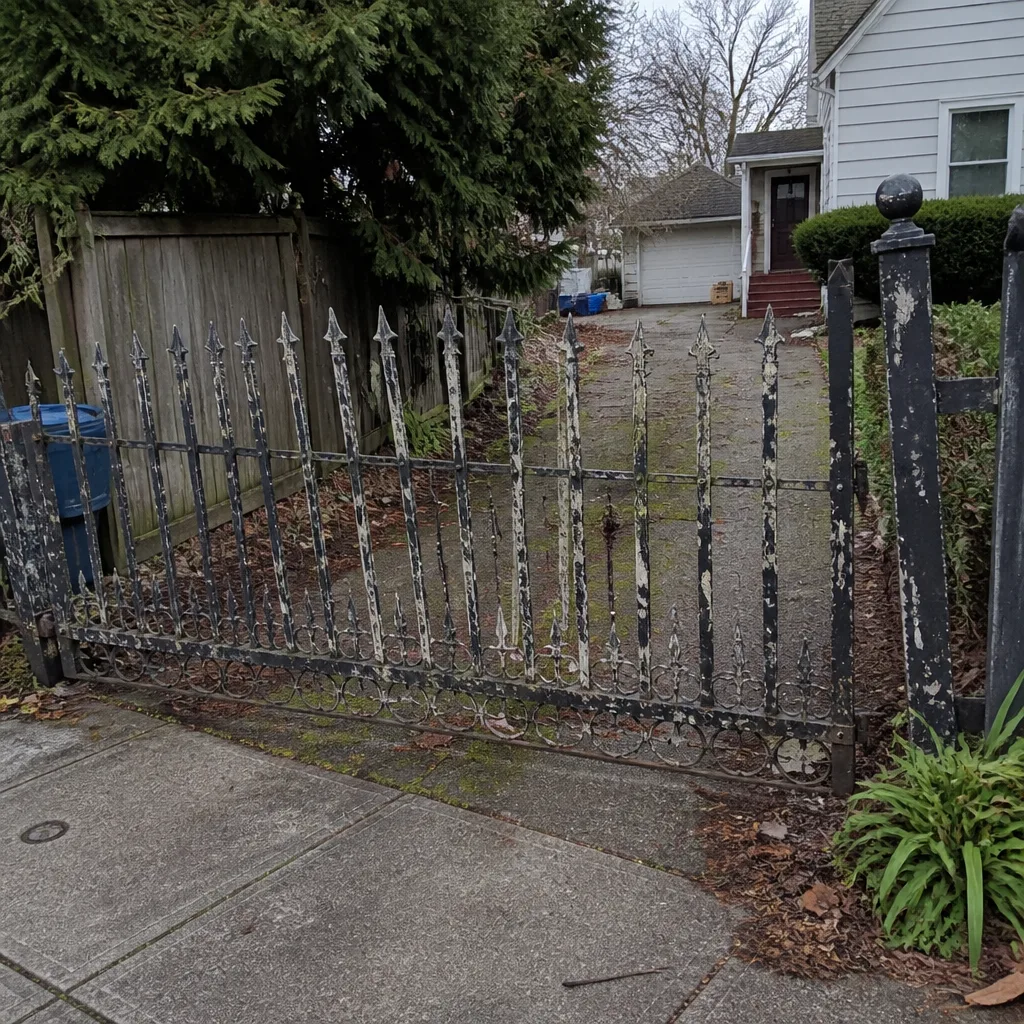 Before
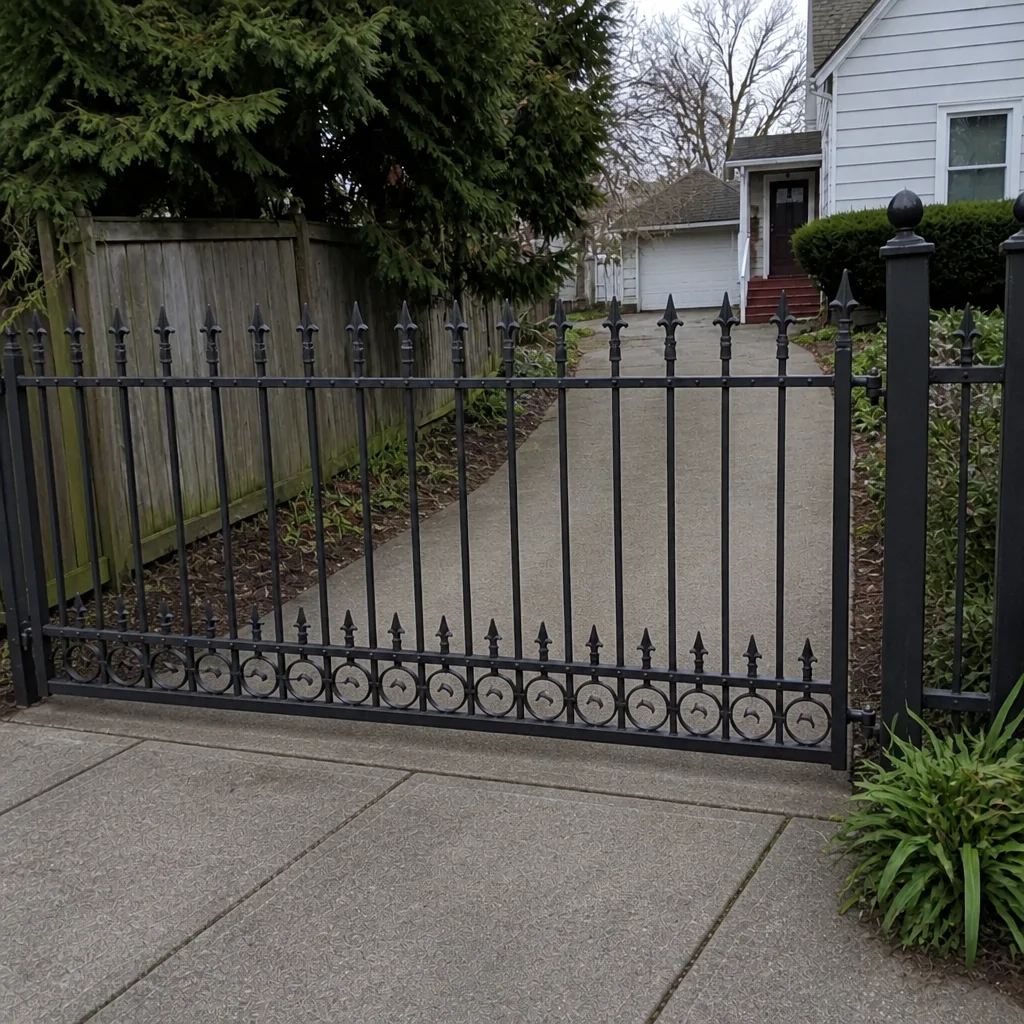 After
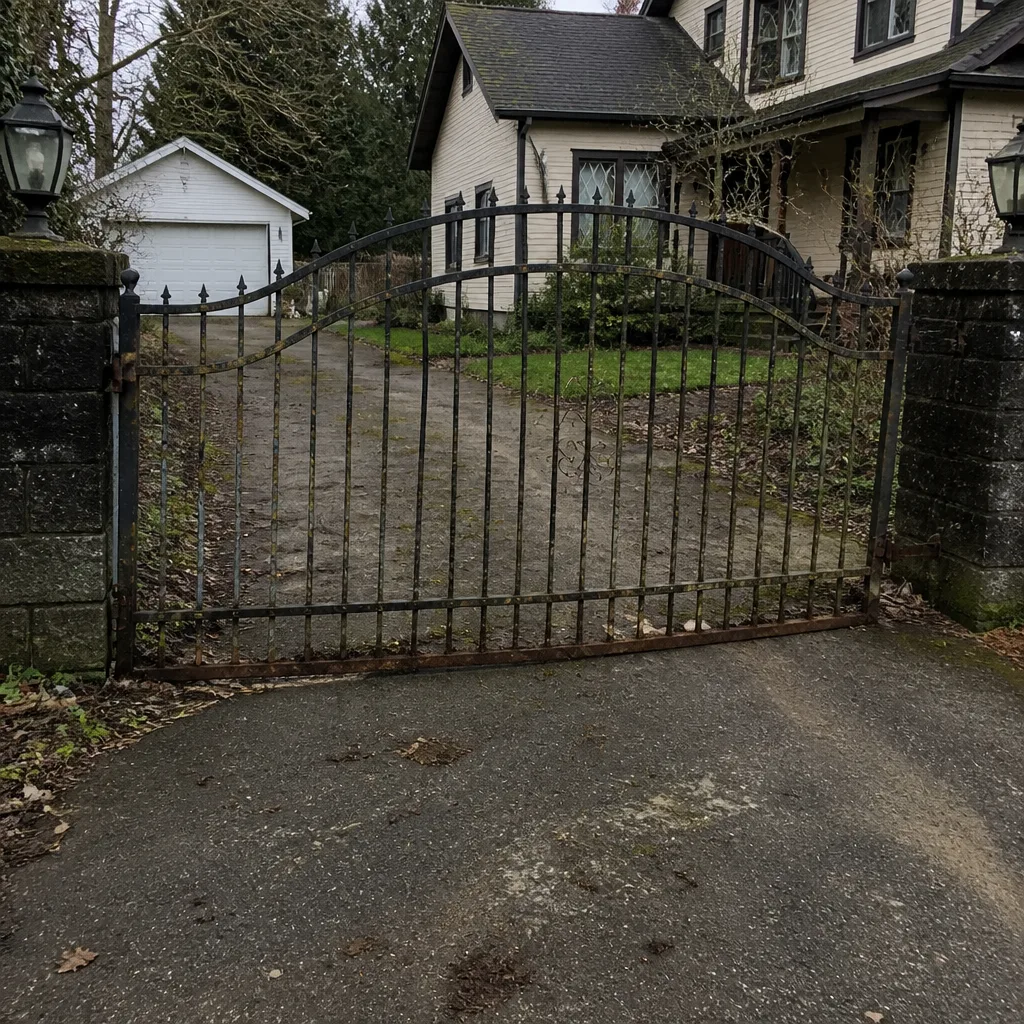 Before
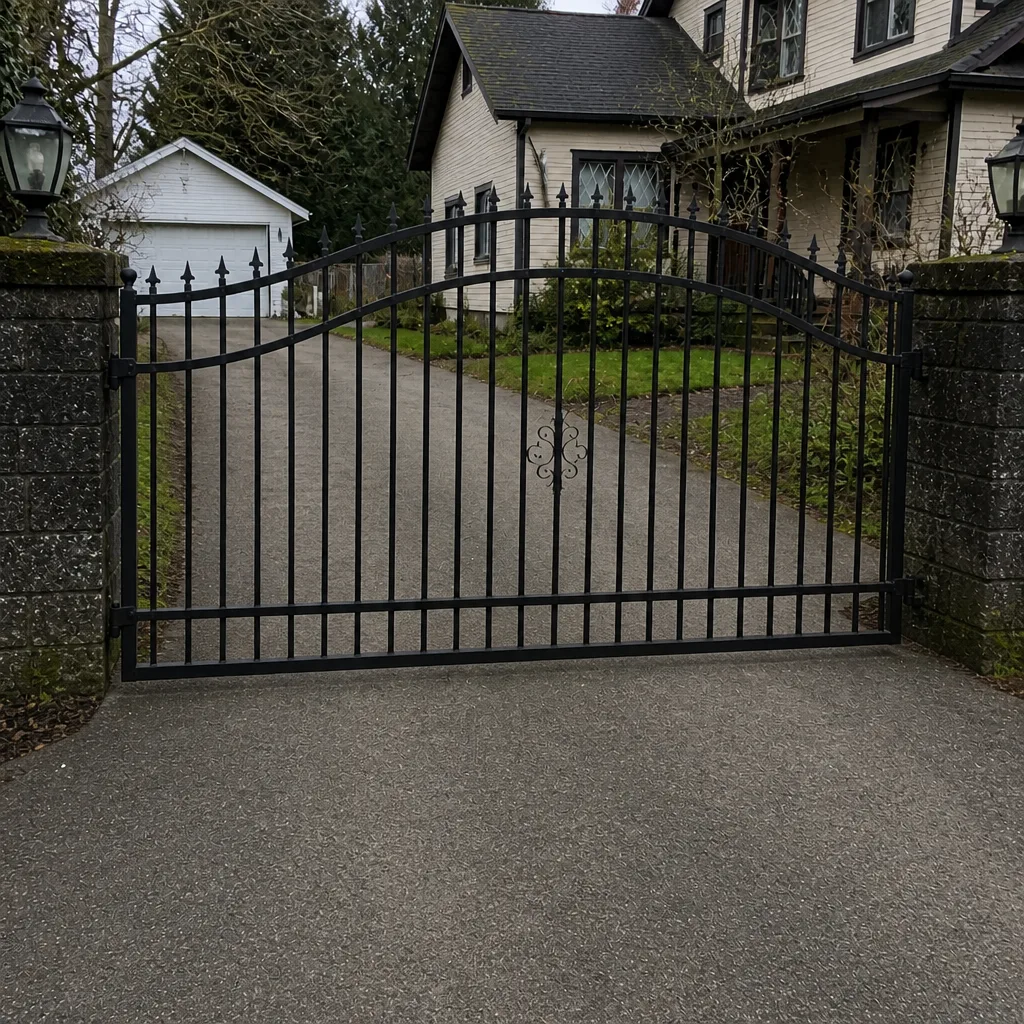 After
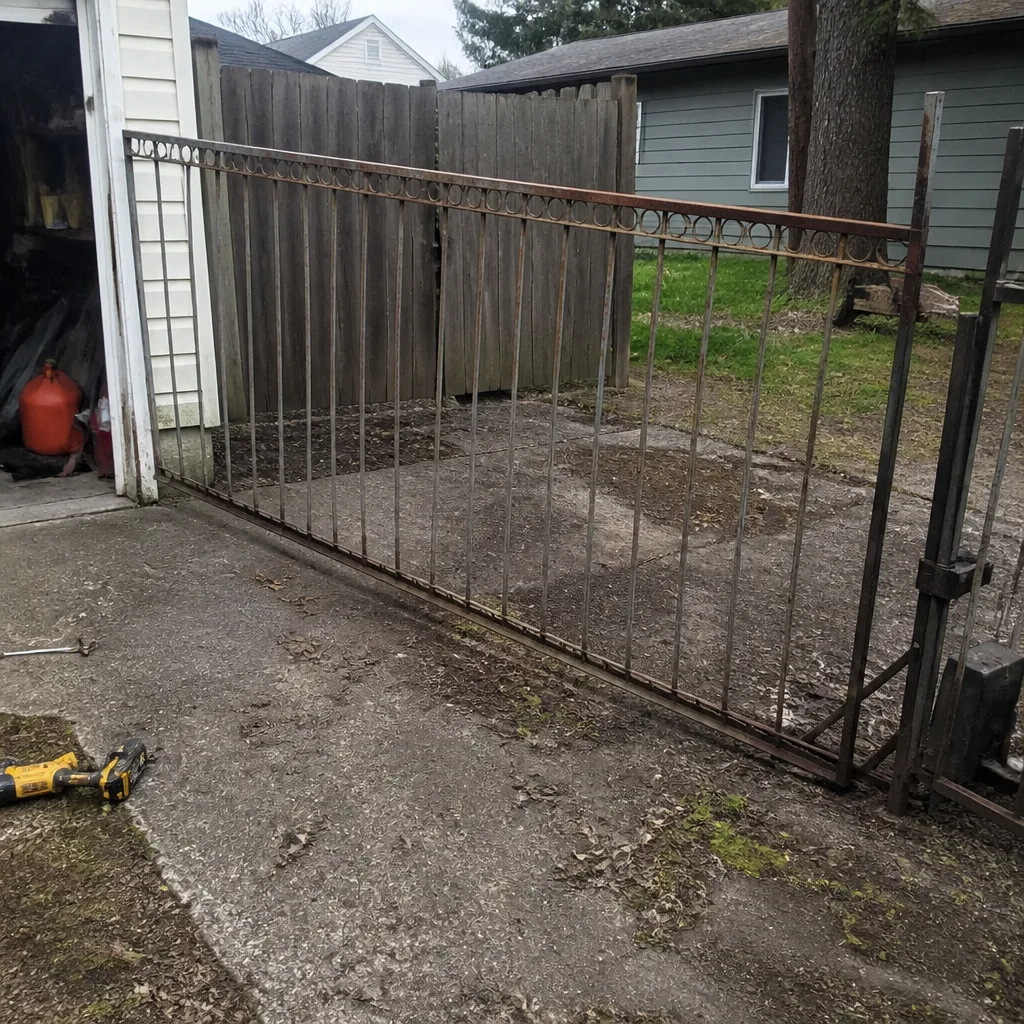 Before
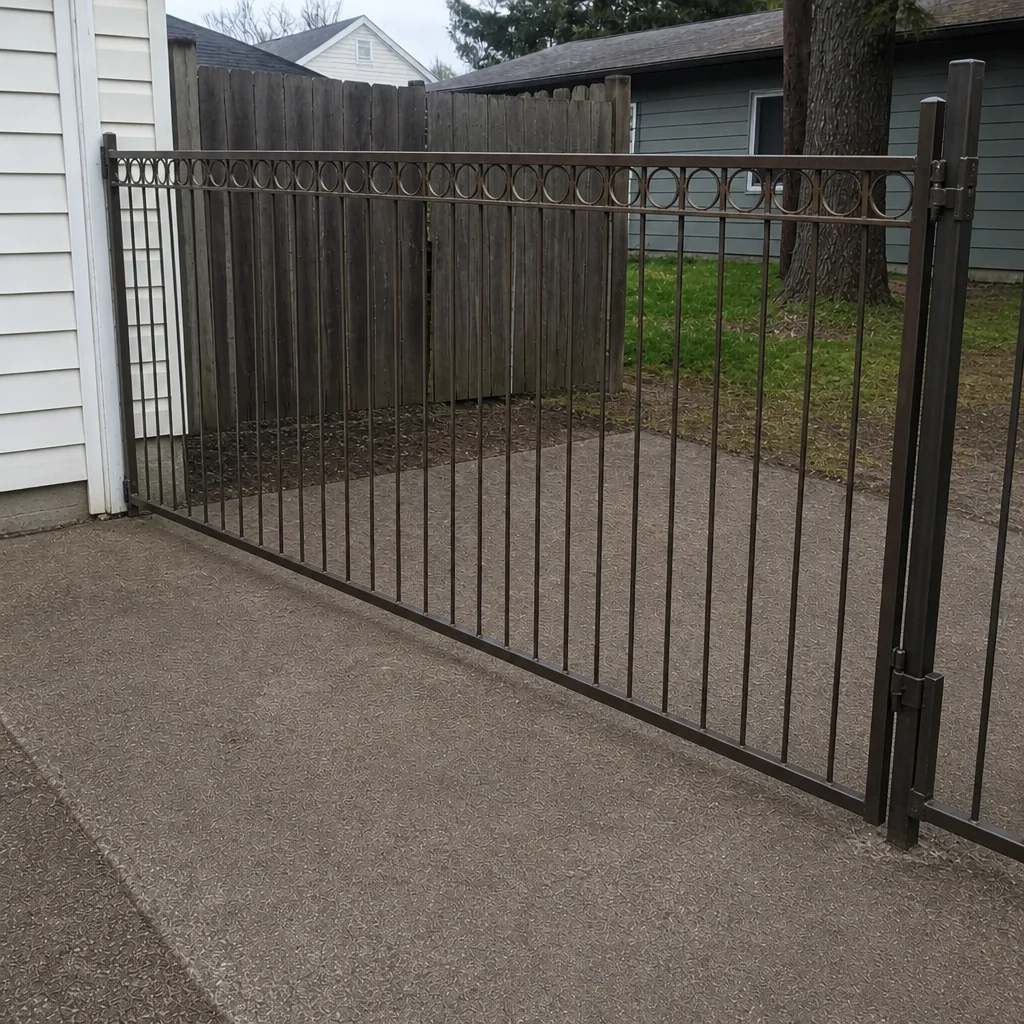 After
When to Call a Professional
Call a specialist when the gate won’t open at all, when it reverses for no obvious reason, when a safety sensor is unresponsive, when a gate post is leaning or heaving, when the operator housing shows a visible error code, or when the gate is on a multi-unit property and functional access control matters. Also call straight away if the gate is an overhead type with a spring or cable problem – those components fail under significant tension and are not safe to inspect closely. For straightforward hinge, limit, or photo-eye issues, same-day repair is often possible. Gate Repair Portland offers free estimates in Portland – call (855) 473-7281. We answer 24/7. Fast dispatch from 7am to 7pm, Sunday through Friday. Any repair starts with a written price agreed before the first bolt is turned.
Frequently Asked Questions
Most residential gate repairs in Portland fall in a broad range depending on what’s wrong, and the honest answer is that the price is set per job once the gate has been inspected. Small fixes like a photo-eye realignment or a limit reset sit at the low end. Control board repair, hinge or track replacement, and post resets sit mid-range. Overhead spring work and full operator replacement cost more because the parts and labor are heavier. Every job gets a written estimate before work starts, so the final price doesn’t drift. Call (855) 473-7281 for an exact quote; estimates are free.
Same-day service is often available for straightforward repairs like hinges, limits, sensors, and simple operator faults. Some issues need a second visit once parts are confirmed. We answer the phone 24/7, and fast dispatch runs 7am to 7pm, Sunday through Friday. Call (855) 473-7281 and we’ll confirm timing for your gate.
Not necessarily. A short-travel reversal is often a safety input problem – a misaligned photo eye, a tripped reversing edge, or a loop detector that’s lost its reference. It can also be a mechanical bind that the operator reads as an obstacle. The manual-release test is the fastest way to tell. If the gate drags by hand, it’s mechanical; if it moves freely, the fault is in the controls or sensors. Either way, this is a diagnosable fault, not always a dead operator.
Yes. We work on LiftMaster, FAAC, BFT, Linear, Viking, Ghost Controls, DoorKing, Elite, and Mighty Mule operators, plus other systems we find on-site. The point of servicing that many brands is that we diagnose the system you have instead of defaulting to replacement because a tech doesn’t recognize the brand. If a dealer has told you your gate has to be replaced entirely, it’s worth a second opinion from someone who works across brands.
No. A tilted post is almost always a footing or soil problem, and in Portland that’s usually the clay soil moving with moisture cycles. The tilt throws the gate out of alignment, and the operator then reads the misalignment as an obstacle and reverses or stalls. Fix the post and the alignment returns, and the operator goes back to normal once the limits are reset. If your break is by the post, don’t replace the operator.
It can be. On multi-unit properties where the gate is part of the agreed access control, letting it stay broken weakens the building’s security and can create liability exposure. Oregon property management norms expect access that was part of the rental agreement to keep working, and a gate that’s propped open with a brick is the fastest route to a dispute. The practical fix is usually fast once diagnosed. Call (855) 473-7281 to schedule an on-site estimate.
The Bottom Line
Gate failures in Portland follow patterns you can learn. Hinge wear and post heave on swing gates, track and roller problems on slide gates, spring and limit issues on overhead gates, and loop and access control faults on barrier arms – each has its own signature, and each is fixable once correctly diagnosed. The single biggest mistake is treating a mechanical fault as an operator failure, and the cost of that mistake is a replaced part that didn’t fix anything. If you work with a gate specialist who services nine brands, the diagnosis covers what you actually own. Gate repair is a repair business first. When the gate needs replacing instead, that gets a written estimate just like any other job.
Looking for Gate Repair Portland for an electric gate that won’t respond, a swinging gate that drags, or a new installation to spec? Our team in Portland handles all three services – gate repair, electric gate repair, and new installation – and prices every job with a free written estimate before any work starts. Call (855) 473-7281. We answer 24/7. Fast dispatch from 7am to 7pm, Sunday through Friday.
Written by the team at Gate Repair Portland.