
Last updated November 15, 2026
 Wrought iron
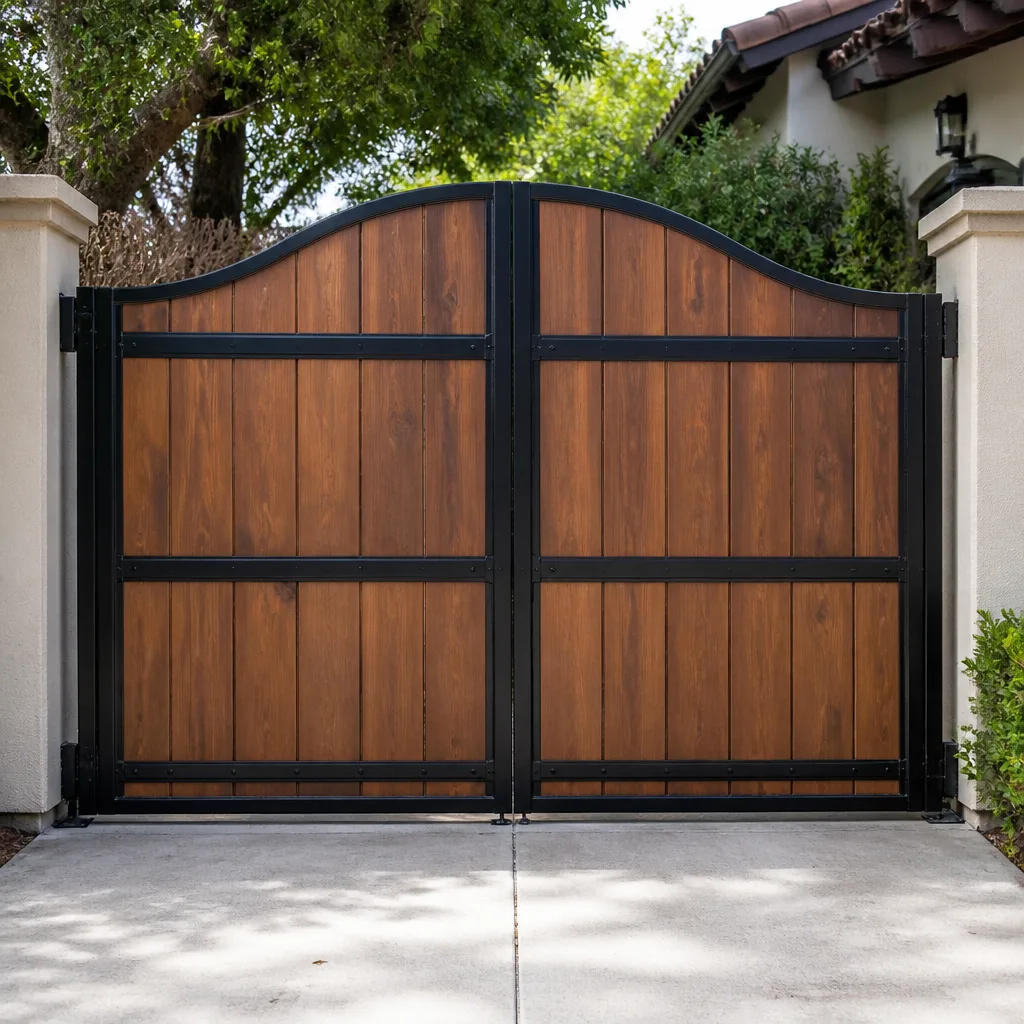 Wood & steel frame
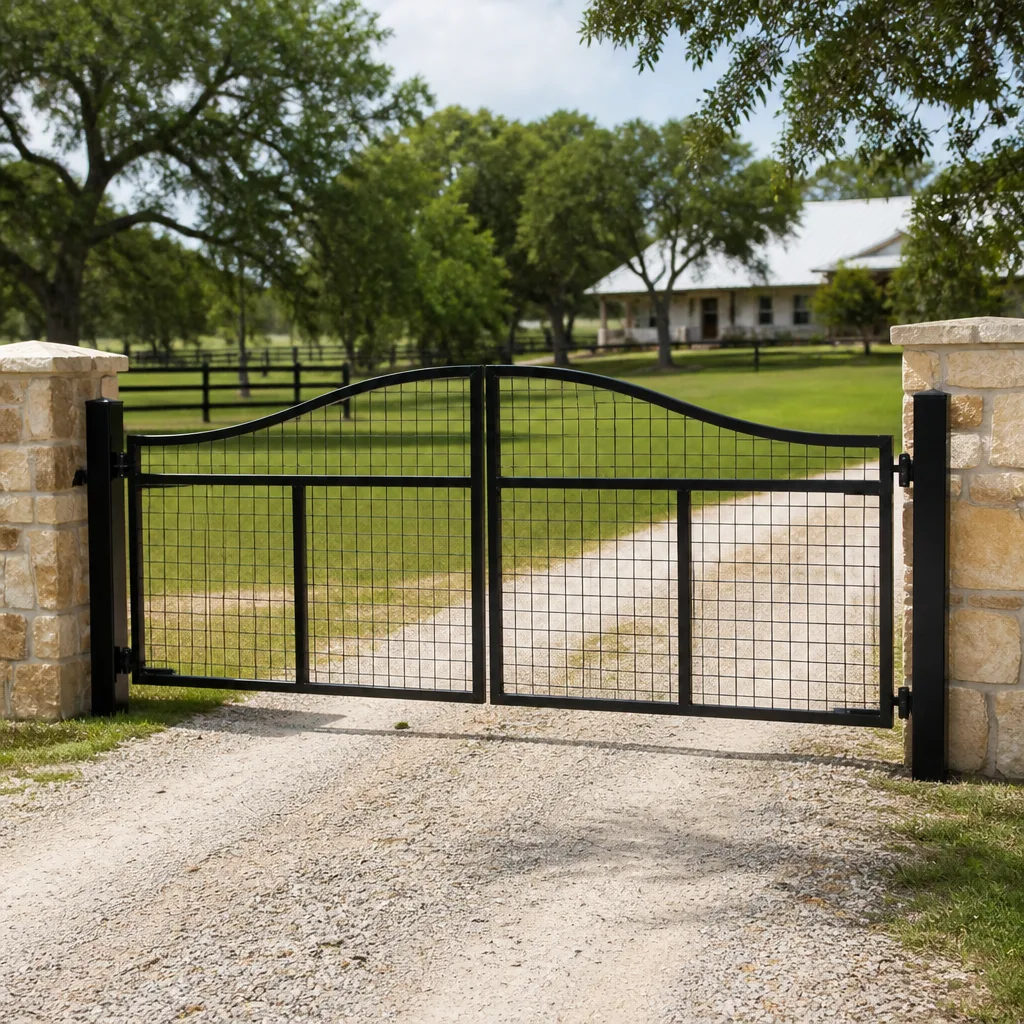 Farm & ranch
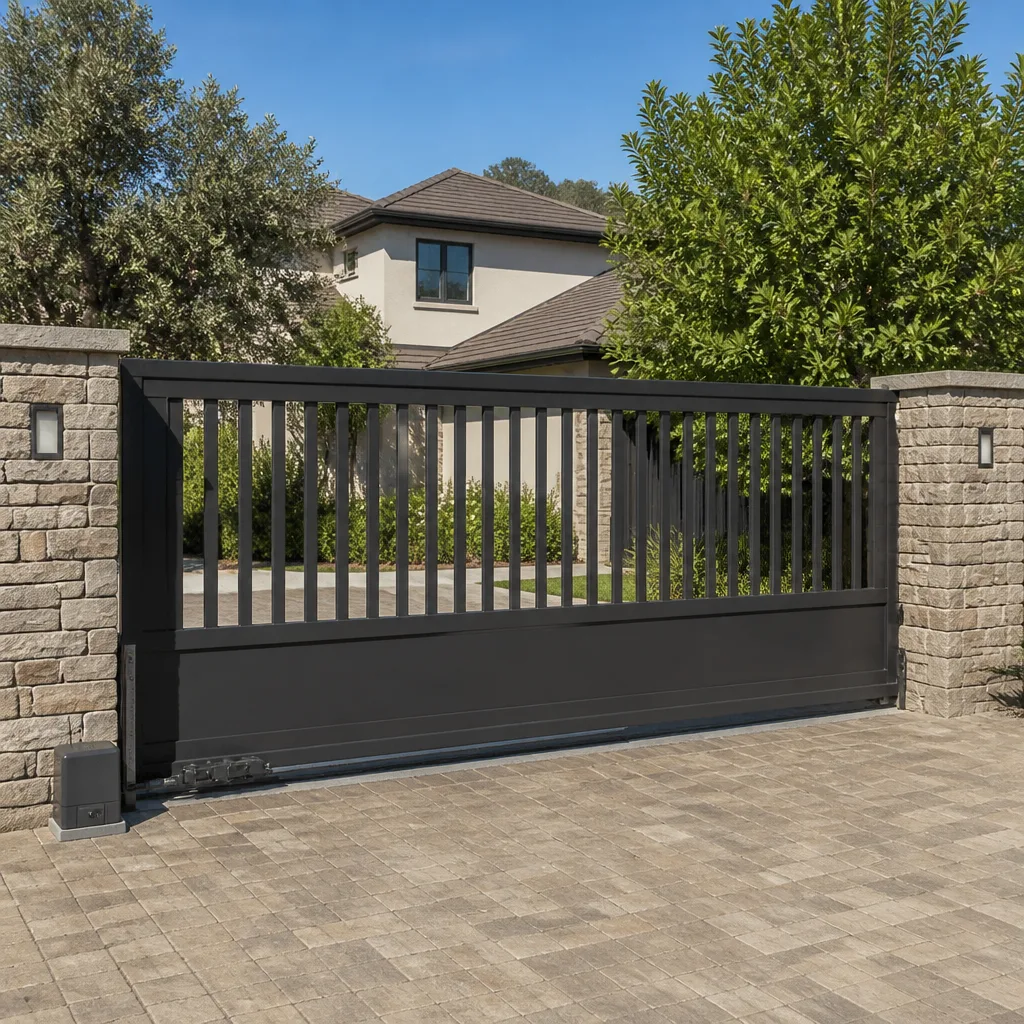 Sliding driveway gates
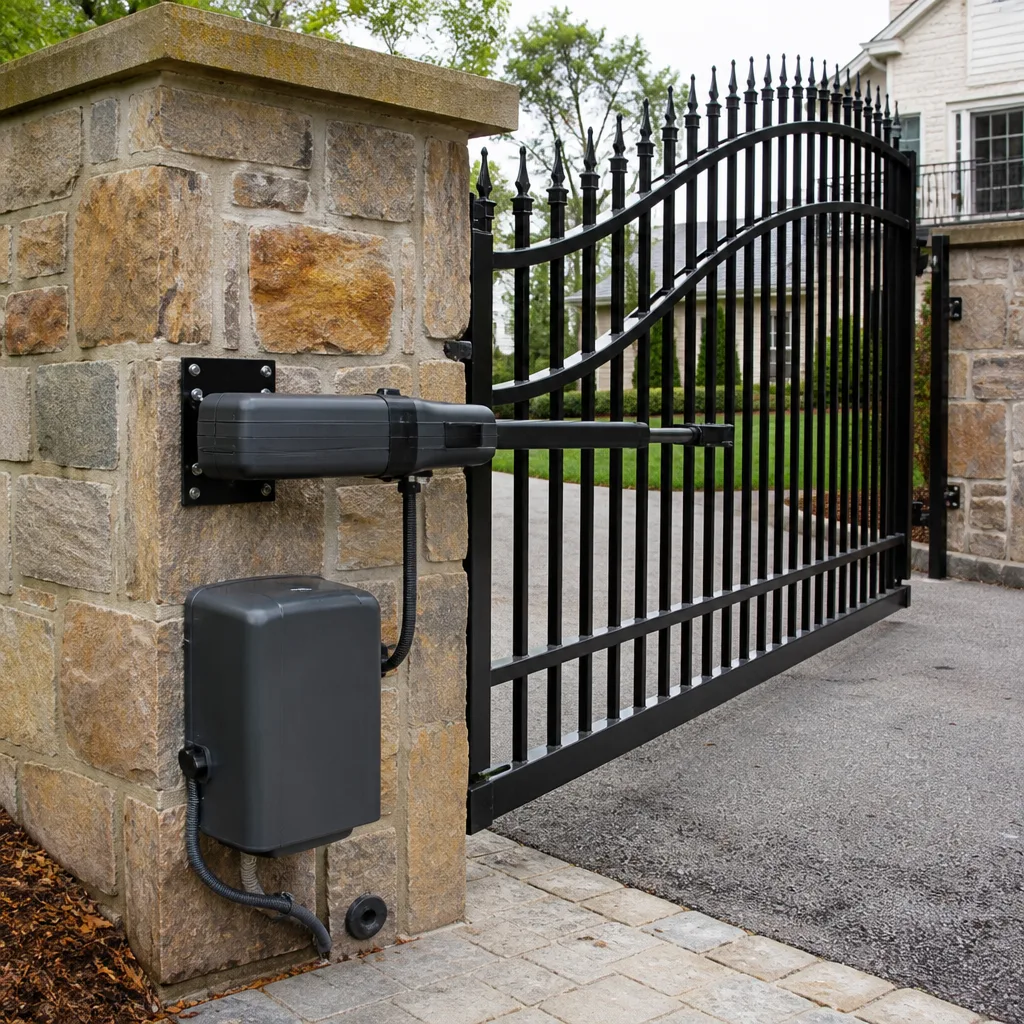 LiftMaster operators
Free on-site gate assessment - hinges, posts, and your LiftMaster or Nice gate operator checked before anything is quoted
The assessment is free and the quote is the invoice.
Get your free estimateDIY vs Professional Gate Repair: The Portland Homeowner’s Decision Guide
Most gate repair advice starts with the wrong question. People ask “can I fix this myself?” when the better question is “what kind of failure is this?” A sagging hinge and a dead control board look equally broken from the driveway, but they sit on opposite sides of a line that decides whether DIY makes sense or costs you more than it saves. Here’s the part that surprises people: replacing a gate operator yourself can void the manufacturer warranty on several major brands, and that consequence doesn’t show up at installation. It shows up months later, when a failed board that should have been a covered replacement turns into a full out-of-pocket purchase. This guide breaks gate problems into two clear categories – the ones a careful homeowner can handle and the ones that carry electrical, warranty, or entrapment-safety stakes – and shows you exactly where the line falls in Portland.
Quick Answer
Some gate repairs are genuinely homeowner-appropriate: lubricating hinges and rollers, clearing debris from the track, tightening bolts, and adjusting a latch. But anything involving the operator’s wiring, control board, motor, safety edges, or loop detectors should go to a gate specialist with the right diagnostic tools. In Portland, electrical and operator work done wrong can void a warranty and leave the gate non-compliant with entrapment-safety requirements, so the small tasks stay DIY and the electrical work goes to a professional.
Styles & brands we work with
- Wrought iron
- Wood & steel frame
- Farm & ranch
- Sliding driveway gates
- LiftMaster operators
Table of Contents
- The DIY Appropriateness Matrix: 6 Tasks You Can Do, 4 You Shouldn’t
- What Oregon Electrical Code Says About Gate Operator Wiring
- UL 325 and the Safety Edges DIYers Get Wrong
- The Tool and Parts Cost Reality Check
- When a DIY Attempt That “Almost Worked” Costs More
- The Warranty Consequence Nobody Mentions at Installation
- Why Brand Familiarity Changes the Repair-or-Replace Question
- When to Call a Professional
The DIY Appropriateness Matrix: 6 Tasks You Can Do, 4 You Shouldn’t
The clearest way to decide is to sort the task before you touch the gate. Gate repair splits into mechanical work that a careful homeowner can handle and electrical or operator work that needs a trained technician. Use this matrix as your starting filter, then read the section that matches your job.
The 6 homeowner-appropriate tasks
- Lubricating hinges, rollers, and pivot points. A dry hinge grinds and eventually sags. A light application of the right lubricant on a swing gate’s hinges keeps the gate moving smoothly without stressing the operator.
- Clearing debris from the track or runway. A sliding gate that stalls may simply have leaves, gravel, or a small obstruction in its path. Clearing it restores travel.
- Tightening visible bolts and brackets. A loose hinge bolt or mount bracket is a mechanical adjustment you can make with standard tools, and it prevents gradual misalignment.
- Adjusting a latch or strike. A gate that closes but doesn’t latch properly often needs a small alignment adjustment at the receiving post.
- Cleaning photo-eye lenses and safety sensor faces. Dust and pollen on a safety sensor cause false trips and a gate that reverses on its own. A wipe with a soft cloth fixes most false-reversal complaints.
- Checking for physical obstructions before you call. Walking the gate path and confirming nothing blocks travel saves everyone time and rules out the simplest failure.
The 4 tasks that carry real consequences
- Replacing a gate operator. This means wiring to a power source, configuring safety inputs, and setting travel limits correctly. It’s the task most likely to void a warranty and the least forgiving of mistakes.
- Working on the control board. A board swap that doesn’t match the operator’s configuration can fail on the first cycle. Diagnostics require specific tools.
- Rewiring loop detectors or access keypads. Low-voltage doesn’t mean low-risk, especially where the run meets the power supply. This is electrical work.
- Re-calibrating safety edges after a motor swap. This is where legal exposure enters the picture. We’ll cover it in detail below.
If your job lands in the first list, go ahead. If it lands in the second, that’s where a professional visit earns its cost. Our technicians have up to 13 years of experience diagnosing gate systems, and they assess the whole gate rather than just the part you pointed at – which matters when a lubrication problem has already strained the operator. For a broader look at the services that cover the whole gate lifecycle, see gate repair.
What Oregon Electrical Code Says About Gate Operator Wiring
Here’s the line most DIYers don’t know exists. Gate operators run on either a dedicated line from the home’s power or a low-voltage wiring run, and in either case the work connects to the electrical system. That connection is where a homeowner’s do-it-yourself confidence meets a code reality. Oregon regulates this work, and patching a gate operator’s wiring without meeting the code requirements can leave the system non-compliant – and unsupportable if something goes wrong.
Gate operators are typically wired on a dedicated circuit, and the wiring method – conduit, burial depth for underground runs, and grounding – follows the electrical code the same way any outdoor circuit does. A genuine low-voltage safety run from a photo-eye to the operator is simpler than a line-voltage supply, but the boundary between where the low-voltage run stops and where the powered feed begins is exactly where mistakes happen. A homeowner who taps into the supply line without understanding that boundary can create an energized-but-ungrounded condition, which is a shock and fire risk.
The practical takeaway: if your repair touches the operator’s power source – anything from the transformer forward – treat it as electrical work. Ask the city’s building department about permit requirements before you start, because most electrical work on a fixed outdoor installation requires a permit and an inspection. Low voltage looks harmless in a diagram, but “low voltage” describes the load, not the safety of an unsafe connection.
The good news is that a gate specialist handles this wiring as part of the job. When a gate stops responding, the fault is often in the safety circuit or the wiring rather than the motor, and a proper diagnostic finds it. That’s the value in electric gate repair as a dedicated service – the electrical and access-control side of the gate gets the same attention as the mechanical side, so wiring faults are found instead of quietly worked around.
UL 325 and the Safety Edges DIYers Get Wrong
UL 325 is the safety standard that governs automatic gate operators, and it exists for one reason: an automatic gate is a heavy moving object that can injure or trap people and animals. The standard requires entrapment protection – photo-eyes, safety edges, or other sensing devices – that stop or reverse the gate when something is in its path. When you re-calibrate or replace an operator, the safety devices must be set correctly for the gate’s travel, or the protection stops working the way it was designed to.
This is the part a DIY motor swap most commonly gets wrong. The homeowner installs the new operator, wires the safety edge, and sets the travel limits – but doesn’t properly calibrate the reversal force or the reverse point. The gate cycles. It looks fine. But the entrapment protection is now mis-set, and the gate no longer stops for an object that the original configuration would have detected. That’s a legal exposure issue, not just a performance quirk, because an automatic gate has to protect people from the gate’s own motion.
Why is this dangerous enough to flag clearly? Because a gate that reverses correctly on the test, then fails in real use, gives no warning. The homeowner has no way to know the calibration is off until the wrong thing happens. A technician who installs operators on a regular basis sets the safety edges to the standard as a matter of routine and verifies the reversal with an obstruction test. That verification step is the difference between a gate that complies and one that only appears to. If you’re handling a new or swapped operator, don’t skip it – and if you’d rather it be done to standard, that’s the call to make.
The Tool and Parts Cost Reality Check
DIY sounds free until you price the tools. A proper swing gate hinge replacement on a heavier residential gate is a case study in hidden costs. The parts themselves vary with the hinge style and gate weight, but the full task usually needs a drill, the correct fasteners for the gate’s material, an angle grinder or cutoff tool for removing a seized or rusted hinge, and a way to support the gate’s weight while the hinge is off. Add the hours spent sourcing a hinge that matches the original, and the real cost of a DIY hinge job is the sum of parts, tools, and a Saturday.
Here’s where the comparison gets clear. For the same scope, a professional visit brings the right hinge style, the cutoff tools, and the know-how to check whether the hinge failure is actually a hinge failure or a symptom of a settling post. That last point matters. A hinge that keeps failing on a Portland gate is often a sign the post has shifted, and replacing the hinge alone just delays the next failure.
A rough way to compare the two paths:
| Task | DIY path | Professional path |
|---|---|---|
| Hinge replacement (swing gate) | Cost of hinge, fasteners, and any tool you don’t own; time to source and fit | Free estimate; parts and fitting included in the written price |
| Latch adjustment | Minutes and standard tools | Usually bundled into a larger visit |
| Operator replacement | Unit cost plus wiring parts and risk to warranty and safety calibration | Free estimate; wiring, calibration, and a verified reversal test |
| Control board diagnostics | Diagnostic tooling most homeowners don’t have | Included in a diagnostic visit |
The estimate is free and the price is set per job by the written estimate, and no work starts until you’ve agreed to that number. That’s the reason a cost comparison usually ends the same way: DIY wins on the smallest mechanical tasks, and the professional visit wins the moment the job needs a tool you’ll use once or a calibration you’ll only get right with experience. Our technicians have up to 13 years of experience on gate systems, and they’ll tell you plainly whether your job is a five-minute adjustment or one that needs the full service.
When a DIY Attempt That “Almost Worked” Costs More
The most expensive repair is often the one that nearly succeeded. A homeowner replaces a control board or re-wires a photo-eye, the gate runs for a few cycles, and then it stops again in a new way. By the time a technician arrives, the original fault is buried under a second problem the DIY attempt introduced. Diagnosing one fault is a clean job. Diagnosing two – one of them created by the partial fix – takes longer and costs more.
Here’s how an incomplete fix typically complicates a professional repair:
- A cleared fault code hides the real fault. A DIY reset or a swapped part clears the symptom without fixing the cause, so the technician has to re-create the failure to see it.
- Mismatched parts change the system. A control board or safety device that isn’t configured for the operator makes the gates behave in ways the original design never would, sending diagnostics down the wrong path.
- A reversed safety input becomes invisible. When a photo-eye is wired backward and the gate runs, the safety circuit is defeated until it’s caught. That’s a function of the entrapment protection being silently disabled.
- Work done twice on one part. When the second repair has to undo the first, you pay for the original attempt plus the correction.
In our experience with gate repair around Portland, the “almost worked” scenario is the single most predictable way a small repair becomes a large one. If you’ve already tried a fix and the gate is still misbehaving, say so when you call. The technician can plan for the complication instead of discovering it on arrival, which saves time and money.
The Warranty Consequence Nobody Mentions at Installation
The warranty issue doesn’t surface when you install. It surfaces months later. Most manufacturers of gate operators, including brands like LiftMaster and FAAC, condition their warranty on proper installation and service. A self-installed operator, or a service performed by someone without the training to meet the standard, can void the coverage on the covered parts. That means the day a board or motor fails, the repair isn’t a covered replacement – it’s a new purchase.
The math is worth sitting with, without inventing specifics. If a covered part would have been replaced under warranty and instead you pay for it out of pocket, the DIY savings on the original install are gone, and then some. The warranty is the invisible safety net that a homeowner only notices when it’s absent. An improper installation doesn’t announce the problem when it happens; it hides until the first failure.
The way to protect the warranty is straightforward: have the operator installed and serviced to the manufacturer’s standard. A gate specialist who installs operators routinely does exactly that, and a brand-familiar technician knows the installation requirements for the system you actually have. That brings us to a piece of Gate Repair Portland’s approach that makes the most difference here: we’re familiar with nine major gate brands – LiftMaster, FAAC, BFT, Linear, Viking, Ghost Controls, DoorKing, Elite, and Mighty Mule – so the technician diagnoses the system on your gate instead of recommending a swap because a brand is unfamiliar. A brand-agnostic repair protects you from being pushed toward an unnecessary replacement simply because one shop only stocks one maker’s parts.
Why Brand Familiarity Changes the Repair-or-Replace Question
The DIY vs. professional question has a hidden third option that a lot of homeowners get pushed into: replace the whole system. Dealers and single-brand technicians who don’t recognize an unfamiliar operator sometimes recommend a full swap simply because they can’t service what’s installed. That’s not a repair decision – that’s a convenience decision for the technician. Brand familiarity is what lets a repair stay a repair.
When a technician knows the system on your gate, the diagnosis shifts. A Linear or BFT control board failure gets worked on as a board failure. A DoorKing access system gets tested at the point where the fault actually is, rather than replaced wholesale. The brand-agnostic approach means the technician assesses what you have, not what’s easiest to sell. For a homeowner, that’s the difference between restoring a system and buying a new one.
This is why the repair-or-replace conversation is worth having with a gate-only specialist rather than a general handyman or a fencing company that treats gates as a side job. Every tool, part, and diagnostic process in a gate truck is gate-specific. There’s no cross-trade scheduling conflict and no divided attention. If you’re comparing options in Portland, start with a diagnostic that identifies the actual failure, then decide. For the full local picture, our Portland page covers the services and the area we work in. And if you want to see how a dedicated gate shop frames the trade, the Gate Repair Portland page is a good place to start.
Common Mistakes to Avoid
- Wiring a new operator to the power supply without a permit. Most outdoor electrical work on a fixed installation requires a permit and an inspection, so check with the city’s building department before you connect anything.
- Skipping the obstruction test after a motor swap. A gate that runs isn’t the same as a gate whose reversal force and safety edges are calibrated to the standard. Set them, then test with an obstruction.
- Ignoring that a failing hinge means a settled post. In a region with heavy seasonal rain like Portland, a post that shifts slightly can put stress on a hinge that keeps failing. Fixing the hinge alone means you’ll be back in a few months.
- Buying a control board without confirming the operator model. A board for the wrong operator won’t configure, and the return window is the only thing between you and a one-time tool purchase.
- Repeatedly resetting a fault instead of diagnosing it. A gate that keeps stopping mid-travel is telling you where to look. Clearing the fault hides the clue.
- Assuming low-voltage means low-risk. Low-voltage safety wiring looks simple, but the connection where it meets the powered supply is not a DIY zone.
- Letting a single-brand dealer talk you into a full swap. A technician who only carries one maker’s parts may recommend a replacement because that’s the system they can service, not because yours needs replacing.
See the difference
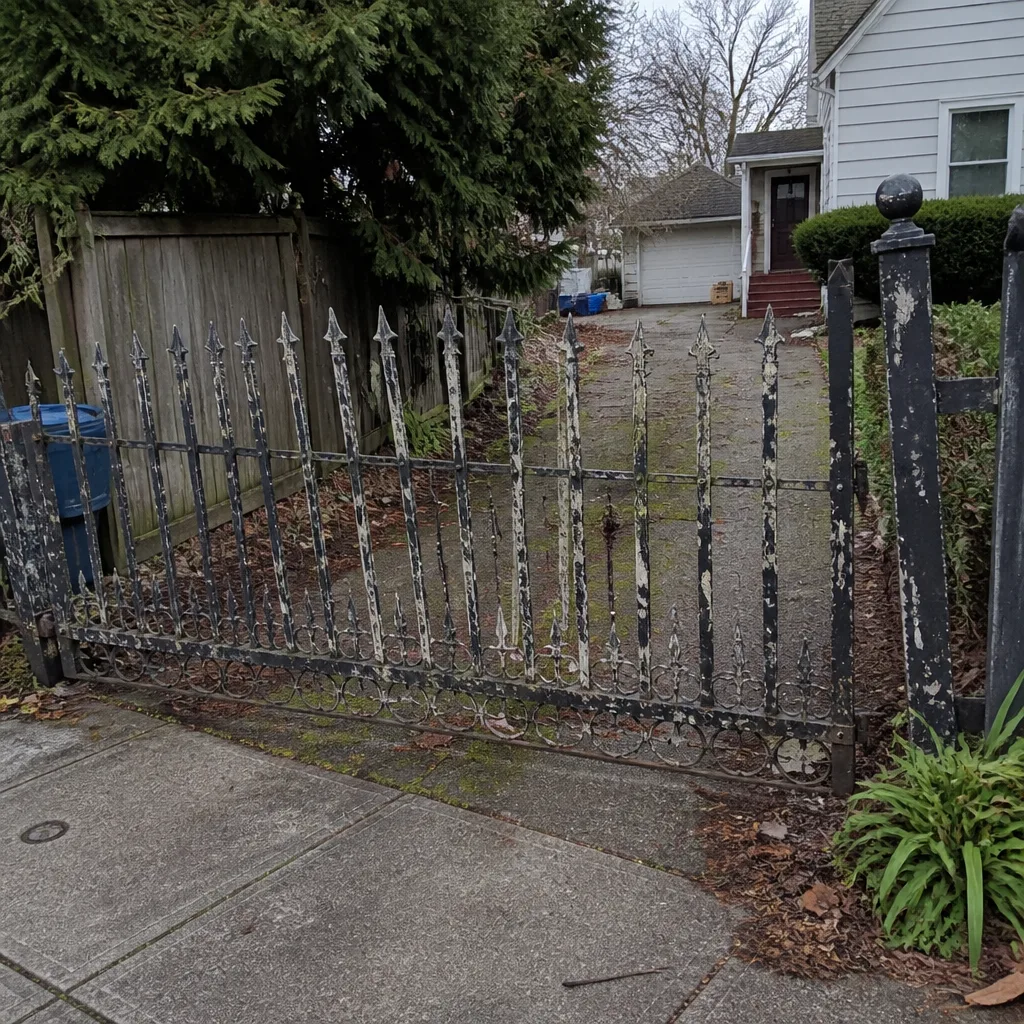 Before
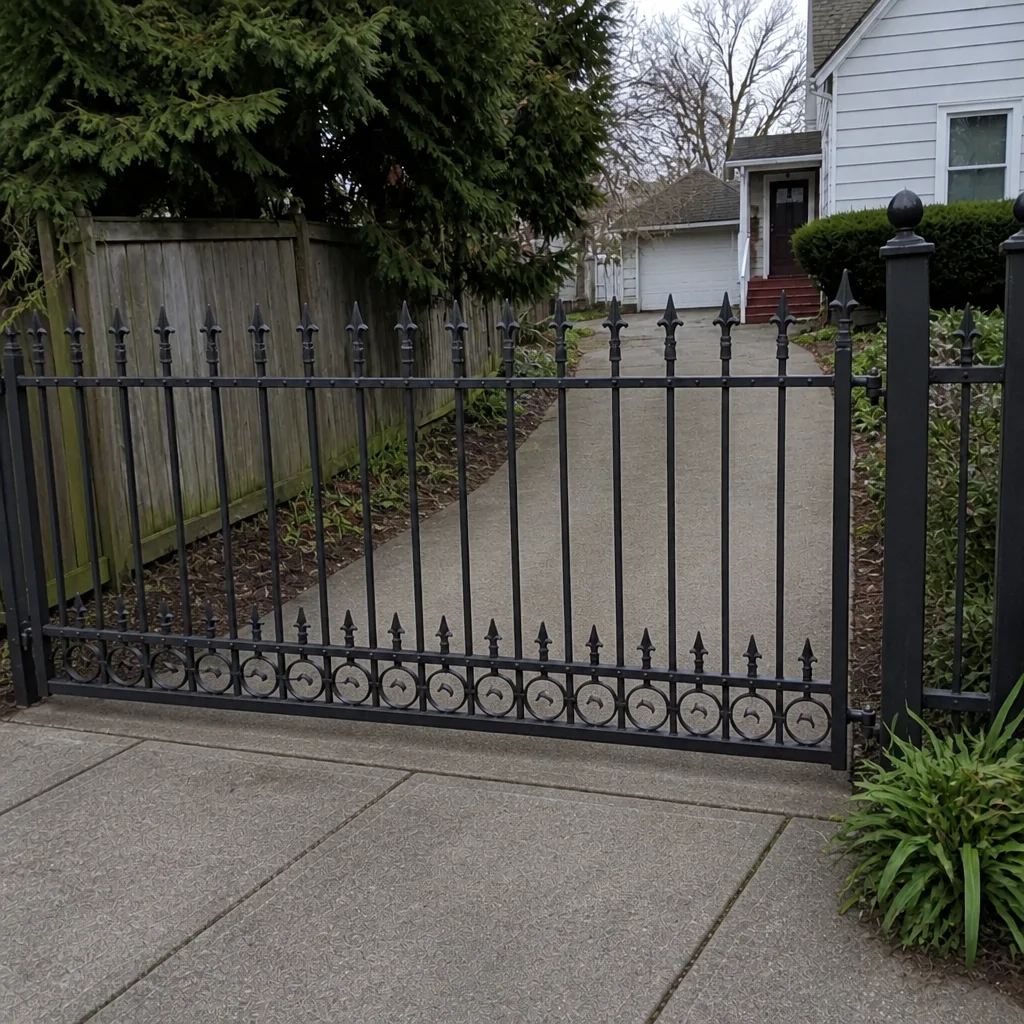 After
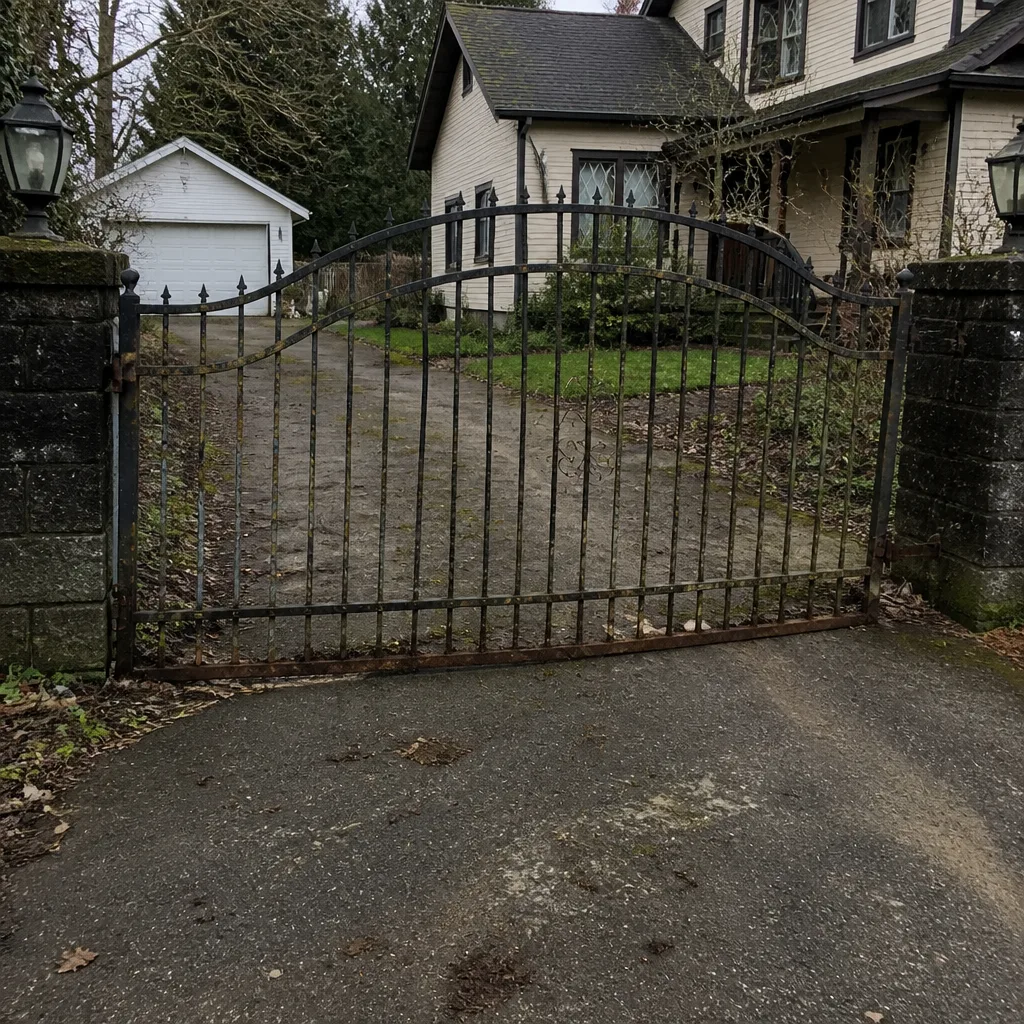 Before
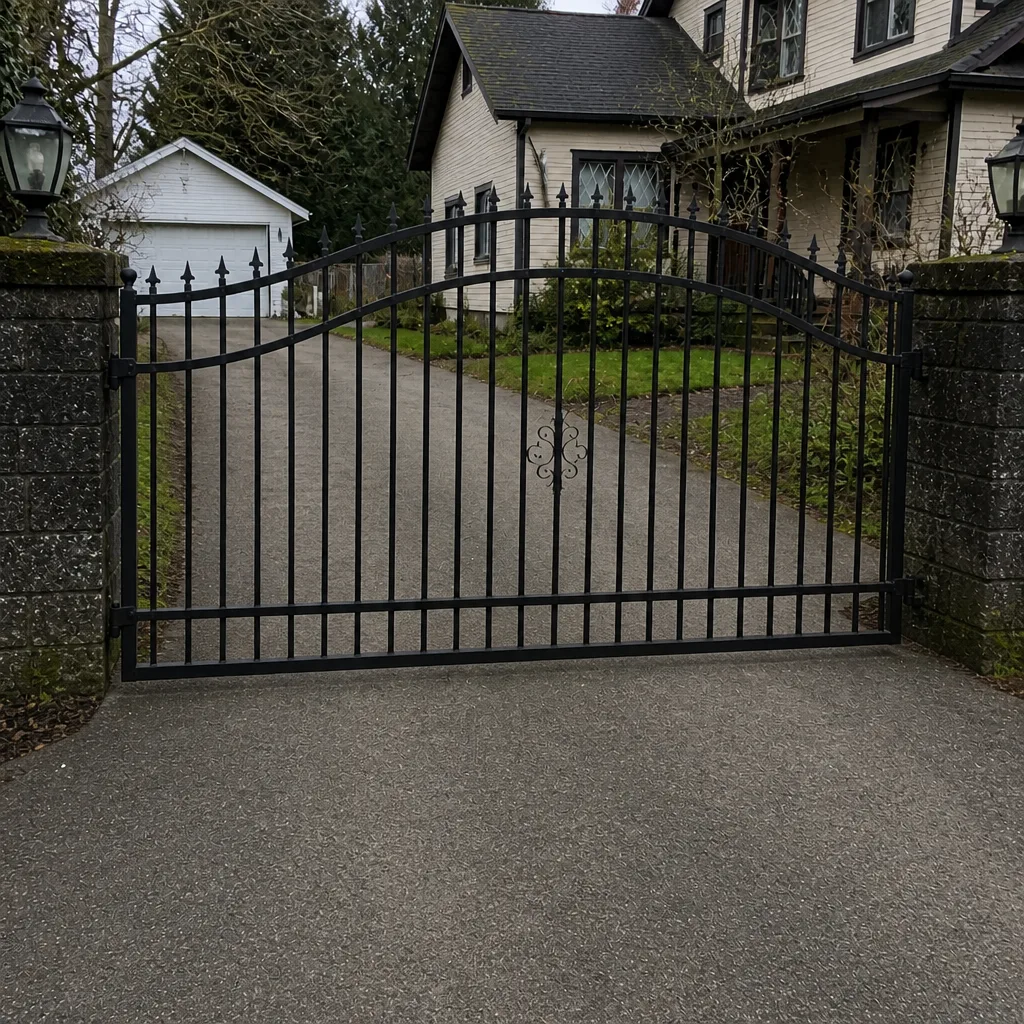 After
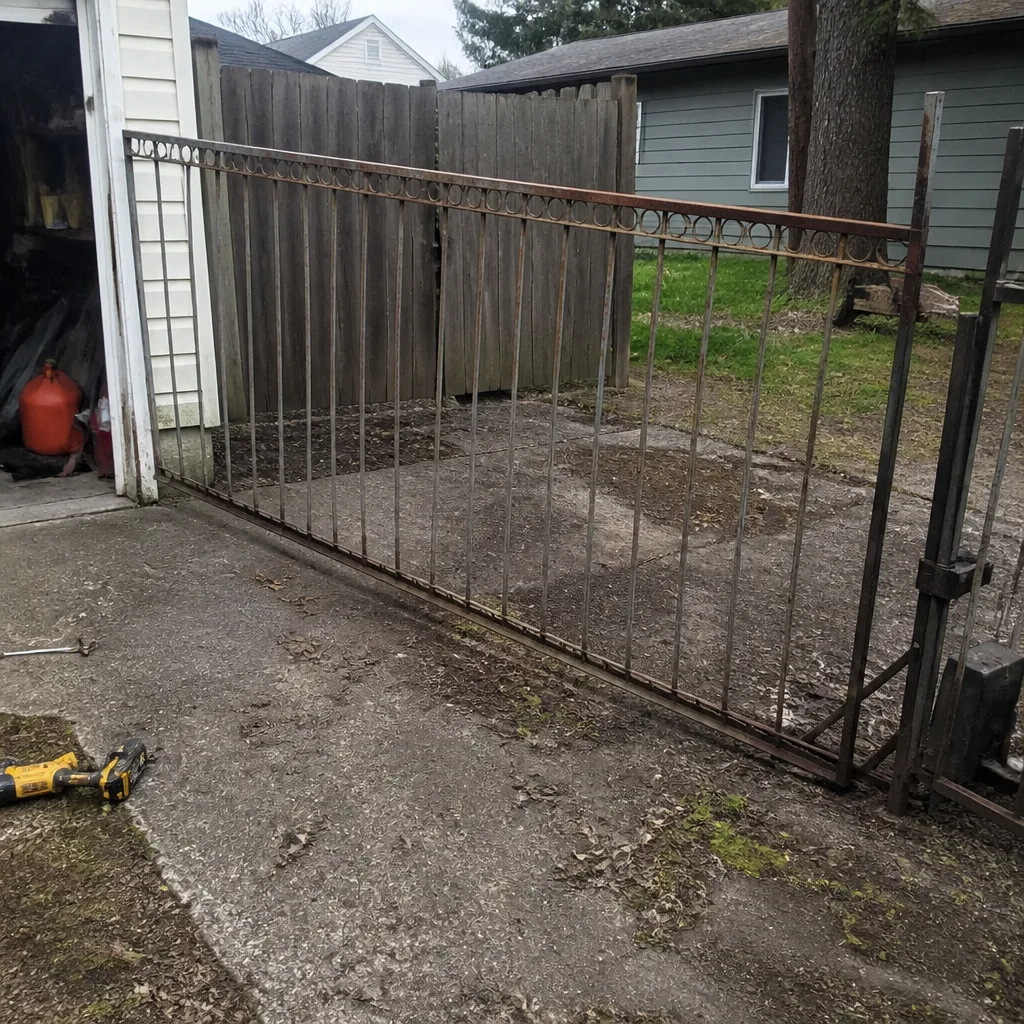 Before
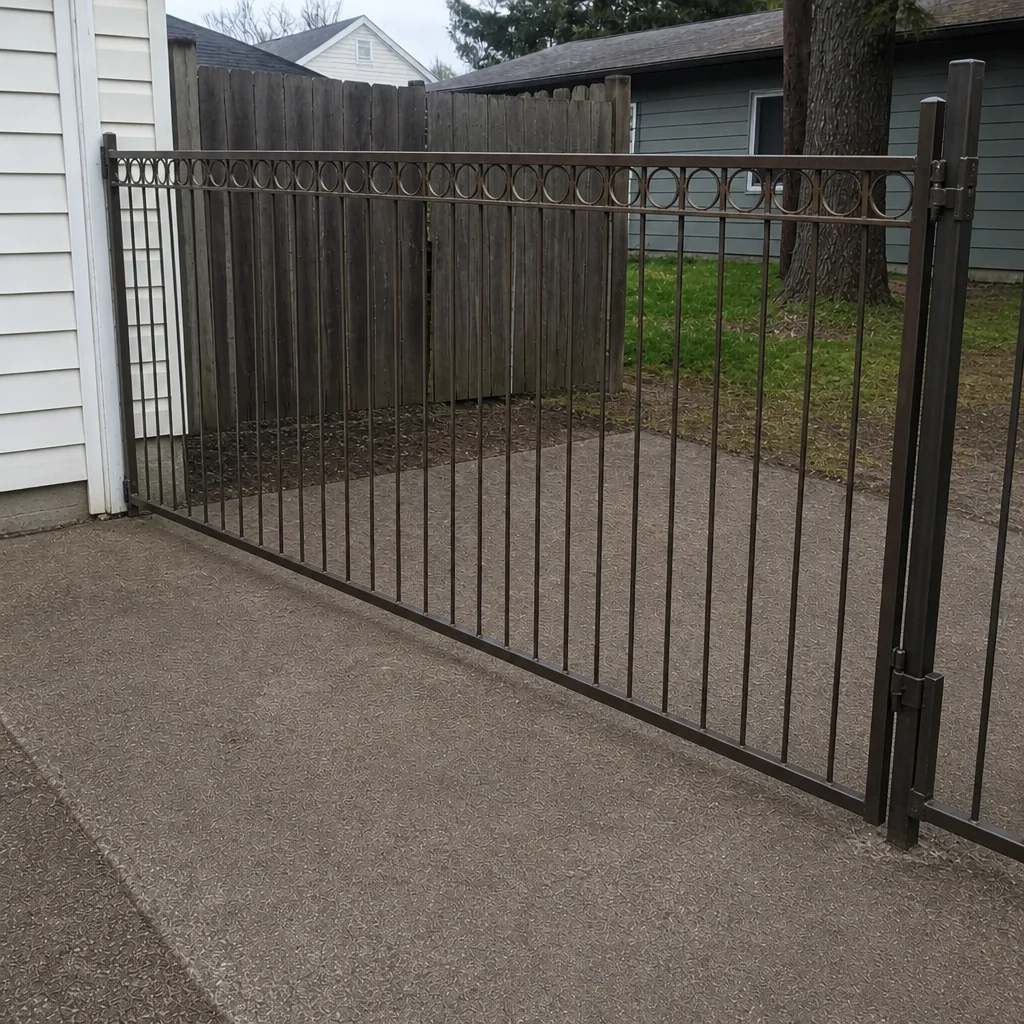 After
When to Call a Professional
Call a professional when the failure is electrical or operator-related, when the gate is an automatic one with entrapment protection, when your gate falls under a warranty, or when you’ve already tried a fix and it didn’t hold. Also call if the gate’s behavior has changed in a way that’s hard to describe – a gate that reverses randomly, stalls mid-travel, or responds intermittently is almost always a control or safety circuit issue, not a mechanical one. The gate-only focus means the diagnostic is focused on the system you actually have. Gate Repair Portland offers free estimates in Portland – call (855) 473-7281. We answer 24/7. Fast dispatch from 7am to 7pm, Sunday through Friday.
Frequently Asked Questions
Yes for purely mechanical tasks like lubrication, debris, and latch adjustment, but no for operator wiring, control boards, motor swaps, and safety-edge calibration. Those tasks carry electrical, warranty, and entrapment-safety consequences. When in doubt, have a technician diagnose it first – a free estimate tells you which side of the line your job is on.
It can, yes. Most major brands condition their warranty on proper installation and service, so a self-install or an improper service can void coverage on the covered parts. That matters most the day a part fails, when a covered replacement becomes an out-of-pocket purchase. A brand-familiar technician who installs and services to the manufacturer’s standard protects the warranty.
UL 325 is the safety standard for automatic gate operators, and it requires entrapment protection that stops or reverses the gate for anything in its path. It matters because a DIY motor swap that doesn’t recalibrate the safety edges can leave the gate non-compliant and the protection defeated. A technician verifies the reversal with an obstruction test after installation.
It includes a diagnostic assessment of the gate’s actual failure and a written price before any work starts. You agree to that price before we begin, so there’s no surprise invoice later. Call (855) 473-7281 for an exact quote – estimates are free.
Often yes, because a partial fix can bury the original fault under a second problem the DIY attempt created. Tell the technician what you already tried so the diagnostic can plan for it. Call (855) 473-7281 and we’ll set up a free estimate to sort out what’s actually failing.
We’re familiar with nine major gate brands: LiftMaster, FAAC, BFT, Linear, Viking, Ghost Controls, DoorKing, Elite, and Mighty Mule. The brand-agnostic approach means we diagnose the system you actually have rather than recommending a swap because a brand is unfamiliar. Call (855) 473-7281 for a free estimate.
The Bottom Line
The DIY vs. professional decision for gate repair comes down to the failure type, not your confidence level. Lubrication, debris, bolts, latches, and sensor cleaning are genuine homeowner tasks. Operator wiring, control boards, motor swaps, and safety-edge calibration belong with a technician who handles the electrical and entrapment-safety side as a matter of routine. The two hidden costs of DIY are the warranty void that shows up months later and the “almost worked” repair that turns one fault into two. A free estimate from a gate specialist gives you a clean diagnosis and a written price, so the call is short and the decision is clear. Call (855) 473-7281. We answer 24/7. Fast dispatch from 7am to 7pm, Sunday through Friday.
Written by the team at Gate Repair Portland.