
Last updated November 15, 2026
 Wrought iron
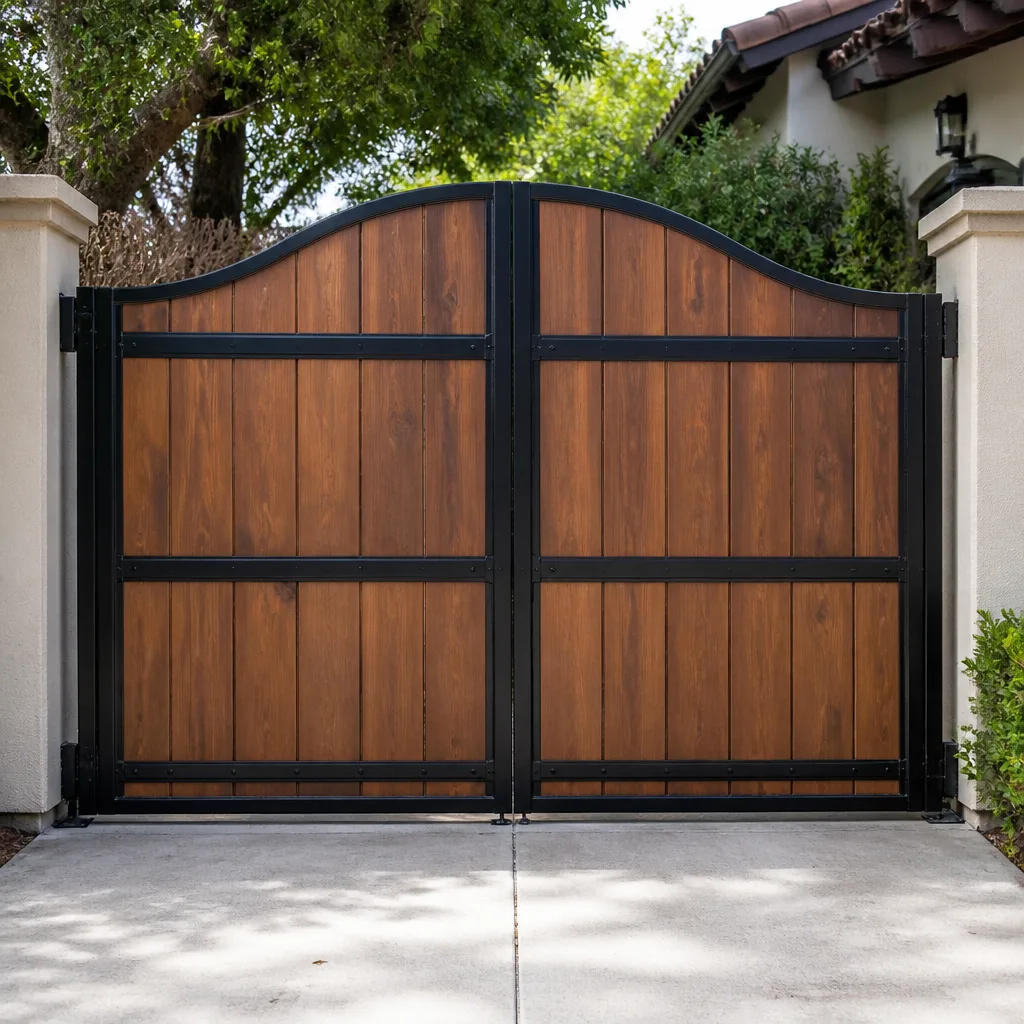 Wood & steel frame
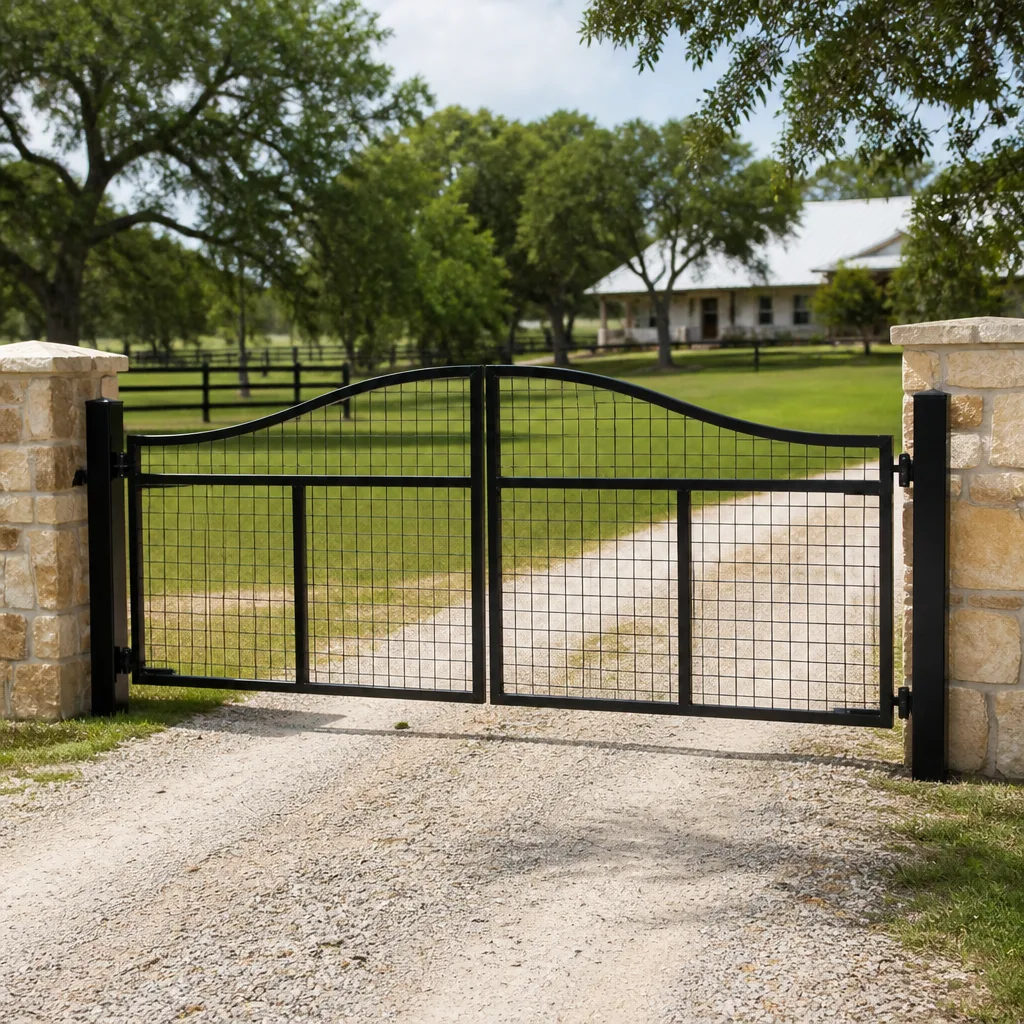 Farm & ranch
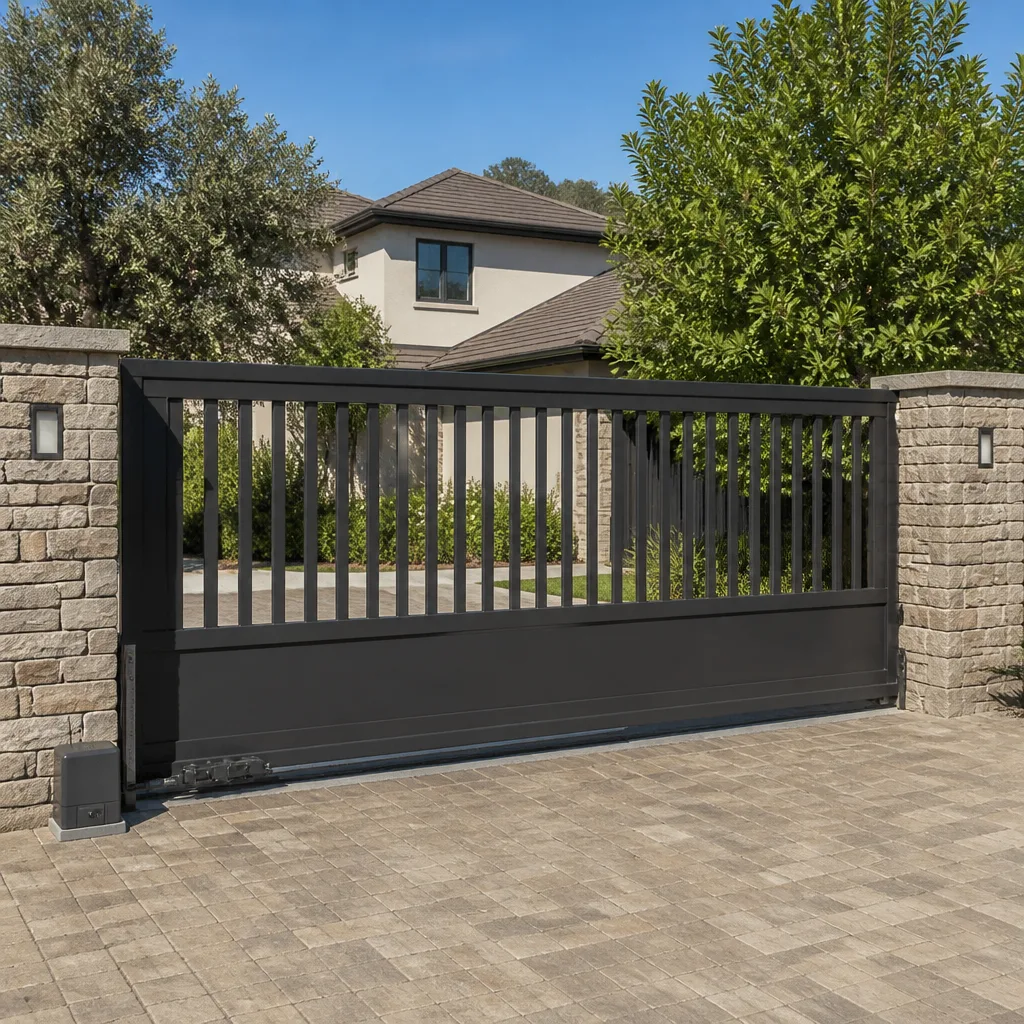 Sliding driveway gates
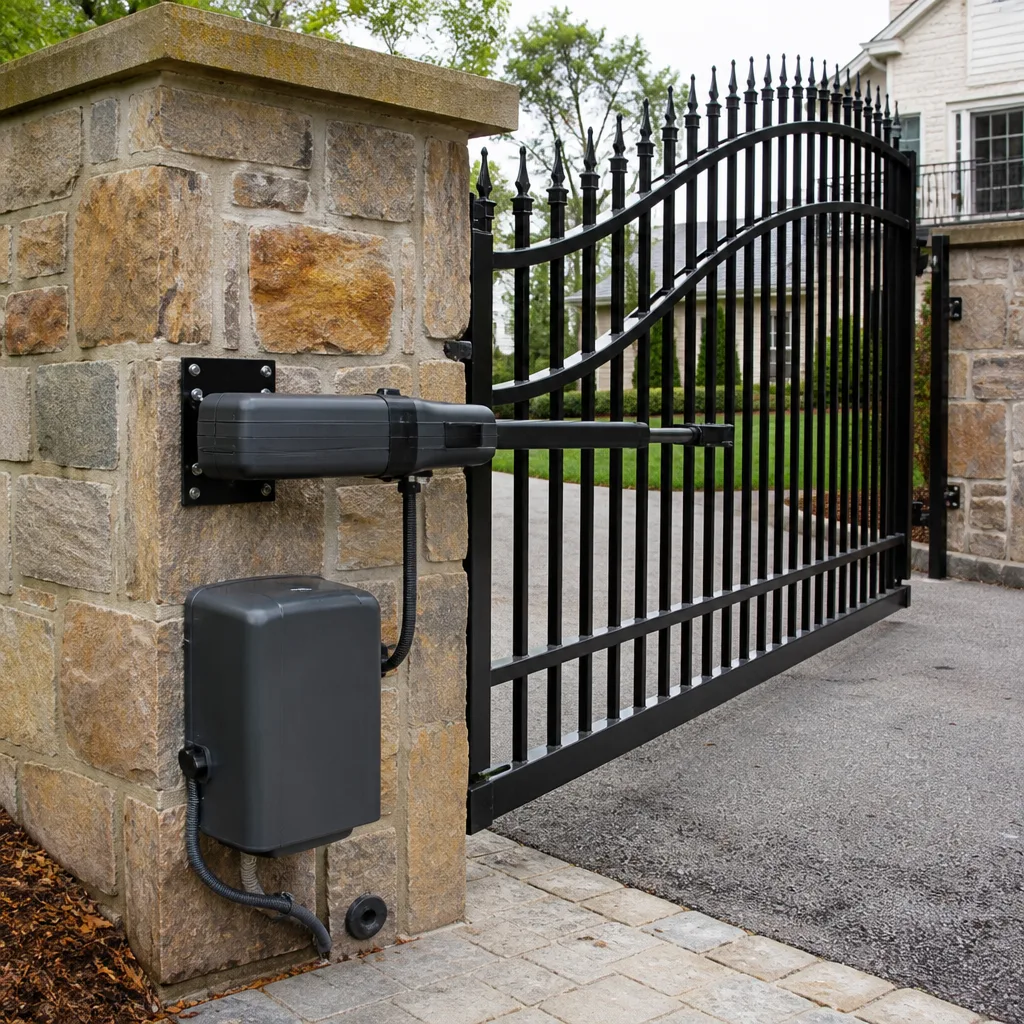 LiftMaster operators
Free on-site gate assessment - hinges, posts, and your LiftMaster or Nice gate operator checked before anything is quoted
The assessment is free and the quote is the invoice.
Get your free estimateGate Repair Maintenance Schedule: What to Do and When
Most gate maintenance advice you’ll read treats the calendar as an afterthought, as if every month carries the same risk. In Portland, that assumption costs people real money. The single most important month to service a gate here is October, and not because anything mechanical changes in autumn. It’s because of what the next six months of rain will do to a system nobody checked. Water finds every dry hinge pin, every cracked seal, every tired battery. By January, a gate that was “fine in September” is stuck half-open in a downpour. This guide gives you a real maintenance calendar built around Portland’s wet season, dry season, and storm windows, plus the lubricants, battery checks, and logging habits that actually hold up here.
Quick Answer
A working gate maintenance schedule in Portland follows the rain: tighten, lubricate, and test everything in late September and October before the wet season, check batteries and drainage through winter, then clean and inspect moving parts again in late spring as things dry out. Swing, slide, and overhead gates each need a different cadence, and electric operators need their own battery and control checks on top of the mechanical work. The short version: service the gate before the rain, not after it fails.
Styles & brands we work with
- Wrought iron
- Wood & steel frame
- Farm & ranch
- Sliding driveway gates
- LiftMaster operators
Table of Contents
- Why October Is the Most Important Month for a Portland Gate
- The Month-by-Month Portland Gate Maintenance Calendar
- Which Lubricants Fail in Pacific Northwest Humidity
- Battery Backup Maintenance for Winter Power Outages
- Swing vs. Slide vs. Overhead: How Maintenance Cadence Differs
- How to Log Gate Maintenance So It Actually Helps You
- Storm Windows and What to Do Before and After
- Common Mistakes to Avoid
Why October Is the Most Important Month for a Portland Gate
Portland’s rain doesn’t arrive gradually. The dry summer gives way to months of steady wet, and a gate that sat in warm, dry air all summer has had nothing tested. October is your last clean window to get ahead of it. Everything you do in that window protects the gate for the six months that follow.
Here’s what the wet season does to an unserviced system. Hinge pins that were dry in August rust in place by December. Track and roller assemblies collect grit that turns to a grinding paste once water mixes in. Control boxes and loop detectors, if their seals have cracked, take on moisture and start throwing phantom faults. None of this is dramatic on its own. Together, it’s how a gate goes from opening smoothly to stalling halfway through a wet morning.
The work itself isn’t exotic. In our experience, the gates that survive a Portland winter best are the ones where someone spent an afternoon in October on the basics:
- Every hinge, roller, and pivot cleaned and re-greased with a water-resistant product
- Every fastener checked for tightness before freeze-thaw and constant moisture work them loose
- Seals and gaskets on the operator and control enclosure inspected for cracks
- Drainage around the gate base checked so water runs away from the footing and track
- Battery backup load-tested, not just glanced at
- The full safety system (photo eyes, loop detectors, safety edges) tested end to end
If you only do maintenance once a year in Portland, do it in October. Everything else in this guide is built around that anchor point.
The Month-by-Month Portland Gate Maintenance Calendar
Generic seasonal checklists tell you to “inspect in spring and fall.” Portland’s weather is specific enough to deserve a specific calendar. This one is built around the local pattern: dry summers, wet winters, and storm windows that put real load on electric operators. It’s the same rhythm our technicians have up to 13 years of experience working with across the city, and it’s what we recommend to homeowners and property managers alike.
Late September to October (the pre-rain service): This is the big one. Clean and lubricate all moving parts with a water-resistant lubricant. Tighten hardware. Inspect operator and control-box seals. Load-test the battery. Test the full safety system. Clear drains and check the base for pooling.
November to February (the wet-season watch): Don’t wait for a failure; do quick visual checks after any significant storm. Look for standing water at the base, listen for new grinding or clicking on each cycle, and confirm the gate reverses correctly on obstruction. Re-check battery voltage monthly during the coldest stretch, since cold shortens battery output and winter storms are when you’ll actually need the backup.
March to April (the post-wet cleanup): As the rain eases, clean out the grit and debris the wet season pushed into tracks and rollers. Re-lubricate anything that washed dry. Inspect for rust on hinge pins, fasteners, and the frame. This is the moment to catch winter wear before it becomes summer trouble.
May to August (the dry-season tune): Heat and dry dust are the summer issues. Check for dried-out lubricant, dusty tracks, and sun-cracked seals. Reconfirm the safety system still reverses on contact. This is also a good time for a full mechanical inspection so any part that’s aging gets flagged before October.
A property with an electric operator on a busy access point will want tighter intervals than a single residential swing gate. The calendar is the frame; your gate’s traffic and age set the frequency.
Which Lubricants Fail in Pacific Northwest Humidity
The wrong lubricant is worse than none in a wet climate, because it attracts grit and traps moisture instead of keeping it out. Light household oils and thin spray lubricants evaporate or wash away within weeks of steady rain. Once they’re gone, hinge pins and rollers run dry and start to seize. That’s a common failure we see on Portland gates every wet season.
What you want on hinges, rollers, and pivot points is a water-resistant grease that stays put and doesn’t wash off. For rack-and-pinion drives on slide gates, the rack needs a product that clings to the teeth and resists water rather than a light oil that runs off. The general rule:
- Hinges and pivot points: a water-resistant lithium or synthetic grease applied to a clean pin, not over old grit
- Rollers and tracks: a dry-film or water-resistant lubricant that won’t collect dust in summer or trap water in winter
- Rack-and-pinion drives: a clinging grease made for exposed gears, reapplied at your pre-rain service and checked mid-winter
- Operator and control enclosures: no lubricant inside, but clean, intact seals so moisture never gets in
Whatever you use, clean the part first. Greasing over grit just grinds it deeper. Wipe the pin or track down, apply a thin even coat, and wipe off the excess so it doesn’t become a dust magnet. If your gate’s brand or operator calls for a specific product, follow that. Our team works on Linear, Viking, Ghost Controls, DoorKing, and other systems every week, and the right lubricant depends as much on the mechanism as on the climate.
Battery Backup Maintenance for Winter Power Outages
Winter storms knock out power in Portland, and a gate with a dead backup battery becomes a manual gate in the worst weather of the year. Battery backup isn’t a nice-to-have here; it’s what keeps your access control working during an outage. The mistake is treating the battery like a permanent fixture that needs no attention until it fails.
Batteries age quietly. They hold a charge less well each cold season, and when the grid drops, a weak battery shows itself immediately. Here’s how to keep backup power trustworthy:
- Load-test before the wet season. In your October service, put the operator on battery power and confirm it can actually move the gate, not just hold a charge.
- Check voltage on a regular schedule. During the wet months, check the battery voltage monthly. A drop from what it measured in the fall is your early warning.
- Keep the terminals clean and tight. Corrosion and loose connections mimic a failing battery.
- Replace on a schedule, not on failure. If a battery is past its expected life or repeatedly measures low, replace it before it strands you mid-outage.
- Confirm the charge circuit works. A backup battery only helps if the operator is actually recharging it between outages.
If your operator is a DoorKing or another access-control system tied to entry hardware, battery health matters even more, because the gate and the entry system may share the same backup. When backup power gets unreliable, that’s a job for a specialist, not something to sort out during a storm.
Swing vs. Slide vs. Overhead: How Maintenance Cadence Differs
Not all gates age the same way, so they shouldn’t share one maintenance schedule. The mechanism decides which parts wear first and how often you need to look.
Swing gates live and die by their hinges and the operator arm. Hinge pins take the load of every open and close, and in Portland’s wet season a dry pin seizes fast. Swing gates need their hinges lubricated at every service, the operator arm checked for alignment, and the frame inspected for the sag that comes with loosening hardware. Because they swing into wind, they also feel storm gusts more directly.
Slide gates ride on rollers along a track or rack-and-pinion, and the enemy is grit and debris. The track needs clearing more often than a swing gate’s hinges need greasing, especially through the wet months when water carries grit onto it. Rollers wear, the rack needs clinging grease, and a slide gate that comes off its track is a safety concern, not a minor annoyance. Sliders generally need more frequent track attention than swing gates need hinge work.
Overhead gates (lift or barrier style) carry their own set of wear points: the lifting mechanism, the guides, and the balance of the panel. They need their guides kept clear and their hardware checked for the loosening that constant up-and-down motion causes. The heavy panel makes safety testing essential every service.
A gate your household opens a few times a day can run on the annual rhythm in this guide. A gate on a busy shared driveway, a rental property, or a commercial access point should be checked at every seasonal marker. Match the cadence to the load.
How to Log Gate Maintenance So It Actually Helps You
A maintenance log pays off twice: it makes the next repair faster to diagnose, and it’s your documentation if a part fails early and you want to make a warranty claim. The trick is keeping it simple enough that you’ll actually fill it in.
For each service or notable event, record:
- The date and who did the work (you or a technician)
- What was checked or done – lubricant type, parts tightened, safety system tested, battery voltage reading
- Any symptoms you noticed – a new noise, a slow spot, a gate that reversed oddly once
- Battery and safety readings so you can see trends instead of guessing
- Photos of parts before and after, and of any wear you’re unsure about
Why this matters for diagnosis: when a gate starts acting up, a technician who can see the full history skips the guesswork. A recorded voltage drop last month, a noted grinding, a recent lubricant change, all point straight at the likely cause. That shortens the visit and the conversation. Why it matters for warranty: if a motor or control board fails sooner than it should, dated records of proper maintenance back up your claim. Without them, it’s your word against the calendar.
Keep the log with the operator’s manual, and note the brand and model of your system. Our whole approach is built around working on the gate you actually have, from Linear and Viking to Ghost Controls and DoorKing, so a clear log helps any technician – ours or otherwise – get to the real problem faster.
Storm Windows and What to Do Before and After
Portland’s winter storm windows put real stress on an electric gate: wind load on swing panels, water on control boxes, and power that may drop without warning. A little prep around each storm pays off.
Before a forecast storm:
- Confirm the battery backup is charged and load-tested
- Clear the gate’s path of debris so it can open and close fully
- Check that control-box and operator seals are intact
- Test the safety reversal so you know it’s working before conditions worsen
After a storm, do a quick walk-around: look for standing water at the base, re-check that the gate moves smoothly and reverses on obstruction, and listen for any new noise on the first few cycles. If something sounds different after a wet, windy stretch, that’s worth a look before it turns into a stuck gate. When a control board or loop detector starts misbehaving after weather, that’s the kind of electric-system problem most general contractors decline. Diagnosing and restoring it is a named core service for us. If you’d rather not troubleshoot it yourself, our electric gate repair team handles the electronics so the gate gets back online.
Common Mistakes to Avoid
- Waiting until spring. The instinct to “service it when the weather’s nice” is backwards in Portland. October, before the rain, is when the work counts; by spring you’re repairing damage, not preventing it.
- Using light oils on hinges and rollers. Thin lubricants wash away in a wet season and leave parts dry and seizing. Use water-resistant grease and clean the part before you apply it.
- Ignoring the battery until the power goes out. A backup battery that isn’t load-tested is a guess. Check it in October and watch the voltage through the wet months so an outage doesn’t catch you with a dead gate.
- Treating all gates the same. A slide gate’s track needs more frequent attention than a swing gate’s hinges, and an overhead gate has its own wear points. Use the cadence that matches the mechanism.
- Letting debris build up in tracks and around the base. Grit and standing water are the quiet causes of a lot of stuck gates in this city. Clear the path and the drains regularly.
- Keeping no maintenance records. Without a log, diagnosing a fault takes longer and a warranty claim is harder to support. A few dated lines and a photo go a long way.
- Testing the safety system once and assuming it’s fine. Photo eyes, loops, and safety edges need checking at every service, especially after storms. A safety failure on a heavy gate is something to catch early.
When to Call a Professional
Some tasks on this calendar are fine to do yourself: clearing debris, wiping down a track, noting a symptom in your log. Others are best left to a trained technician, and some are genuinely unsafe to attempt. Stop and call a professional when:
- A gate won’t reverse on obstruction, or the safety edges and photo eyes keep faulting
- The operator or control board throws repeated errors, especially after wet weather
- A slide gate has come off its track or a heavy panel is misbehaving
- You smell burning, see damaged wiring, or the operator trips a breaker
- The battery backup won’t hold a charge after testing
- You’re dealing with wiring, power, or moving a heavy panel – a gate’s dangerous parts are its operator’s power, its heavy panels, and a slide gate off its track
Electrical work and heavy panels are not DIY territory. gate repair is what we do, and Gate Repair Portland offers free estimates in Portland. Call (855) 473-7281. We answer 24/7. Fast dispatch from 7am to 7pm, Sunday through Friday.
See the difference
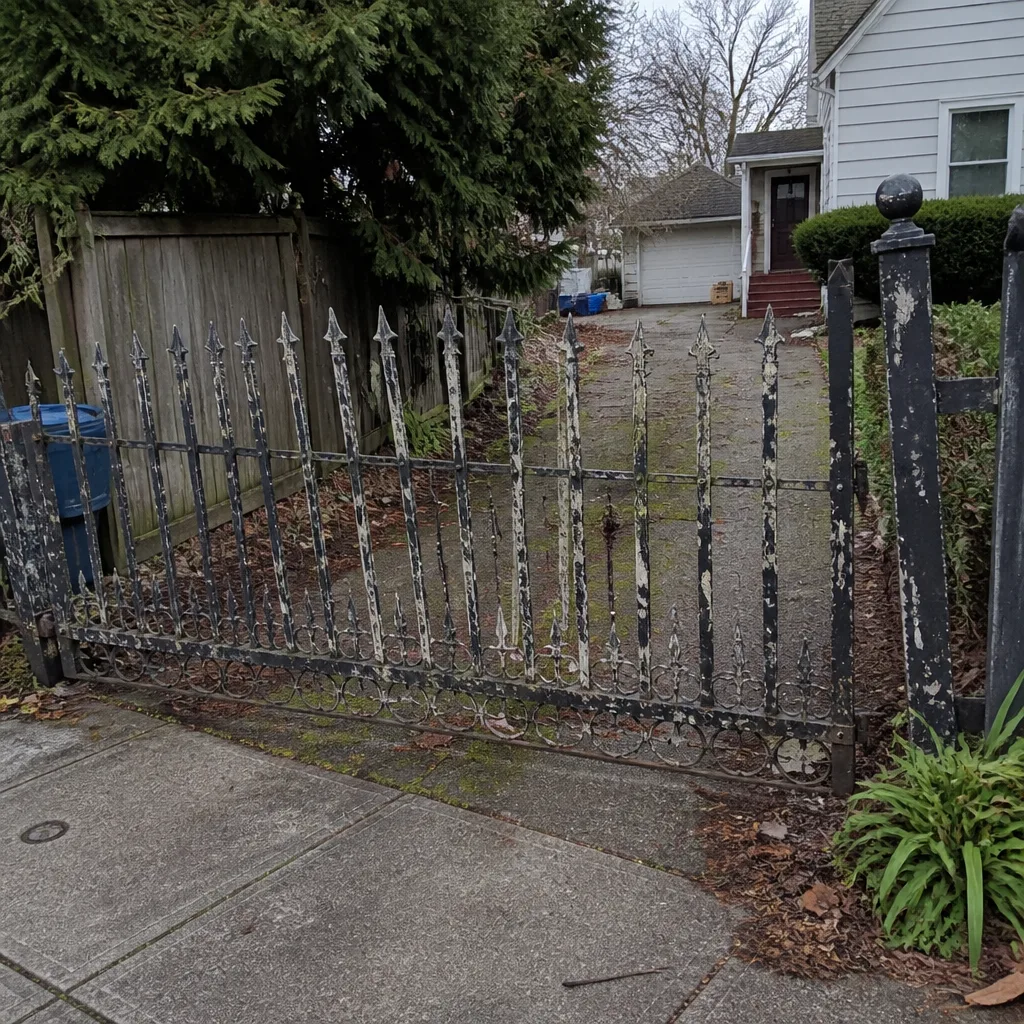 Before
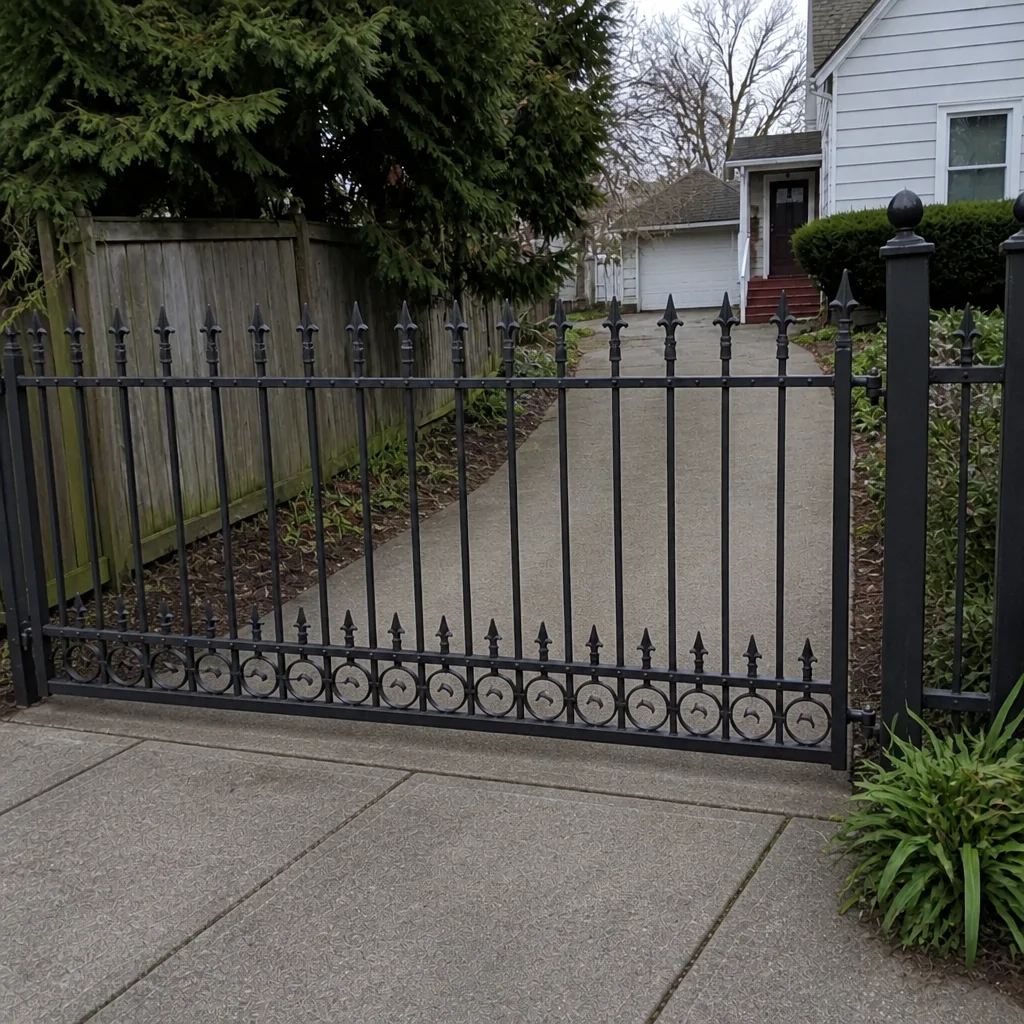 After
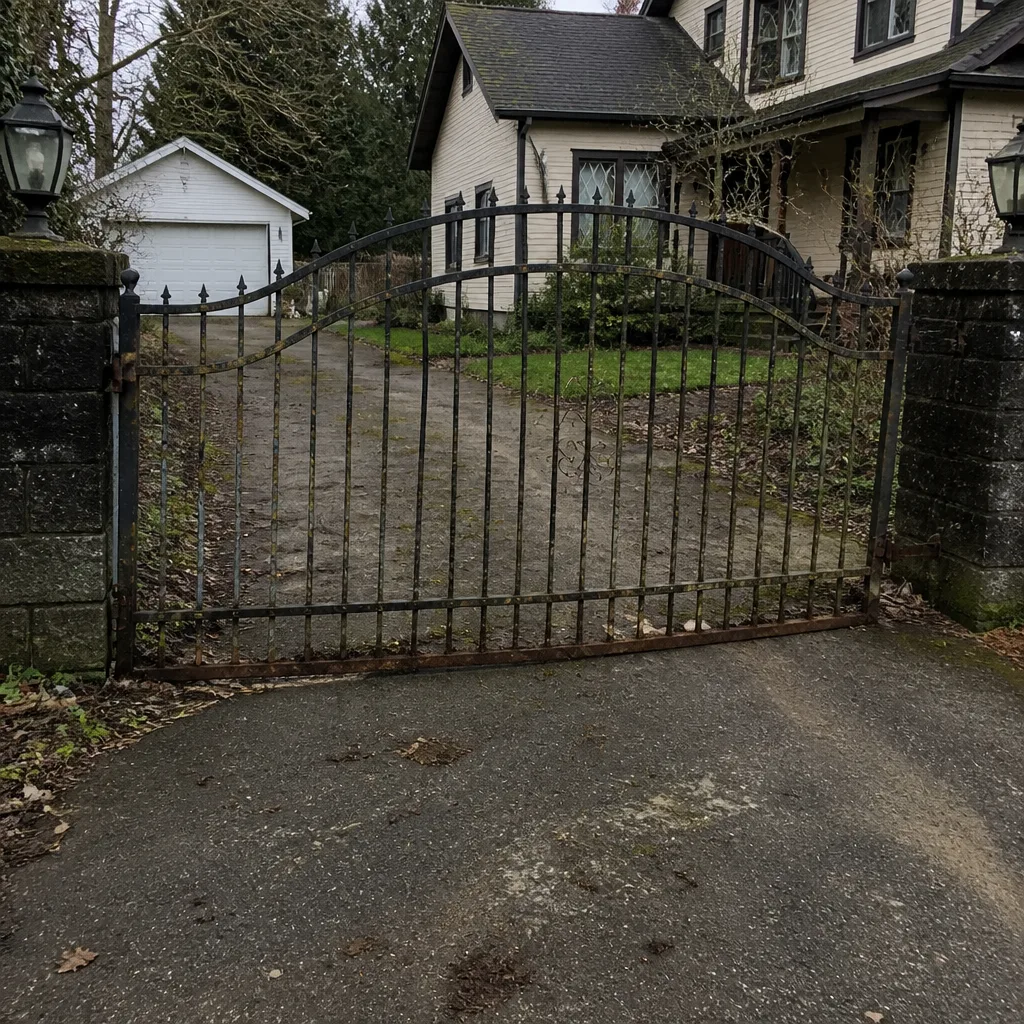 Before
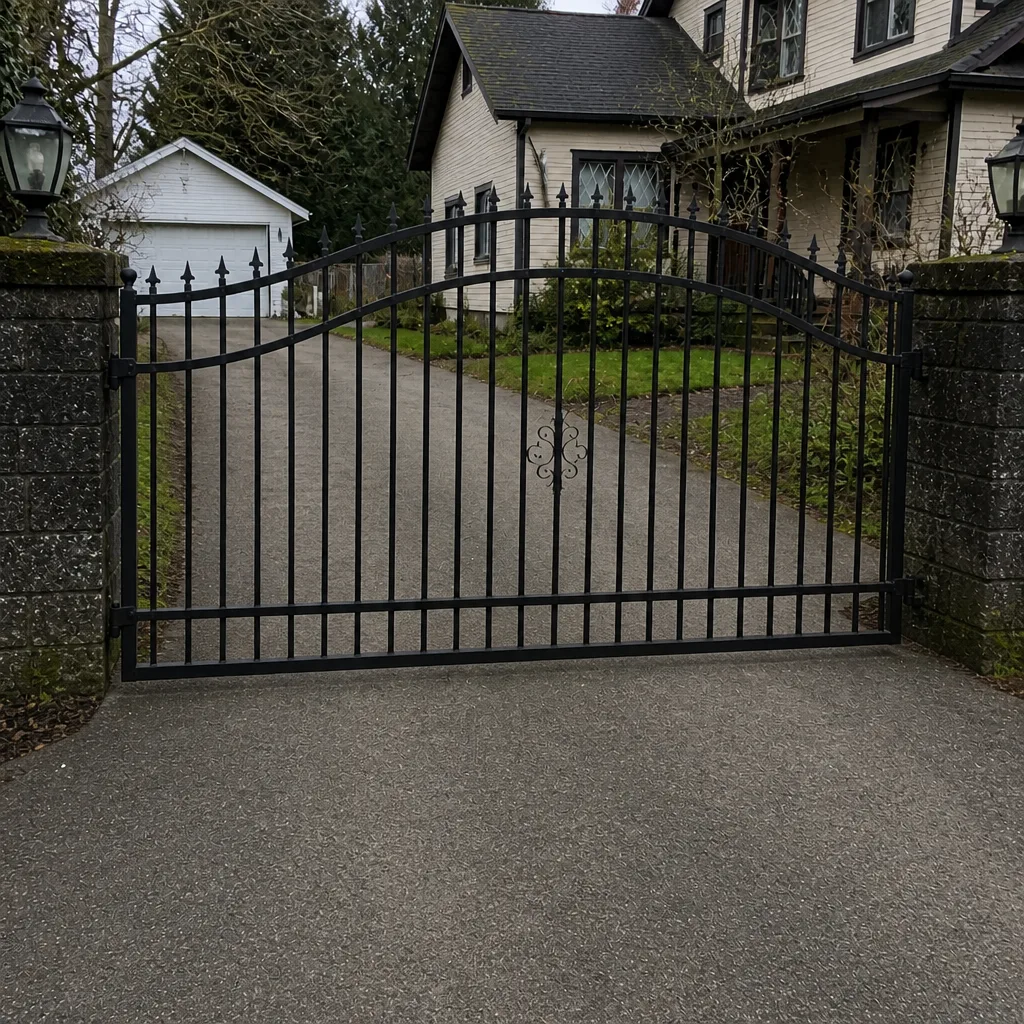 After
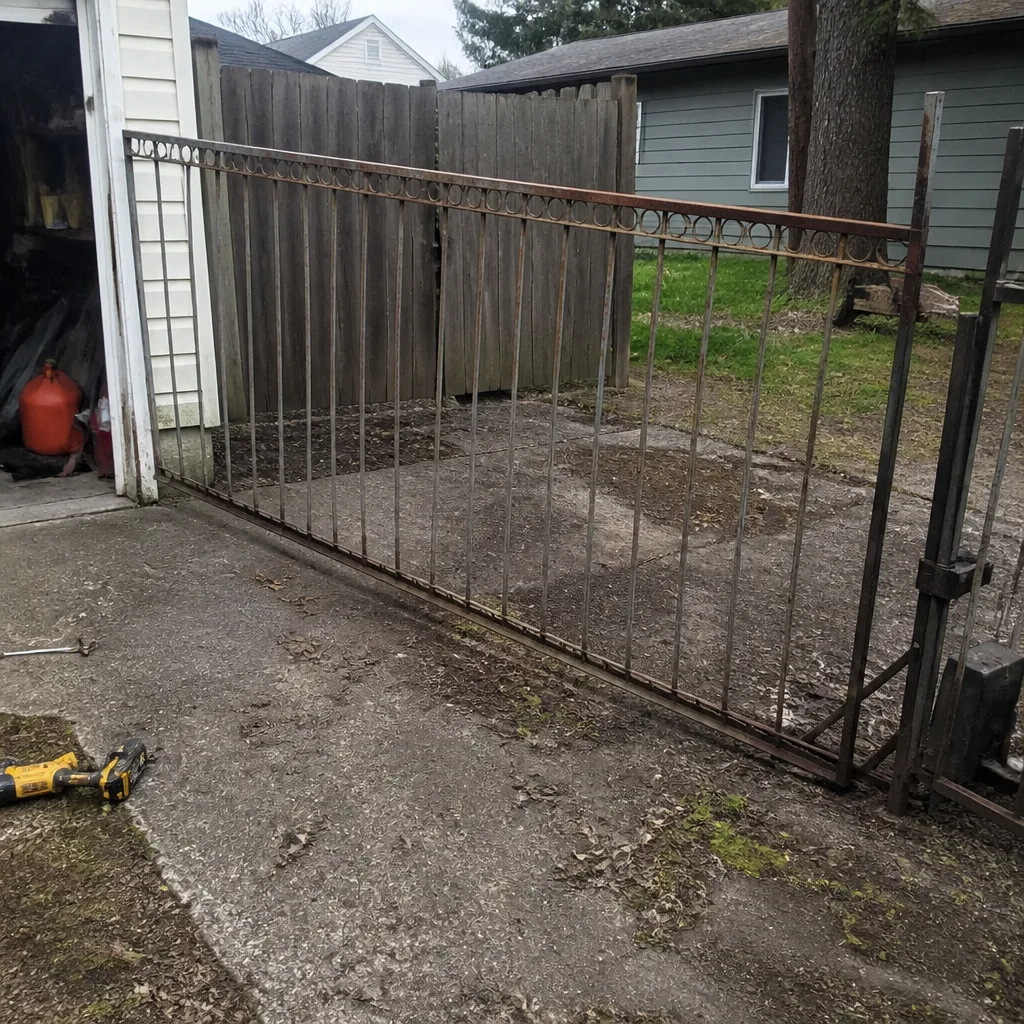 Before
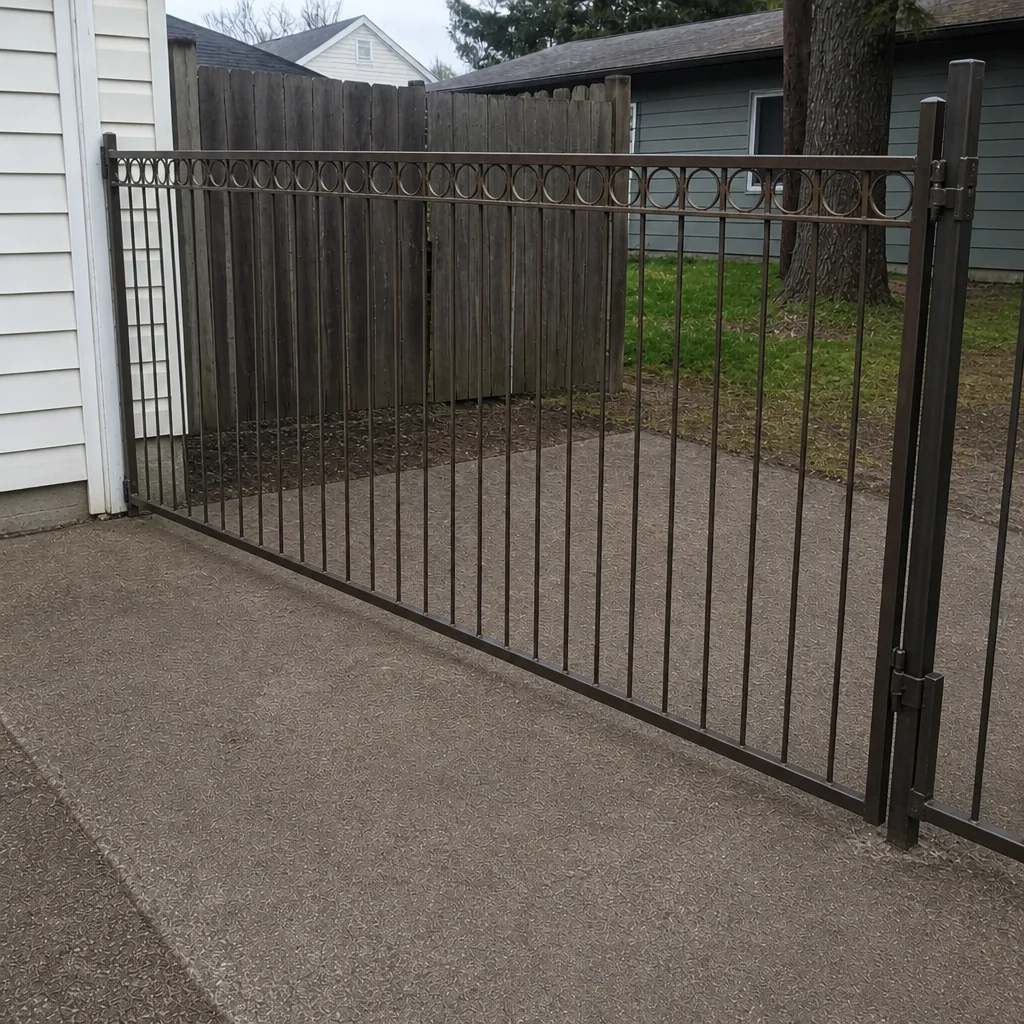 After
Frequently Asked Questions
Once a year at minimum, and the most important service is in October before the wet season. A gate your household opens a few times a day can usually run on the annual rhythm plus quick storm checks, but a busy shared driveway, a rental property, or a commercial gate should be checked at every seasonal marker, so two to four times a year depending on traffic.
October is your last clean window before six months of wet weather test everything on the gate. Servicing then cleans and lubricates moving parts, tightens hardware, checks seals, and load-tests the battery before the rain, so winter finds the gate protected instead of exposed. Service it after the damage starts and you’re repairing, not preventing.
A water-resistant grease holds up where light oils fail, because thin lubricants wash away in steady rain and leave parts dry. Use water-resistant grease on hinges and pivots, a dry-film or water-resistant product on rollers and tracks, and a clinging grease on rack-and-pinion drives. Always clean the part before you apply anything. For an exact quote on a service visit, call (855) 473-7281; estimates are free.
Each wears differently, so each needs its own focus. Swing gates depend most on hinges and the operator arm, slide gates need their track and rack kept clear and greased more frequently, and overhead gates need their guides and panel hardware checked with a safety test at every service. The calendar is shared; the emphasis is not.
Winter storms cause power outages, and a weak backup battery turns an electric gate into a manual one exactly when you need it most. Load-test the battery in October and check its voltage monthly through the wet season, replace it before it fails rather than after, and confirm the operator is actually recharging it between outages.
Yes, and keep it simple. Dated notes on what was checked, battery and safety readings, any new symptoms, and a few photos make the next repair faster to diagnose and support a warranty claim if a part fails early. Keep it with the operator’s manual and note your system’s brand and model so any technician can work from it.
The Bottom Line
A good gate maintenance schedule in Portland is built around the weather, not a generic checklist. Service the gate in October before the rain, watch the battery and drainage through winter, clean and re-lubricate once things dry out in spring, and tune again in summer. Match the cadence to whether you have a swing, slide, or overhead gate, use water-resistant lubricants that survive local humidity, and log what you do so the next repair is quicker and any warranty claim is easier to back up. Do that, and a Portland winter stops being the thing that breaks your gate.
Contact
If your gate needs a professional look, a full electric-system diagnostic, or a maintenance visit before the next rain, we’re gate specialists, not generalists. We work on the gate you have, from Linear and Viking to Ghost Controls, DoorKing, and the other major operator brands. Call (855) 473-7281 for a free estimate. We answer 24/7. Fast dispatch from 7am to 7pm, Sunday through Friday. You can also start at Gate Repair Portland to see what we do, or look us up in Portland to plan your next service.
Written by the team at Gate Repair Portland.