
Last updated November 15, 2026
 Wrought iron
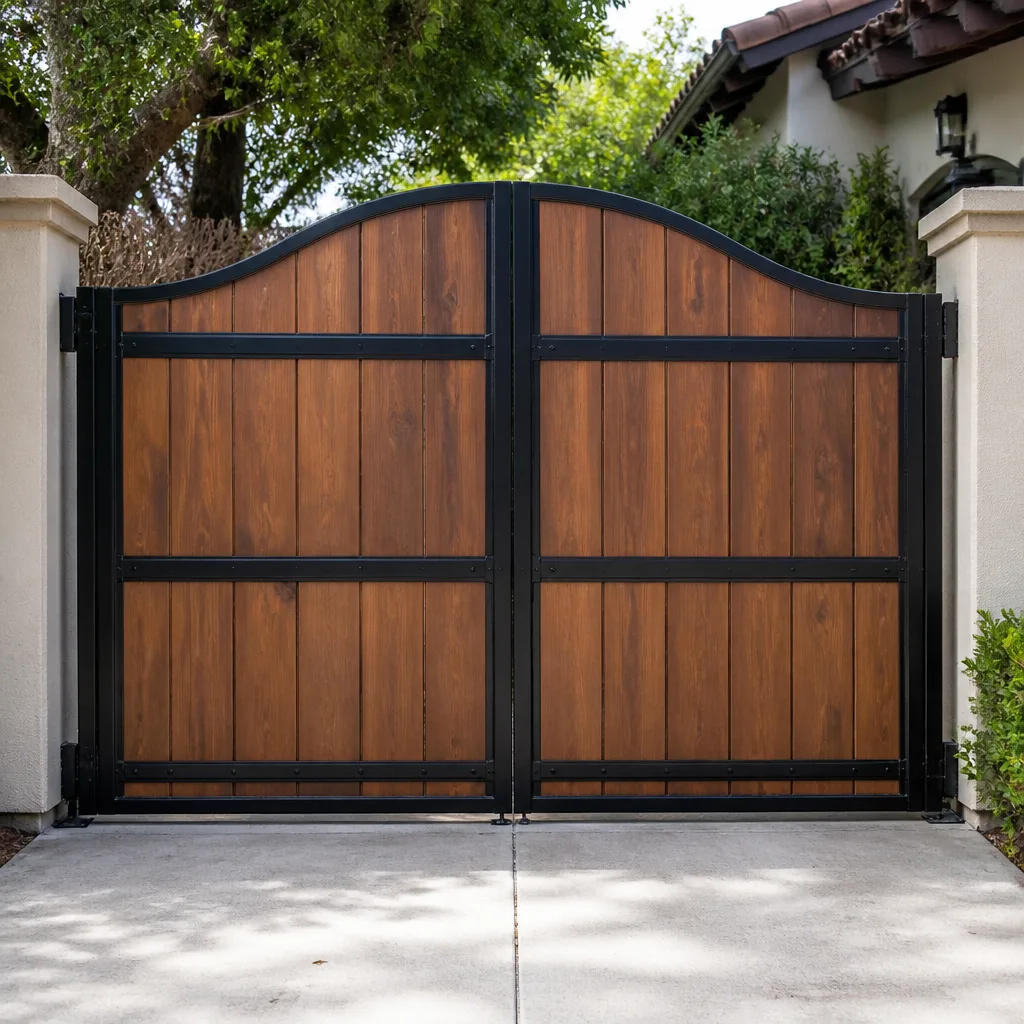 Wood & steel frame
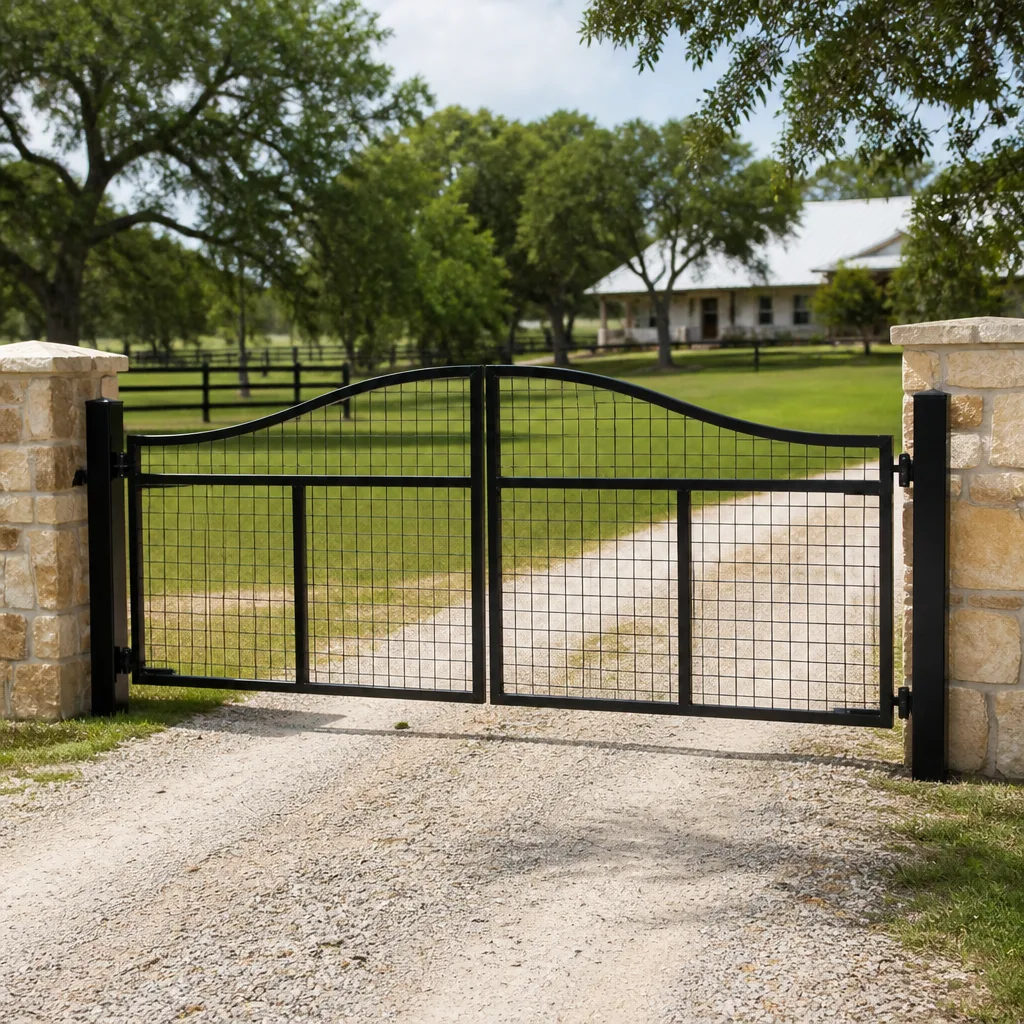 Farm & ranch
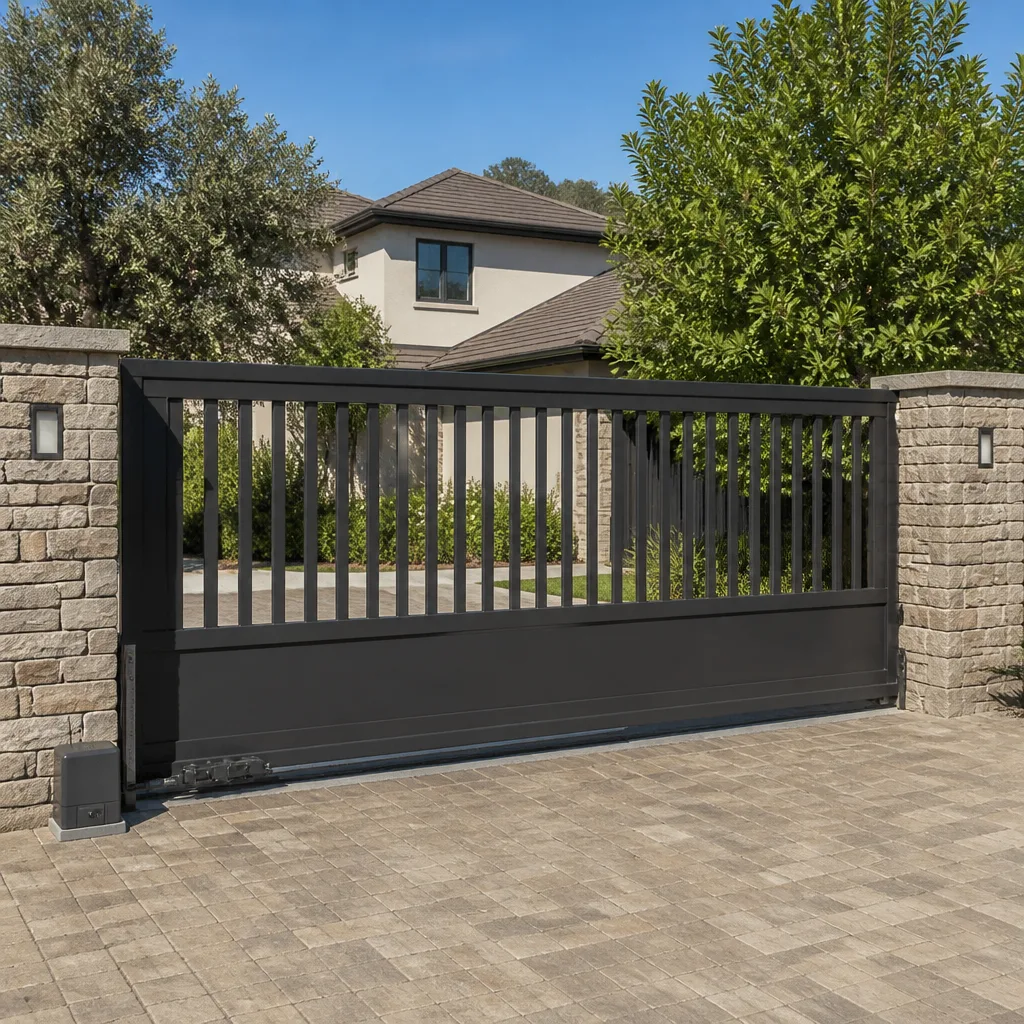 Sliding driveway gates
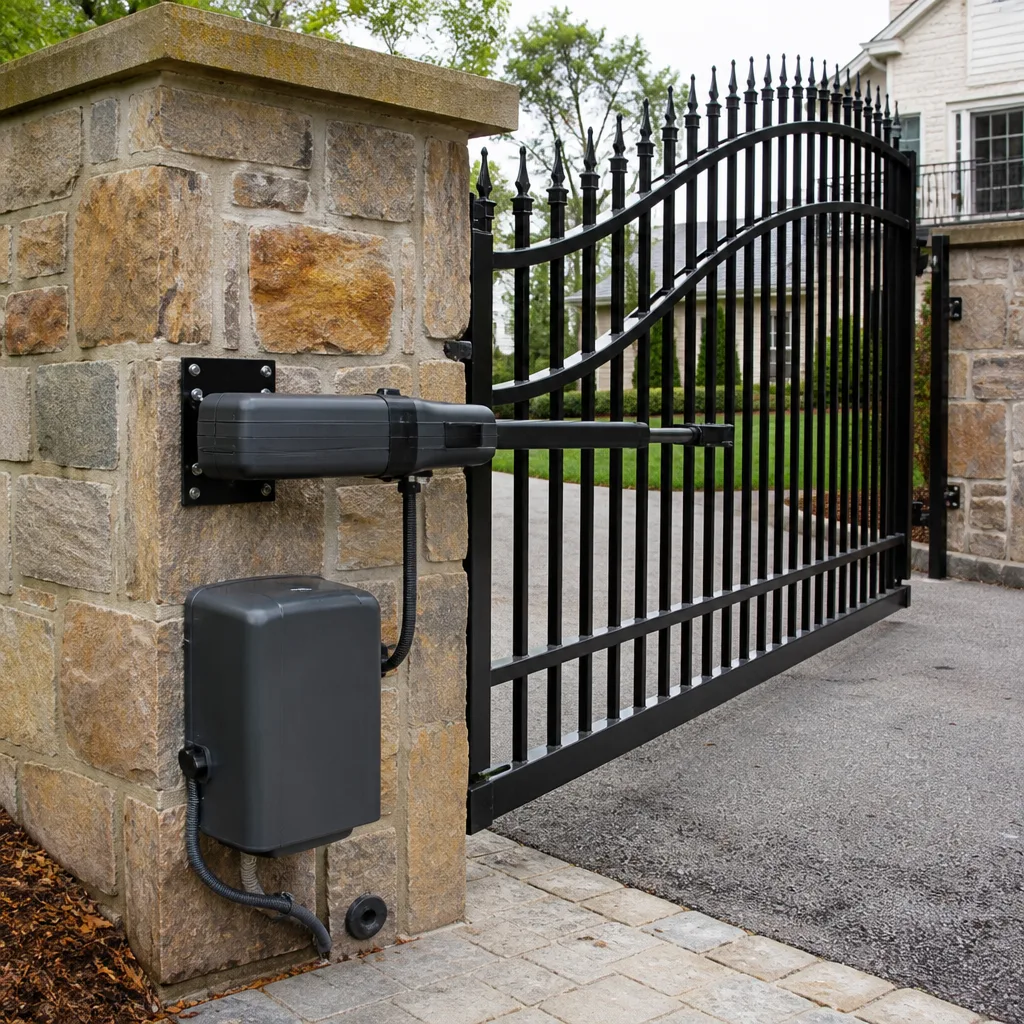 LiftMaster operators
Free on-site gate assessment - hinges, posts, and your LiftMaster or Nice gate operator checked before anything is quoted
The assessment is free and the quote is the invoice.
Get your free estimateGate Repair Emergency Preparedness Guide for Portland Homes
Most gate failures we get called about aren’t really gate problems. They’re readiness problems. The motor is fine, the control board is fine, but nobody knows where the manual release is, nobody tested it, and suddenly a driveway gate is the only thing standing between a household and the street. What surprises people is that the fix is usually boring: a key on a hook, a battery that actually holds a charge, a phone number taped inside the control box. This guide covers how gate emergencies actually play out in Portland, what to sort out before the windstorm, and how to get a stuck gate moving again. Portland weather is a real testing ground for this stuff, and a few minutes of preparation goes a long way.
Quick Answer
Gate repair emergencies in Portland come down to three preparations: knowing how to open your gate manually when the power fails, having a battery backup sized for your gate’s weight and how often it cycles, and a written contact protocol so the right person can approve repairs when something fails outside normal hours. Most lock-outs we see would have been a non-event if the homeowner had tested the manual release once and known what to do with it. What follows walks through each piece, plus what to do in the first half hour if your gate is stuck open.
Styles & brands we work with
- Wrought iron
- Wood & steel frame
- Farm & ranch
- Sliding driveway gates
- LiftMaster operators
Table of Contents
- Finding and Using the Manual Release on Common Gate Operators
- Battery Backup: What “Backup” Actually Means in Cycles per Charge
- Power Outage Strategy for Portland Gate Owners
- The Emergency Contact Protocol Property Managers Should Set Up
- Gate Stuck Open: What to Do in the First 30 Minutes
- Freeze and Ice Prevention Before the Event
- Windstorm and Storm Damage Readiness
- When to Call a Gate Specialist Instead of Trying to Force It
Finding and Using the Manual Release on Common Gate Operators
Every automatic gate has a manual release. That’s the first thing to internalize. It’s a mechanical override built into the operator so a gate can be opened by hand when the motor can’t run, whether that’s a power cut, a dead battery, or a control board that’s given up. The catch is that the release looks different on every brand and every model, and most homeowners have never actually used theirs.
Broadly, you’ll find two styles:
- Key-operated release. Found on many LiftMaster and DoorKing residential operators. You insert a small key into a housing on the operator or a nearby post, turn it, and the gear disengages. The key is usually supplied at install and then, predictably, lost. If you don’t have it, that’s the first thing to sort out.
- Pull cord, lever, or manual key without a lock. Common on Mighty Mule, Ghost Controls, and many FAAC and BFT swing operators. You pull a cord or flip a lever to disconnect the drive from the gate arm or the track.
Slide gates often have a manual release on the operator plus a physical key to release a chain or clutch. Swing gates usually release an arm that lets the leaf move freely by hand. Either way, once released, you can move the gate by hand, carefully.
Here’s a starting checklist:
- Locate the operator housing. On most Portland homes it’s a box near the gate post or mounted on the gate itself for swing arms.
- Look for the keyhole, pull cord, or lever. Read the label on the housing if it’s still there.
- Find your manual release key or tool. If it’s missing, order a replacement before you need it.
- Do a test release on a calm day. Walk the gate open and closed by hand once.
- Re-engage the operator and confirm the gate arms back to normal operation.
That test run is the entire difference between a 10-minute inconvenience and a gate that’s dead for five days. If you don’t know how to release your specific system, that alone is worth a call to electric gate repair so a technician can show you in person.
Battery Backup: What “Backup” Actually Means in Cycles per Charge
Battery backup gets sold on the word “backup,” which tells a homeowner almost nothing useful. The number that matters is cycles per charge: how many open-and-close cycles your gate can do on battery alone before the battery is depleted. That depends on the battery, the operator, and how heavy your gate is.
Light aluminum gates on a DC-powered operator with a properly sized battery backup might run dozens of cycles on a charge. Heavy ornamental steel or full-clad wood gates run far fewer because the motor works harder every cycle. So when someone says their gate “has battery backup,” the honest answer is: for what duration, with what gate?
What to look at when you evaluate yours:
- Is the battery actually installed? Plenty of operators are sold as “battery backup compatible” with an empty compartment.
- How old is the battery? Lead-acid backup batteries degrade over time. A four-year-old battery may hold a fraction of its original capacity.
- Does the operator report battery health? Many LiftMaster, FAAC, and BFT control boards show a low-battery warning. If yours beeps or flashes, that’s a signal, not a quirk.
- What’s your gate weight? The heavier the leaf, the fewer cycles per charge. Match the battery to the gate, not just the operator.
During a Portland power outage, the length of the event matters as much as the battery. If you typically come and go two or three times an hour when you’re home, a small battery will be exhausted quickly. Sizing the right battery for your gate and your habits is a job a gate technician can do at the same visit as a repair.
Power Outage Strategy for Portland Gate Owners
Portland’s outages tend to come in clusters: a windstorm knocks a line down, or an ice event stresses the grid, and homes on the same circuit may be dark for hours or days. If your gate is the only vehicle access to your property, that means your access is gone too, unless you have a plan.
The plan has three parts:
- Know your manual release cold. Not “roughly know.” Actually know. Tested once, key located, motion walked through.
- Decide your security posture during the outage. If your gate is open by hand, is it still serving a security function? Consider a temporary chain or a move of valuables until the gate is operational.
- Know who to call and when. Your operator’s phone line may be answered at any hour, but a technician still has to be dispatched. We answer 24/7. Fast dispatch from 7am to 7pm, Sunday through Friday. Calls that come in during a big outage are handled in the order they arrive.
If you have multiple gates on the property (front entry plus a driveway gate, for example), decide which one needs manual access first. Front pedestrian gates are usually easier to release by hand and can be chained temporarily. Vehicle gates are heavier and often key-operated, so the key is the priority.
One practical Portland note: outages during winter are often accompanied by low temperatures, and a gate that’s partially opened may freeze into its current position. If you’ve released the gate manually, walk it to fully open or fully closed before the temperature drops.
The Emergency Contact Protocol Property Managers Should Set Up
The most expensive gate emergencies we see aren’t mechanical. They’re approval failures. A tenant is locked out, the property manager is at dinner, and nobody knows who’s allowed to authorize a repair call. Hours pass while the gate sits open, and the eventual fix is a bigger job than it needed to be.
Before anything fails, put one document together that answers these questions:
- Who has authority to approve an emergency gate repair? Name one primary and one backup. Both need the phone number of the repair company written down.
- What’s the price ceiling they can approve without escalation? A number in writing saves an hour of phone tag at 8pm.
- Who is the tenant contact, and who is the landlord contact? Make sure the person answering the phone knows the property.
- Where is the gate operator located, and where is the manual release key stored? In writing. Not “somewhere in the shed.”
- What does the gate control? Vehicle entry only, pedestrian entry, or both. Which gate is critical and which one can wait.
Then test it once. On a quiet afternoon, have the property manager run through the scenario: “If the gate fails right now, who am I calling, and what do I tell them?” If the answer requires a call to someone else first, the protocol isn’t ready.
This matters in Portland because so many properties sit behind gates and rental turnover means the person who signed the original install papers has probably moved on. Rebuild the protocol at every tenant change. The cost of doing this is zero. The cost of not doing it is a gate that’s open overnight while everyone negotiates who’s in charge.
Gate Stuck Open: What to Do in the First 30 Minutes
A gate stuck in the open position is a security exposure, not a mechanical inconvenience. If your automatic gate has decided to stay open and the operator isn’t responding, the first half hour is about managing the exposure while you wait for a technician or decide on next steps.
Do these things in roughly this order:
- Confirm the gate’s actual status. Is the operator powered? Is the release engaged by accident? Is a photo-eye or loop detector tripped? That last one causes more “stuck open” calls than motors do.
- Close the gate manually. Release the operator per the manual and walk the gate to the closed position. Chain or latch it there if the gate doesn’t have a mechanical stop that holds it closed.
- Illuminate the area. Whether it’s dusk or midday, a stuck gate is more secure with light on it. If you have exterior lighting over the gate, turn it on.
- Check the perimeter. If the gate is the only access to a backyard or side yard, walk the rest of the perimeter to confirm no other opening is exposed.
- Look at the operator for a display or status light. Note what it’s showing. Modern control boards on LiftMaster and BFT units often display a code that tells a technician exactly what’s wrong before they arrive.
- Call for service. Call (855) 473-7281. We answer 24/7. Fast dispatch from 7am to 7pm, Sunday through Friday.
Don’t try to force the gate closed with the motor still engaged. That’s how you strip gears, bend the arm, or damage the operator beyond what a repair would have cost. Trip the release first, then move it by hand, or leave it where it is and wait for a technician.
If the exposure is real and overnight, the safe move is to physically secure the opening with a temporary barrier. For many Portland homeowners that means parking a car across the driveway for the night.
Freeze and Ice Prevention Before the Event
Portland doesn’t see deep cold often, but when it does the consequences tend to be bigger than the forecast suggests. The gate mechanics that work fine at 40°F can seize at 25°F, especially if a bit of moisture has worked into the moving parts.
Pre-freeze, there’s one step that prevents most of the lock-up scenarios we hear about: make sure the gate is left fully closed or fully open, never parked in between, if a cold snap is coming. A gate left mid-travel can settle into ice at the edge of a sensor or actuator, and once it does, it won’t move until things thaw.
Beyond that, before a forecast cold event:
- Test the manual release. If the operator is unresponsive after a cold night, the release lets you get the gate open without waiting.
- Clear the track or the swing arc. Wet leaves and debris freeze into concrete. Any obstruction in a slide gate’s track becomes a physical stop.
- Check the photo-eye and loop detectors. Snow, frost, and wet leaves across a photo-eye reflect infrared and trip the safety, holding the gate open indefinitely. One pass with your shoe clears most of them.
- Confirm battery health. Cold saps battery capacity, and a compromised battery in the summer may not be able to muscle through a cold snap in December.
Ice events in Portland are often preceded by wind and rain followed by a drop below freezing, and the freeze happens fast. The pre-event step you take on a mild afternoon is worth far more than the emergency call you make at 11pm.
Windstorm and Storm Damage Readiness
Wind events hit gates hard because gates are big, flat, and mounted to panels that catch every gust. A gate that’s fine in a light breeze can swing violently in a gust or wrench its arm against the operator. Knowing the common failure points helps you decide what’s a nuisance and what’s a stop-the-presses issue.
What we get called about after wind:
- Operators that have lost position or need a limit reset. The gate swings hard, the operator’s limit trips, and suddenly the gate overshoots or stops short. This is a repair, not a replacement.
- Bent arms, twisted brackets, or a gate that has moved off its hinges. Mechanical damage that needs an on-site look before it’s operated again.
- Loops and detectors tripped. Conductive debris or a displaced loop will hold the gate open. Faulty loop detectors are one of the more common electric gate repair calls after a storm.
- Control boards that have taken water or a surge. If the gate comes halfway and stops repeatedly, the board may not be getting clean signals.
If the gate is still moving but behaves erratically, stop cycling it. Running a gate that’s fighting a mechanical problem (a bent arm, a jumped sprocket) usually turns a small fix into a bigger one. Call for repair, and if the gate is stuck open overnight, chain or barricade it as you would in any other exposure scenario.
After a windstorm in Portland, demand for gate repair spikes. If your gate is safe to leave until morning, it’s often worth calling the next day rather than chasing a technician during the same few hours everyone else is calling. We answer 24/7. Fast dispatch from 7am to 7pm, Sunday through Friday.
When to Call a Gate Specialist Instead of Trying to Force It
There are repairs a homeowner can handle safely, and there are repairs where trying to save the call makes things worse. Know which is which.
Call a technician immediately if:
- The gate is stuck open and you can’t release it manually. You’ve tried the key, the cord, the lever, and nothing moves the gate by hand. That means a mechanical issue inside the operator, not a control problem.
- You smell burning, see smoke, or hear a grinding or buzzing sound from the operator. Stop cycling and unplug the operator at the breaker if you can safely reach it. The control board or motor is in trouble.
- The gate has struck a person, a vehicle, or a pet. An operator that fails to stop on contact is a safety problem. Don’t operate it again until it’s inspected.
- The gate has physically moved off its track or hinges. Forcing a slide gate back onto its track without understanding the shoe or the operator’s drive mechanism usually causes more damage.
- The operator’s brand is unfamiliar and you’re not sure what the display is telling you. Every brand reports errors differently, and guessing costs money.
This is exactly the kind of thing a gate-exclusive specialist exists for. General handyman services, fencing companies, and garage door technicians run into electric gates and usually have to pass or improvise. We diagnose the system you actually have, whether it’s a LiftMaster, a FAAC, a Mighty Mule, or anything else. Call (855) 473-7281. We answer 24/7. Fast dispatch from 7am to 7pm, Sunday through Friday.
Common Mistakes to Avoid
- Assuming the gate came with a manual release you can find later. The key is separate from the operator, and if you never located it, you won’t locate it at midnight. Find it today and hang it somewhere near the gate.
- Forcing a stuck gate with the motor engaged. Every part inside the operator expects the motor to drive the gate. Hand-forcing it without releasing the operator strips gears and bends arms. Trip the release first, always.
- Trusting “battery backup” without checking cycles per charge. A small battery on a heavy gate is backup in name only. Measure what yours actually delivers so you know when it’s your turn to run out.
- Leaving a stuck-open gate open overnight because “it’s just not closing.” An open gate is an open perimeter. Chain it, barricade it, or park a car across it before dark.
- Not clearing the photo-eye or loop detector during a storm. A single wet leaf across a photo-eye will hold the gate open indefinitely. A quick sweep after a windstorm is a fix, not a repair.
- Letting a property’s contact list rot. Portland rental properties turn over. If the person with authority to approve a repair has moved on, the whole protocol is dead. Rebuild it at every change.
- Calling a general contractor for an unfamiliar operator brand. They’ll either turn it down or guess. Brand-agnostic diagnostics are what you want when the gate is stuck and the display is flashing.
See the difference
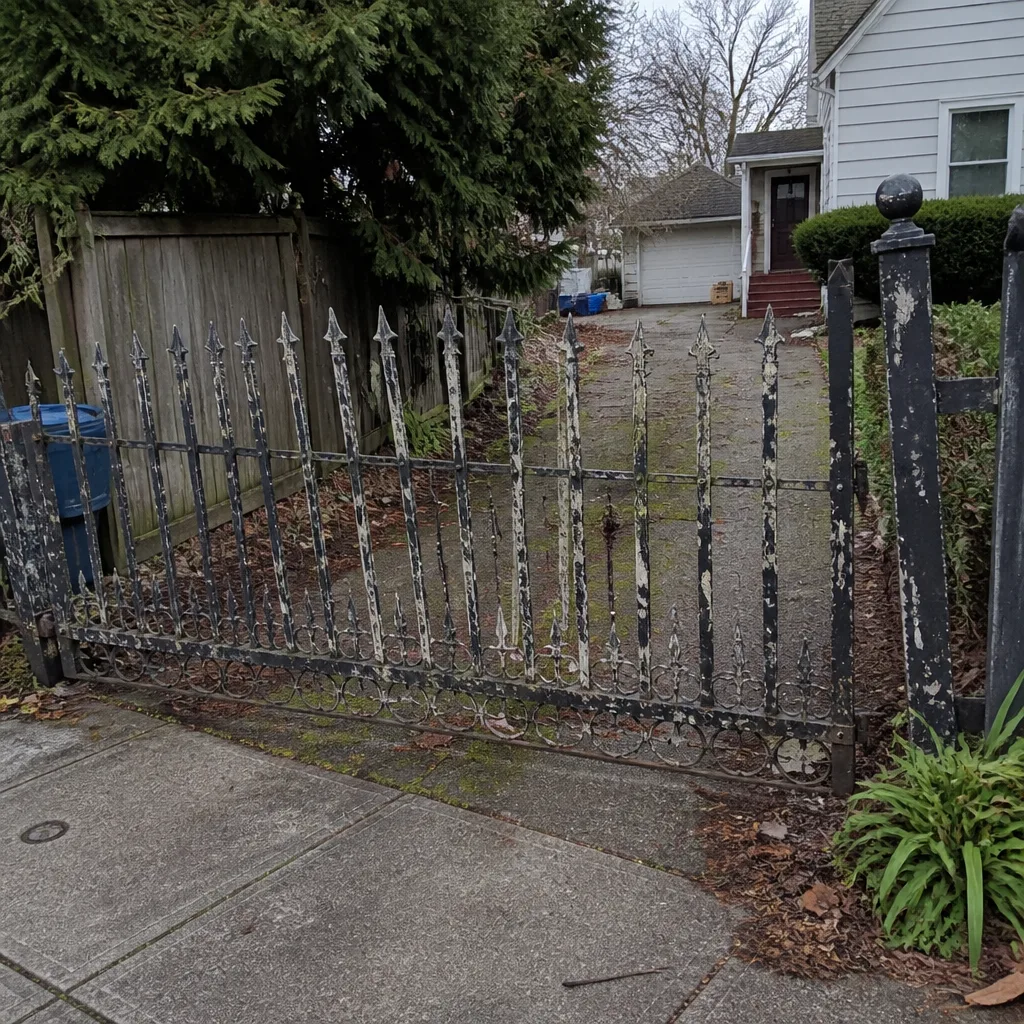 Before
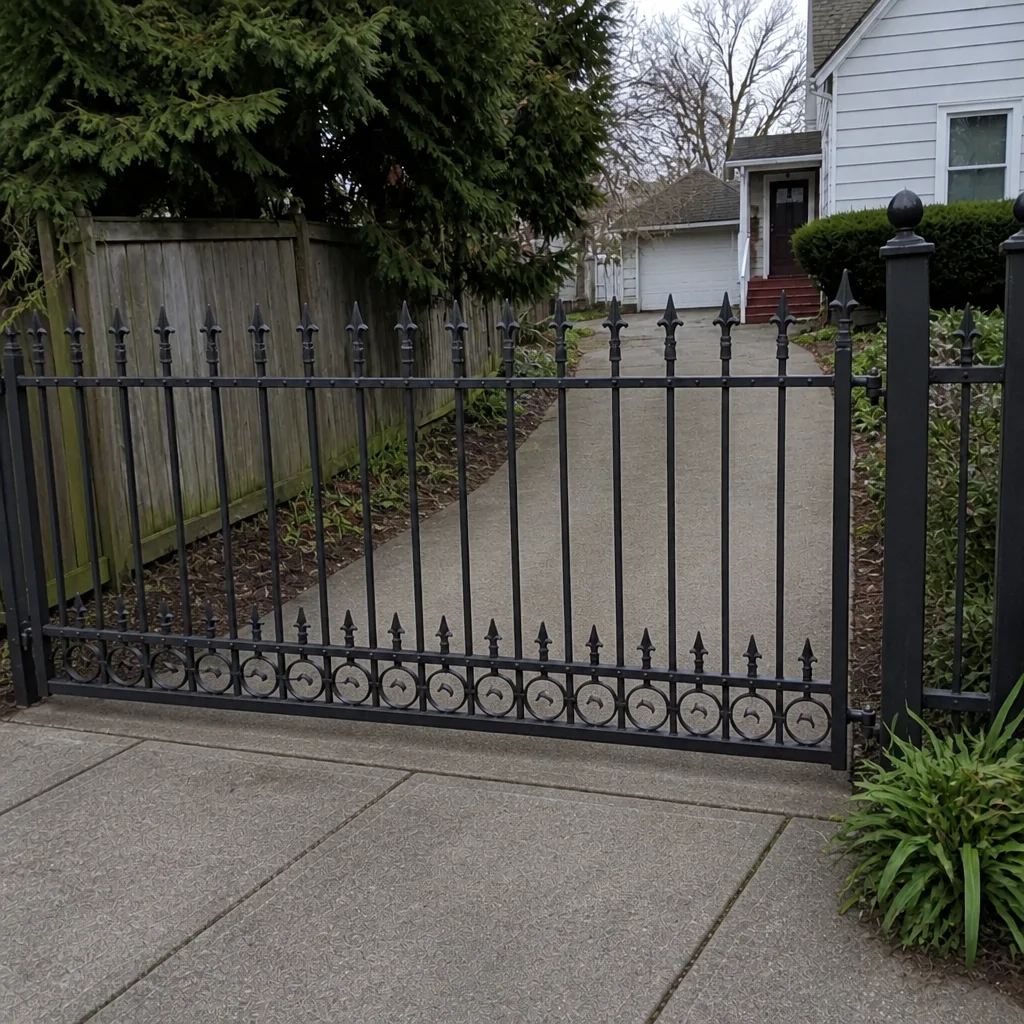 After
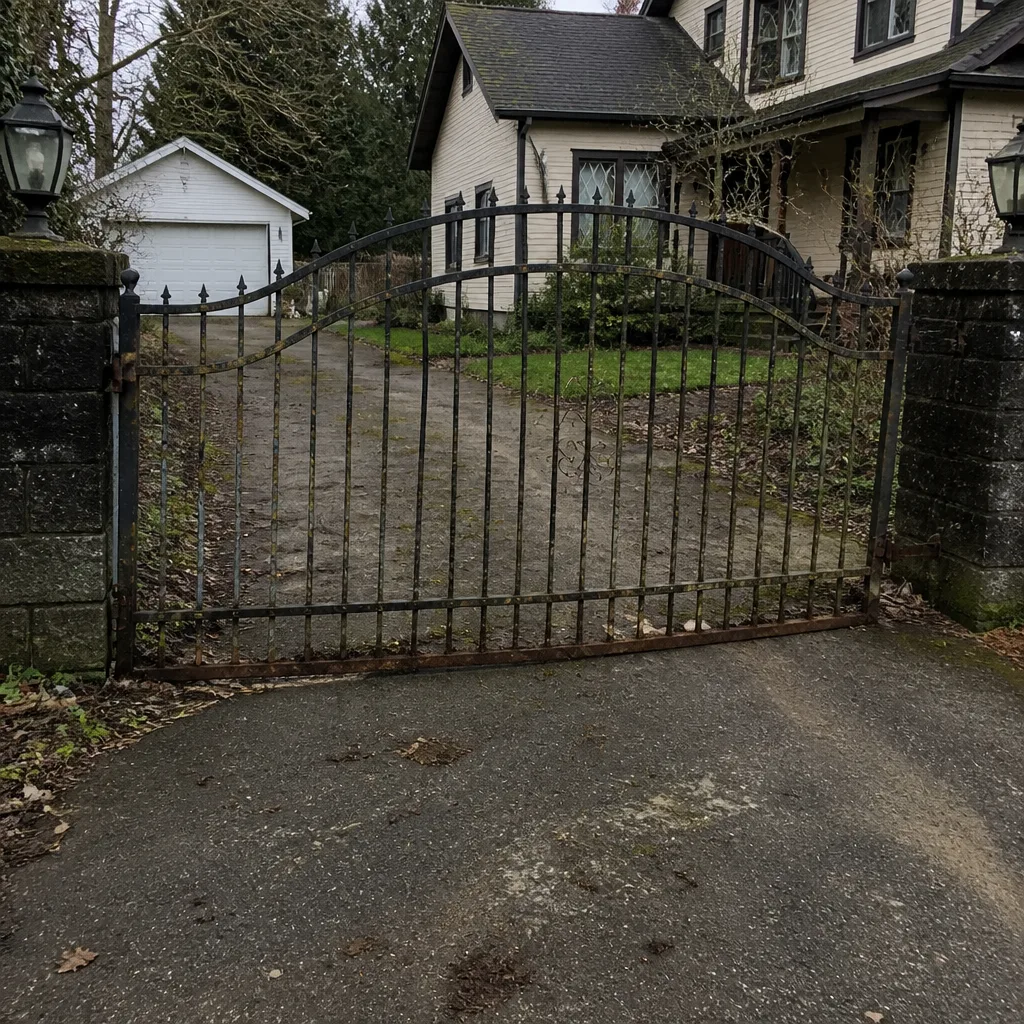 Before
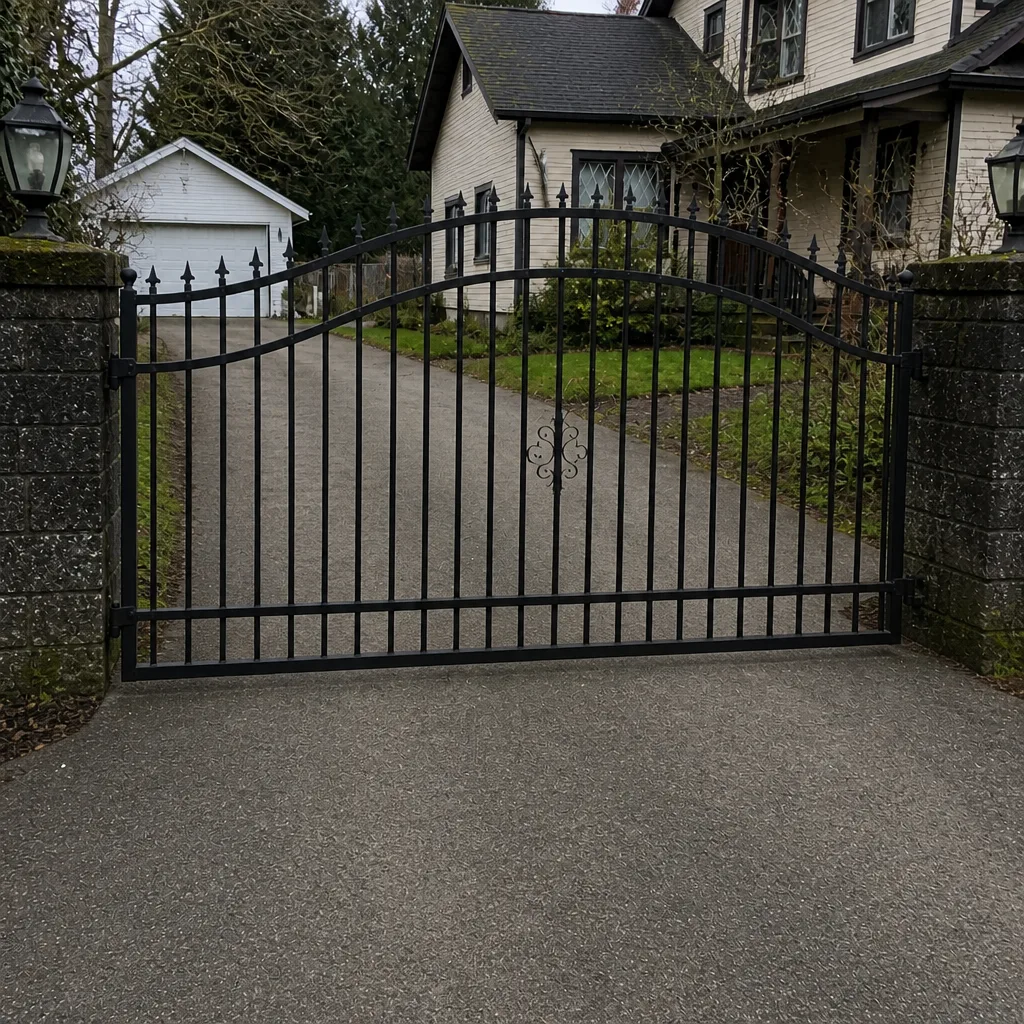 After
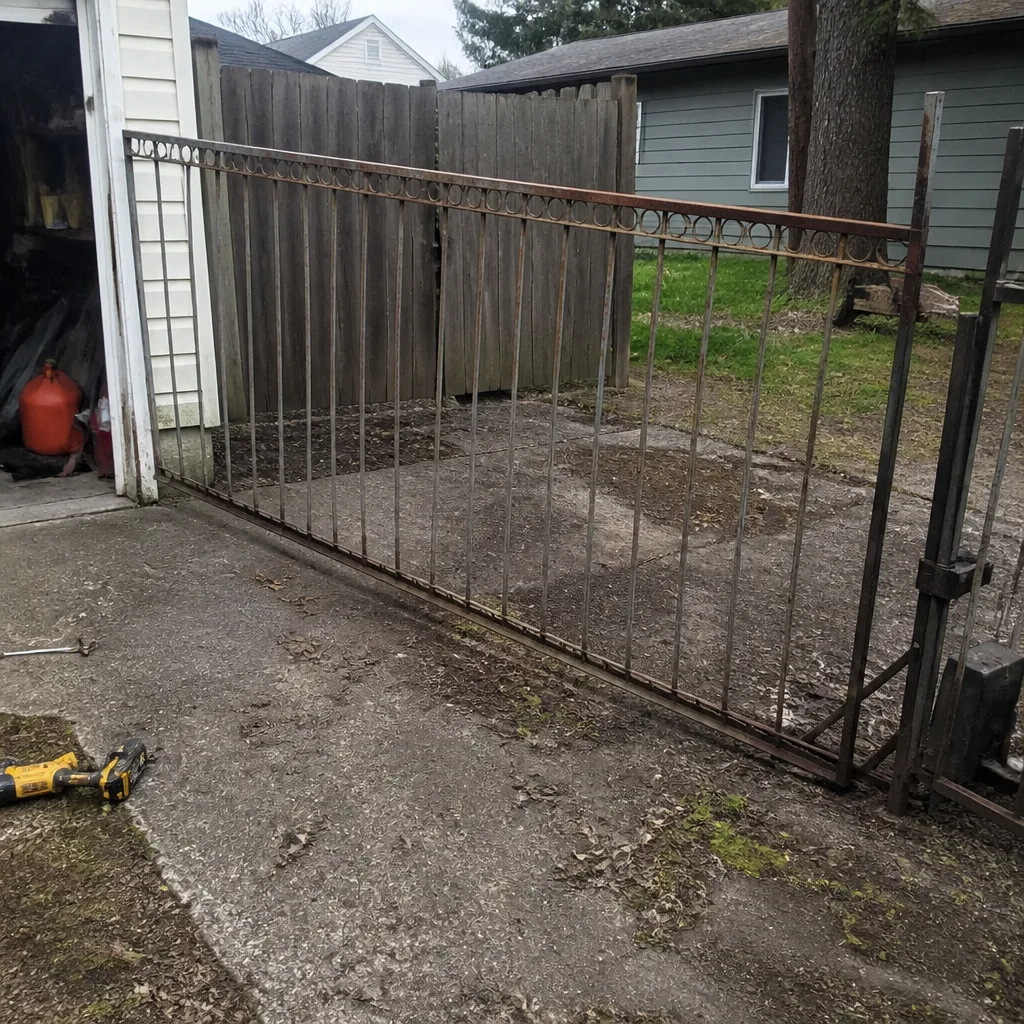 Before
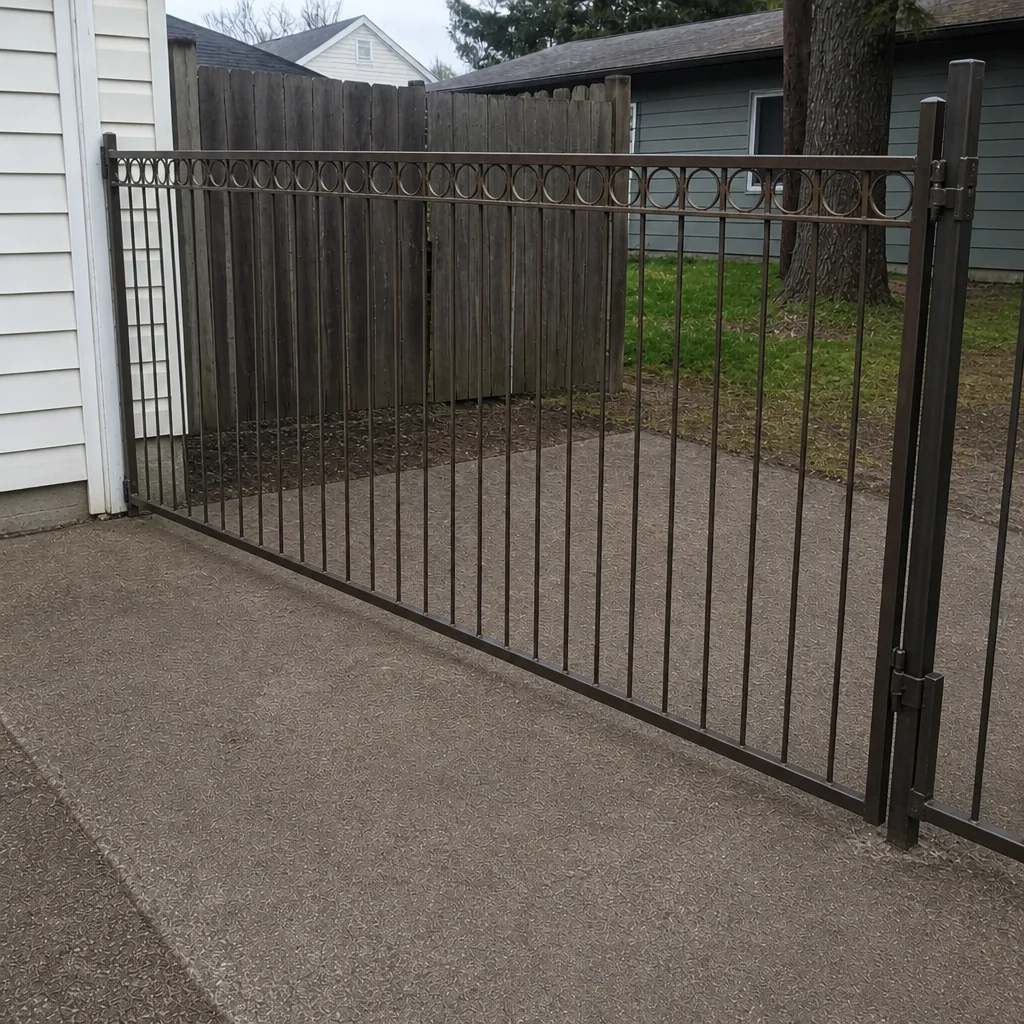 After
When to Call a Professional
Call a professional when the gate won’t release manually, when the operator is buzzing, grinding, or smoking, when the gate has moved off its track or hinges, when the display is showing an error you can’t identify, or when the gate is stuck open and the exposure is real. Also call when you’ve never tested your manual release and want someone to walk you through it once, so the next failure is a nuisance instead of an emergency. Gate Repair Portland works on the system you already have, not just one brand, and we offer free estimates. Call (855) 473-7281. We answer 24/7. Fast dispatch from 7am to 7pm, Sunday through Friday.
Frequently Asked Questions
Use the manual release built into your gate operator, which disengages the motor so the gate can be moved by hand. Most operators use either a key-operated release (common on LiftMaster and DoorKing) or a pull cord or lever (common on Mighty Mule, Ghost Controls, and many FAAC and BFT swing operators). Find the key or the cord before you need it, test the release on a calm day, and walk the gate open and closed by hand once. If you’re not sure which style you have, that’s a question for a technician.
It depends on your gate’s weight and how often it cycles, not on the battery alone. A light aluminum gate on a properly sized battery backup can manage many cycles on a charge; a heavy ornamental or wood gate runs far fewer because the motor works harder each time. Cold weather reduces battery capacity, which matters most during winter outages. Every operator is different, so check the actual capacity of your installed battery rather than assuming.
Release the operator manually and close the gate by hand, then chain or latch it in the closed position. Turn on any exterior lighting over the gate, walk the rest of the perimeter if the gate is a security barrier, and note any status display on the operator’s control board. Then call a technician. Call (855) 473-7281. We answer 24/7. Fast dispatch from 7am to 7pm, Sunday through Friday.
Whoever the property’s owner has put in writing. Before a failure happens, name one primary and one backup contact with authority to approve emergency work, write down a price ceiling they can approve without escalation, and record where the operator is and where the manual release key is stored. Rebuild that document every time the tenant turns over, because the person who signed the original install paperwork is usually gone by the second lease.
Photo-eye and loop detector trouble, usually by a wide margin. Wet leaves, debris, and displaced loops trip the safety signals that tell the operator something is in the path, and the gate stays open rather than risk closing on it. A quick visual check and sweep of the detector area answers the question most of the time. If the gate’s still misbehaving after that, the issue is further upstream.
We work on the gate you actually own. Our technicians are experienced with LiftMaster, FAAC, BFT, Linear, Viking, Ghost Controls, DoorKing, Elite, and Mighty Mule, along with other common operators, and they diagnose the system that’s installed rather than recommending a full swap because a brand is unfamiliar. That matters most when a gate fails and you need an answer rather than a sales pitch. Start with gate repair for the mechanical side or electric gate repair for the operator, controls, and detectors.
The Bottom Line
A Portland gate emergency is almost always a readiness problem in disguise. The manual release you’ve never tested, the battery backup that was never sized for your gate, the property contact list that’s two tenants out of date – these are what turn a five-day outage into five days of no access. Sort them out now and the next windstorm is a non-event. If it’s already failed, get a gate specialist rather than a generalist on it. You can read more about gate repair in Portland and our Portland service coverage. Call (855) 473-7281 for a free estimate. We answer 24/7. Fast dispatch from 7am to 7pm, Sunday through Friday.
Written by the team at Gate Repair Portland.