
Last updated November 15, 2026
 Wrought iron
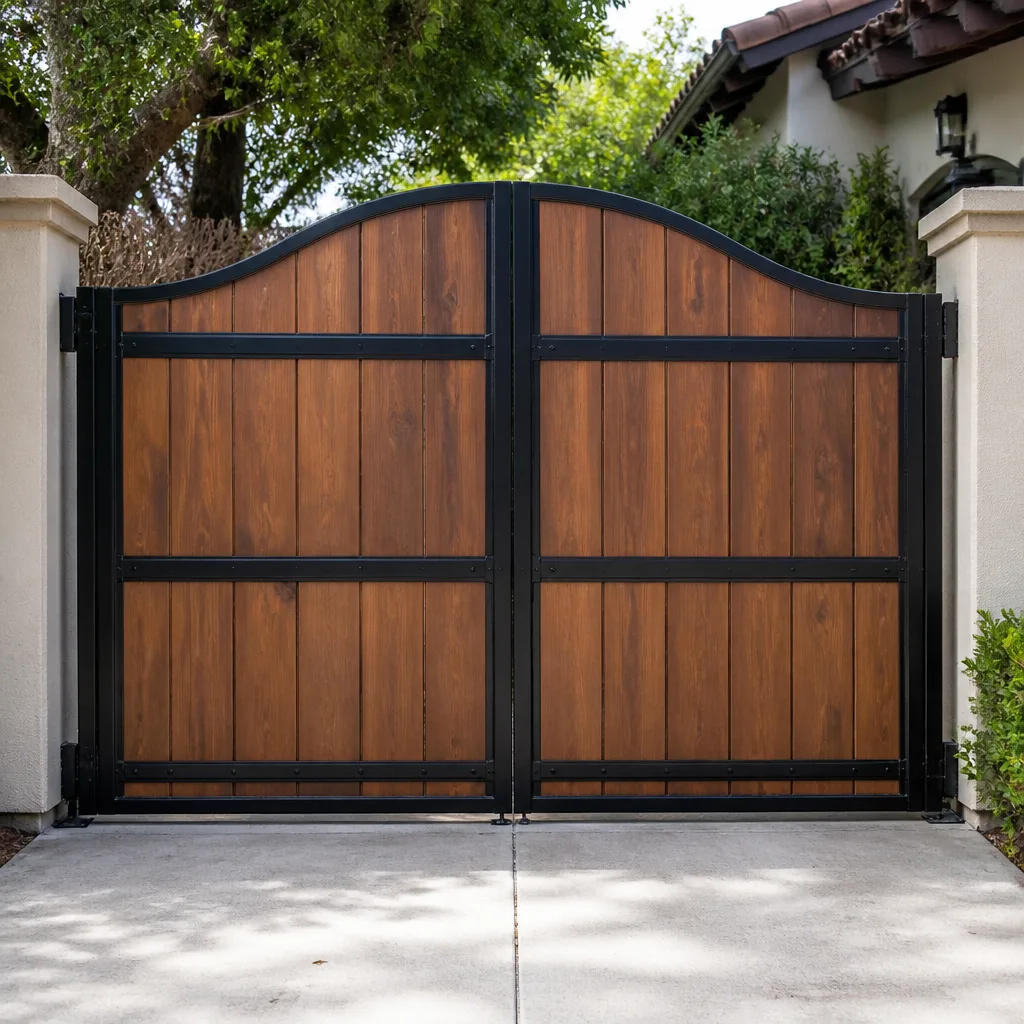 Wood & steel frame
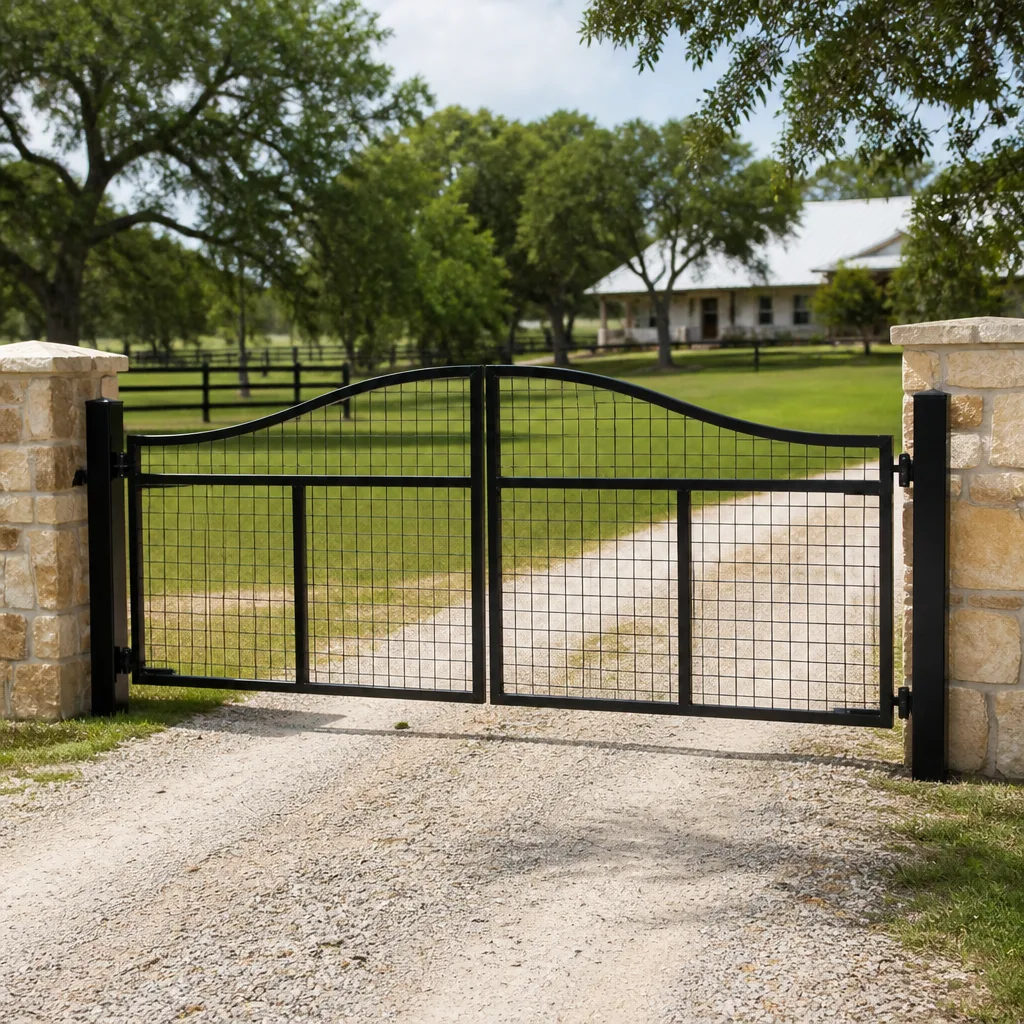 Farm & ranch
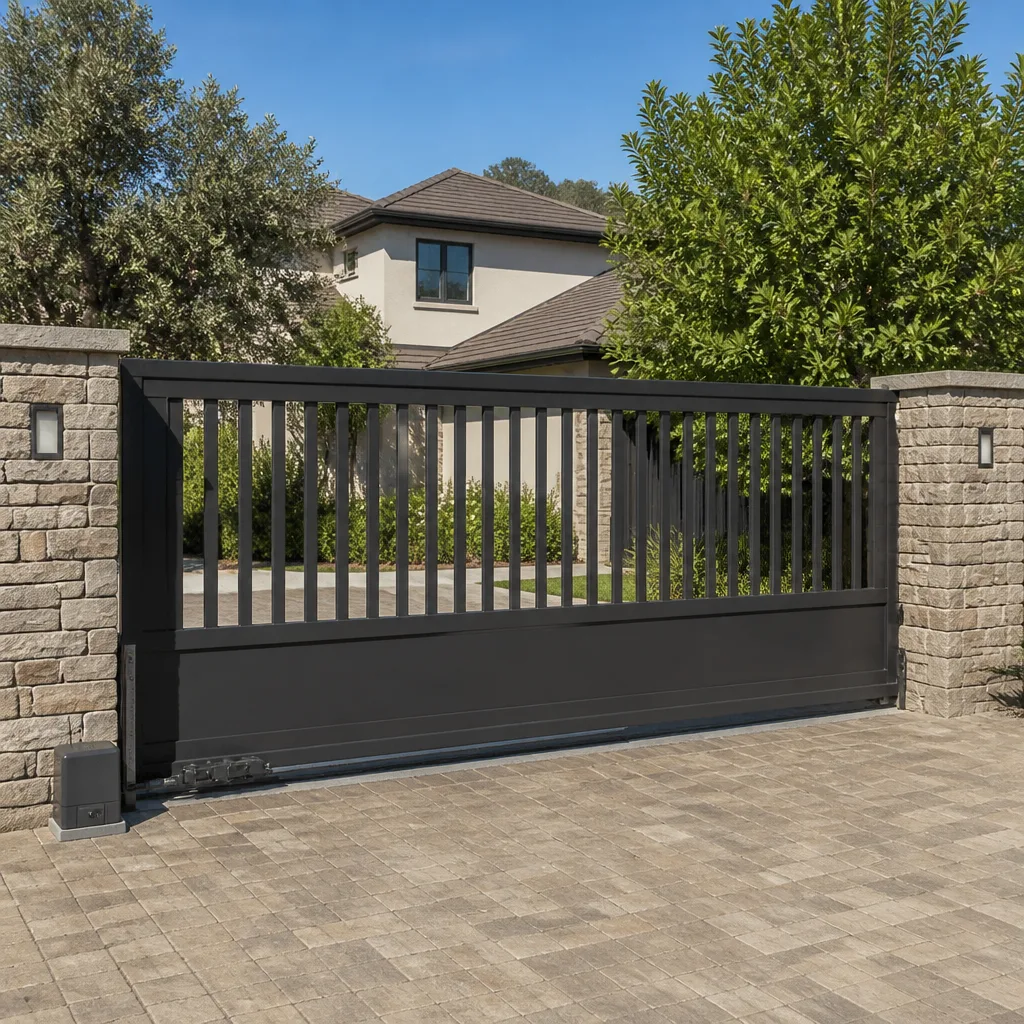 Sliding driveway gates
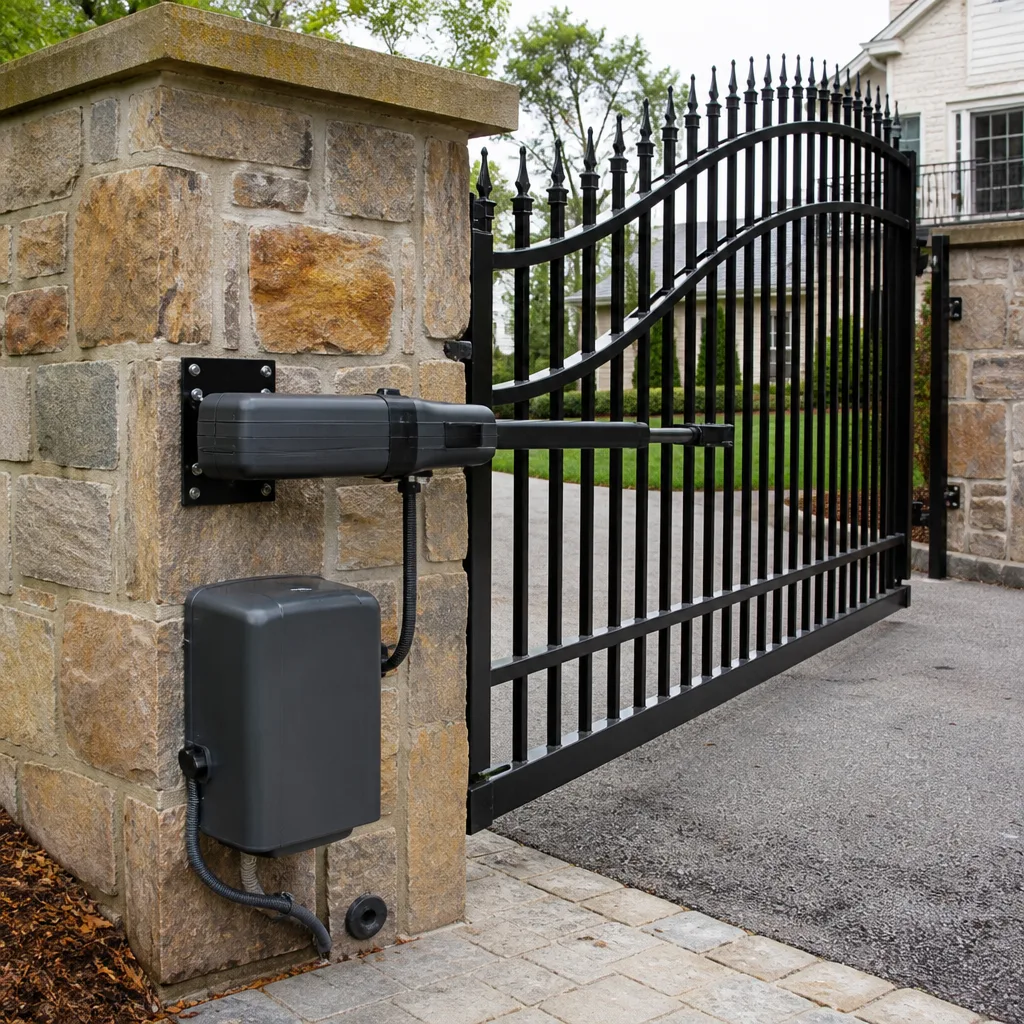 LiftMaster operators
Free on-site gate assessment - hinges, posts, and your LiftMaster or Nice gate operator checked before anything is quoted
The assessment is free and the quote is the invoice.
Get your free estimateSeasonal Gate Repair Care for Portland: Year-Round Homeowner’s Guide
The mistake most Portland homeowners make with an automatic gate is treating maintenance as a four-season, evenly spread chore. It isn’t. Our rain doesn’t fall in a polite monthly ration across the calendar. Roughly 70% of the city’s annual precipitation lands between October and March, which means a gate that hasn’t been inspected and adjusted by September heads into its hardest six months completely unprepared. The evidence shows up in February: seized hinges, waterlogged control boards, slide tracks packed with wet leaves. This guide walks through the full year in the order the seasons actually hit your gate, starting with fall prep rather than spreading attention thin across all four quarters. We’ll cover the five hardware points that fail first, how rare freeze events stress hydraulic operators, why summer heat quietly cooks south-facing control boards, and what to inspect in spring before problems hide until fall.
Quick Answer
Gate care in Portland should be front-loaded toward a September pre-rain-season inspection, because the October-to-March wet window drives the majority of operator failures, hinge corrosion, and track warping. The rest of the year is about damage control: assessing what winter did in spring, protecting control boards from July-August heat, and keeping leaf debris off slide tracks through the October-November windfall. A gate prepped in fall and checked in spring needs far fewer emergency repairs than one left to fail on its own schedule.
Styles & brands we work with
- Wrought iron
- Wood & steel frame
- Farm & ranch
- Sliding driveway gates
- LiftMaster operators
Table of Contents
- Why Portland’s Seasons Don’t Stress Gates Equally
- The September Pre-Rain-Season Inspection: Five Points That Fail First
- Freeze Events and Hydraulic Swing Operators
- Summer Heat and South-Facing Control Boards
- Spring Post-Rain-Season Assessment
- Leaf and Debris: The October-November Windfall vs. Slide Tracks
- Brand-Agnostic Care: Why the System You Own Matters
- Your Annual Gate Care Calendar
Why Portland’s Seasons Don’t Stress Gates Equally
A gate operator is a machine that lives outdoors, and every component inside it responds to moisture and temperature differently. The trouble is that no two seasons deliver the same load. Portland’s wet window concentrates the wear into about half the year, then hands the system a hot, dry stretch where a separate set of problems develops. If you treat all twelve months as identical, you spend effort in the wrong places and miss the moments that matter most.
Here’s how the load actually distributes across a Portland year:
- October through March: The high-stress wet season. Rain drives into hinges, gate frames, and operator housings. This is when corrosion accelerates fastest and when most operator failures surface.
- November through February: The occasional hard freeze. Rare in Portland, but when it hits, it hits systems that were never designed around sustained cold.
- July and August: The heat stretch. Gate control boards and motor housings bake, especially when mounted facing south with no shade.
- April through June: The recovery window. Winter damage becomes visible, or worse, stays hidden until fall.
- All year: Debris. Leaves, branches, and windblown grit work their way into every moving part they can reach.
The practical takeaway is that gate care should be shaped like the weather, not like a symmetric calendar. The most valuable inspection of the year happens in September, just before the rain starts. That’s the moment you can still correct a problem cheaply. By February, that same problem has had six months to worsen in wet conditions. If you own an automatic gate anywhere in Portland, this timing is the single highest-leverage thing you control.
The September Pre-Rain-Season Inspection: Five Points That Fail First
In our experience, a small set of hardware points accounts for most of the failures we see by mid-winter. They’re predictable, which means they’re preventable. A September inspection that focuses on these five gives you the best return of any single action in the annual care cycle.
- Hinges and pivot points. Gate hinges carry the full weight of the leaf and take constant moisture. Surface rust that looks cosmetic in dry weather becomes binding and squealing once rain and cold arrive. Check for play, roughness, and rust, and lubricate with a product that stays put in wet conditions.
- The slide track and rollers (or the swing arm linkage). For slide gates, the track is the foundation of smooth movement. Any debris, dirt, or early leaf litter left in the channel in September works its way under the rollers through the wet months. Clear it fully and check that rollers turn freely.
- The operator housing and seals. This is where water intrusion does its worst. Weather-stripping and gasket seals degrade silently, and a small gap is enough to let rain into the electronics. Inspect the seals, the housing lid, and any cable entries before the wet season.
- Safety edges and photo-eye sensors. These are the components that keep a moving gate from closing on a person or vehicle. Grime, moisture, and misalignment throw them off. Test that the gate reverses when the edge is triggered and that the photo-eyes see cleanly across their beam path.
- Batteries and backup power. Many operators run on a battery that ages slowly and quietly. A battery that’s fine in summer may drop below usable voltage once cold sets in. Test it in September rather than discovering the weakness during a power outage in December.
If any of these points looks marginal, fix or replace the part before the rain. A gate specialist can also test the control board and motor draw to catch developing electrical issues early. Getting your gate repair handled in the fall is far simpler than the same repair in the middle of a failing wet season, when a stuck gate is stuck in mud and rain.
Freeze Events and Hydraulic Swing Operators
Freezes in Portland aren’t the rule, but they’re not rare enough to ignore, and they’ve been disruptive enough in recent winters that anyone with a hydraulic swing operator should plan around them. The issue is that hydraulic fluid is temperature-sensitive. As temperatures drop, fluid thickens, and a system that moved at a smooth rate in mild weather can become sluggish or strain against its own resistance. A gate that hesitates in cold is telling you its hydraulics or its power draw are already at their limit.
The components that feel a freeze most are:
- Hydraulic fluid and seals. Cold fluid can stiffen and press past worn seals. Inspect for weep at fittings and top off or service the fluid before winter.
- Worn hinges. A hinge that’s slightly stiff in warm weather becomes a real bind in a freeze, and the operator takes the strain.
- Control board cold sensitivity. Electronics that function in summer can behave erratically when cold. A seasonal board check in September catches this.
- Weather-sealed enclosures. Moisture that gets in then freezes is worse than moisture alone. Seals matter as much for cold as they do for rain.
The core point residents miss: a hydraulic swing gate doesn’t fail at the moment of the freeze. It fails because everything was already slightly out of alignment, low on fluid, or binding, and the cold is the stress test that exposes it. September is the time to correct those conditions. If you’re not sure whether your system is freeze-ready, an electric gate repair visit before the wet season will tell you more than any guess.
Summer Heat and South-Facing Control Boards
Portland’s summers have gotten hotter, and July and August now put real thermal stress on gate electronics. The control board is the brain of the operator, and it’s often mounted in a housing that faces the sun for hours a day. Heat pushes the board’s components toward their thermal limits. A south-facing control enclosure with no shade may run much hotter than the same unit in shade, and the symptoms don’t always show up as an outright failure. Sometimes they show as erratic behavior: a gate that stops partway, re-arms on its own, or refuses a keypad or remote command.
What to watch in the hot stretch:
- Check the enclosure. If the motherboard housing is in full sun, look for warping, discolored plastics, or a hot-to-the-touch lid. Some installs benefit from a shade panel or repositioning at replacement time.
- Mind the operator duty cycle. A gate run constantly in peak heat works harder. If a gate feels warm after a few cycles, that’s worth a call.
- Keep keypads and access pads cool and clean. Keypads facing the sun can misread inputs when hot. A wipe-down and inspection helps.
- Watch for repeated board resets. A control board that resets or glitches on hot afternoons is usually telling you something about heat exposure or failing components.
Brand familiarity matters here. Knowing how a LiftMaster control board or an FAAC board is laid out and how each handles thermal protection lets a technician read the symptom rather than replace blindly. In our experience, the fix is often a well-aimed repair or a housing adjustment, not a full operator swap.
Spring Post-Rain-Season Assessment
Spring in Portland is the diagnostic season. Winter’s damage is fresh, but its invisible version is the one that should get your attention: problems that aren’t broken yet but are quietly headed toward failure by fall. If you skip the spring check, that seed of damage runs through summer and shows up in October as a repair you could have caught in April.
What to look for after the wet season ends:
- Rust that started where water pooled. Check the frame, hinge seams, and any low spots where water collects. Surface rust that goes unchecked becomes structural by next winter.
- Water marks inside or around the operator housing. Any sign of moisture intrusion means seals failed somewhere. A control board or motor that got wet in the wet season is a candidate for failure later.
- Sagging or drift. A swing gate that no longer aligns cleanly in its latch, or a slide gate that rubs, may have shifted a post or worn a hinge. Left alone, this damages the operator over summer.
- Loose anchors and mounting hardware. Seasonal ground movement loosens what’s bolted down. A re-torque now saves a bigger repair later.
- Sensor alignment drift. Photo-eyes and safety edges take a beating in the wet months. Re-check their alignment in spring so the gate behaves correctly through summer.
A spring assessment is also a good moment to run a full cycle test and listen. A gate should move quietly and smoothly. Grinding, squealing, straining, or stopping in the same spot every time are all things spring inspection should catch. Many homeowners only call when the gate finally stops, but the cheaper call is the one that finds the near-miss.
Leaf and Debris: The October-November Windfall vs. Slide Tracks
Portland’s leafy streets give slide gate owners a specific annual problem. The October and November windfall fills every low point, and a slide gate track is a perfect leaf trap. Wet leaves pack into the channel, decay, and hold moisture against the rollers and track. That combination – wet organic debris plus metal – is a corrosion setup, and it also causes real mechanical strain: a roller that can’t spin freely drags and wears, and a packed channel makes the operator work much harder.
What weekly clearing prevents:
- Roller bind and drag. Free-turning rollers keep the operator’s load low. Packed debris grinds them.
- Track corrosion. Wet leaves held against steel or aluminum hold moisture in exactly the wrong place.
- Obstruction stalls. Many operators are designed to reverse or stop on obstruction. Wet debris can trigger that behavior and make the gate unreliable.
- Costly winter repairs. A small, cheap clearing habit now is what keeps the winter from turning into an emergency repair call.
A simple rhythm works best: sweep the track weekly through the windfall months and do a full clear after any big wind event. For swing gates, clear the travel arc so leaves and debris don’t block the gate. This is also the moment to check that the safety edges aren’t fouled by debris, since they’re the components most likely to be knocked out of alignment by a pile of wet leaves.
Brand-Agnostic Care: Why the System You Own Matters
Seasonal care only works when it’s aimed at the system you actually own. A residential operator from a brand like Mighty Mule or Ghost Controls behaves differently from a commercial-grade DoorKing unit, and the maintenance focus shifts with it. A technician who only knows one manufacturer tends to see one manufacturer’s problems – or recommends a replacement because an unfamiliar system is unfamiliar. We work on the gate you have, whether that’s a LiftMaster swing unit, a FAAC hydraulic arm, an Elite slide operator, or a BFT system. That’s the point of a gate-only specialist: the diagnostic is about your equipment, not the easiest sale.
Across all brands, the seasonal themes stay constant. Fall prep, freeze readiness, summer heat exposure, spring damage review, and debris control apply no matter what’s on the housing. What changes is the detail: which components wear first, how the board reacts to heat, what the safety and access controls look like, and how the operator’s power draw should read. Our technicians have up to 13 years of experience working across these systems, and a gate-exclusive focus means the tools and diagnostics brought on-site are for gates, not a mixed bag of general repair skills. For anyone searching “seasonal gate maintenance Portland Oregon” and wondering if the same advice works for a Mighty Mule as for a commercial DoorKing, the answer is yes in principle and no in the specifics – which is why a real on-site look matters more than a generic checklist.
Your Annual Gate Care Calendar
Here’s the whole year, in the order the Portland seasons ask for it. This is the sequence we recommend to homeowners, landlords, and property managers who want their gate to run reliably without constant attention.
- September (pre-rain-season inspection): Hinges, track and rollers, operator seals, safety edges, batteries. This is the most important inspection of the year. Correct anything marginal before the wet season.
- October through November: Weekly track and travel-arc clearing through the leaf windfall. Re-test safety edges after each clearing.
- December through February (freeze window): Keep hydraulic fluid and seals in order, watch for sluggish movement or repeated board resets, and call early if the gate hesitates in cold.
- March through June (spring assessment): Check for rust, moisture intrusion, sagging, loose anchors, and sensor drift. Fix near-misses now, before summer.
- July through August (heat window): Watch south-facing control boards, keypads, and duty cycle. Confirm no glitchy resets or stoppages on hot afternoons.
- All year: Run a full cycle test and listen. Quiet, smooth movement is the signal that everything below is working.
Print it, put it on the fridge, and treat the September and spring checks as non-negotiable. One Gate Repair Portland visit at the right time of year is worth more than several emergency calls at the wrong one.
Common Mistakes to Avoid
- Treating maintenance as a four-season chore. Spreading attention evenly across the year misses that the wet season is the heavy-load window. Front-load your effort into September.
- Waiting until the gate fails to call. A gate that hesitates in cold or glitches in heat is already telling you something. Fixing the early signal is cheaper than fixing the eventual failure.
- Clearing the slide track only after the leaves settle. Portland’s windfall is a continuous drop through October and November. Weekly clearing is what actually prevents roller bind and track corrosion.
- Assuming a south-facing control board is fine because it still works. Heat stress shows as erratic behavior long before outright failure. A sheltering or inspection now is cheaper than a board replacement later.
- Letting a single-brand technician talk you into a replacement. When a technician only knows one brand, an unfamiliar system can look like a total swap. Ask for a brand-agnostic diagnosis of what you have.
- Ignoring a rust spot in fall because it looks cosmetic. Wet-season moisture turns a minor hinge or frame rust spot into a structural problem. Address it before the rain, not after.
- Skipping the spring assessment. It’s the one check that catches damage while it’s still a near-miss. Without it, that damage quietly runs to fall as a full repair.
See the difference
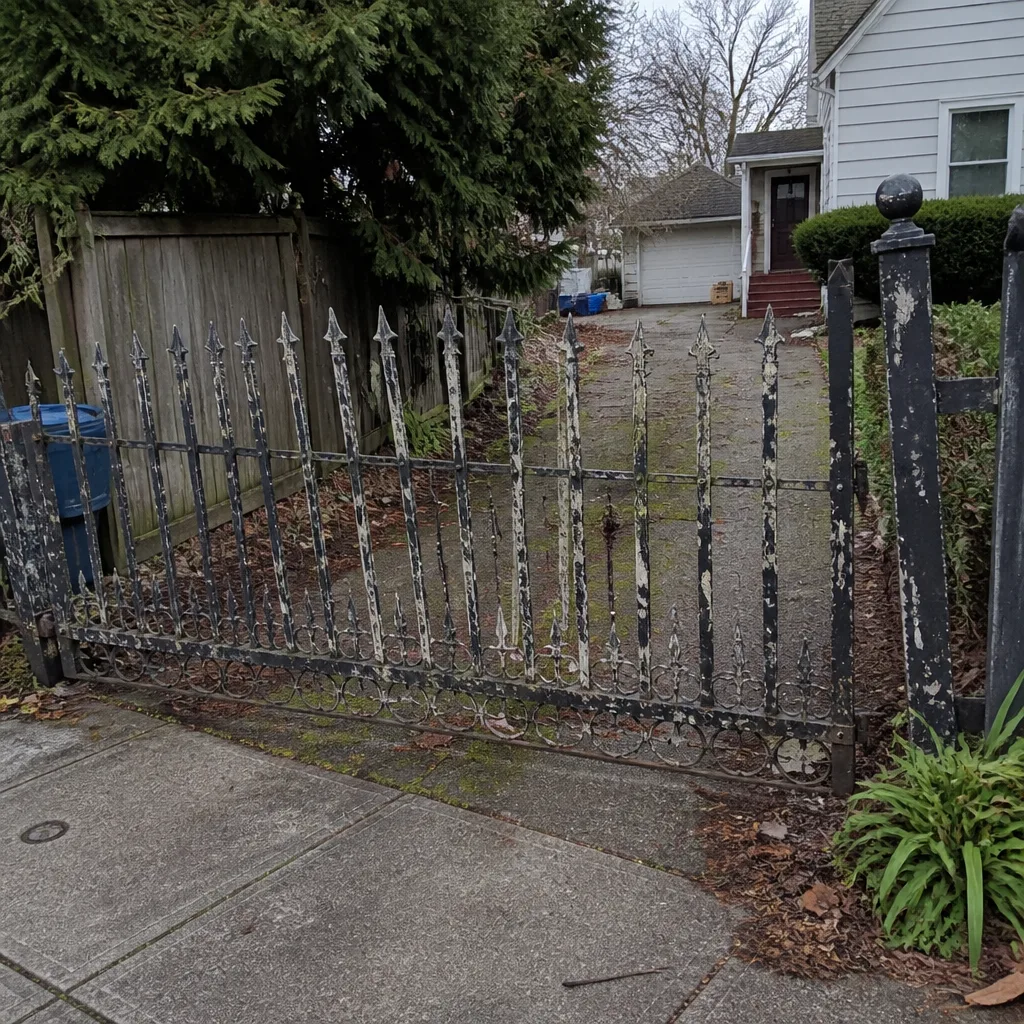 Before
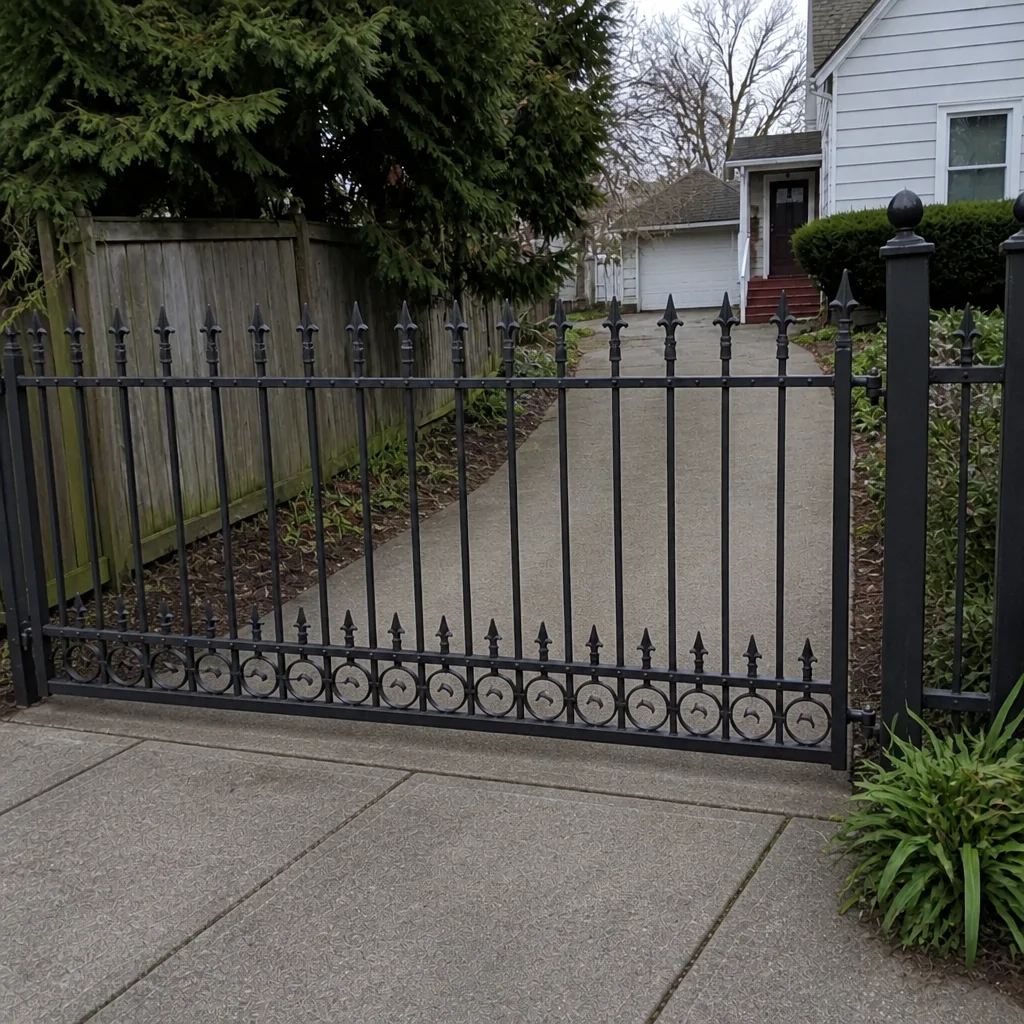 After
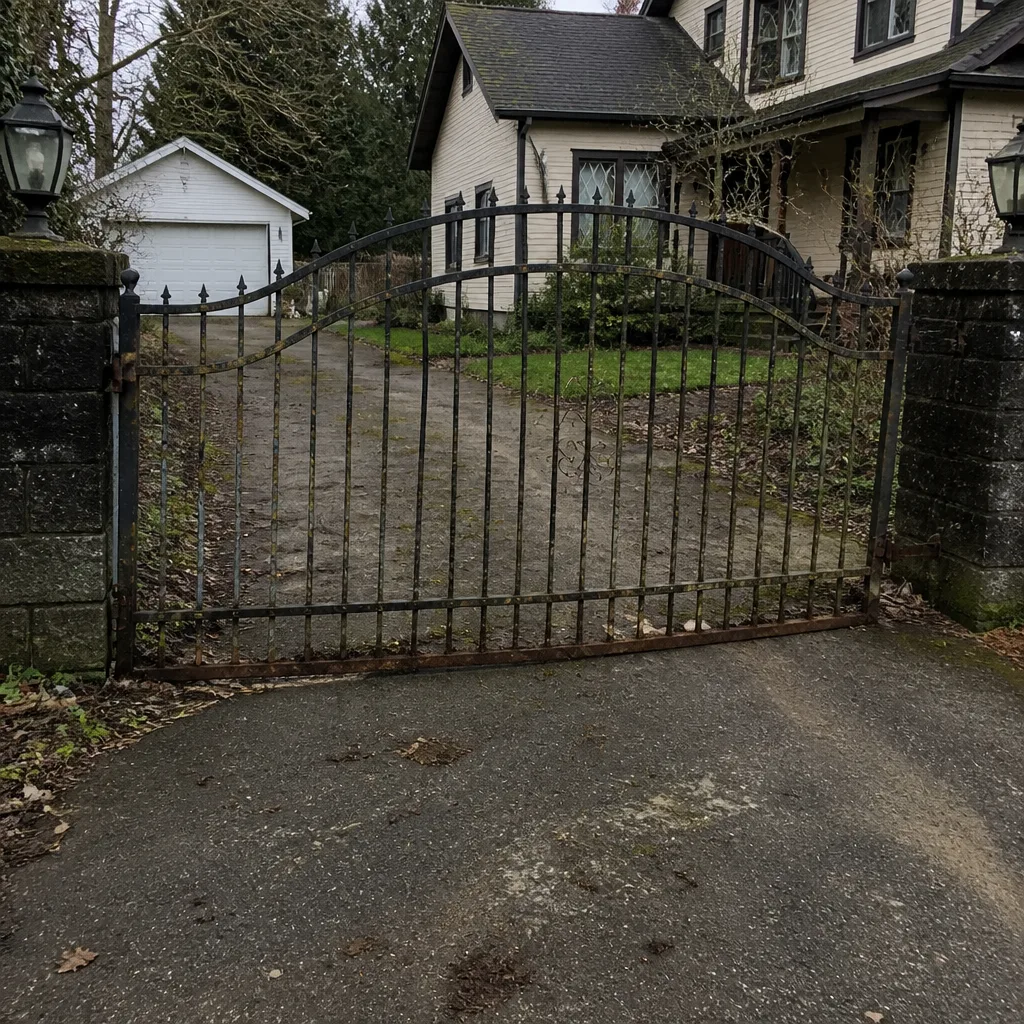 Before
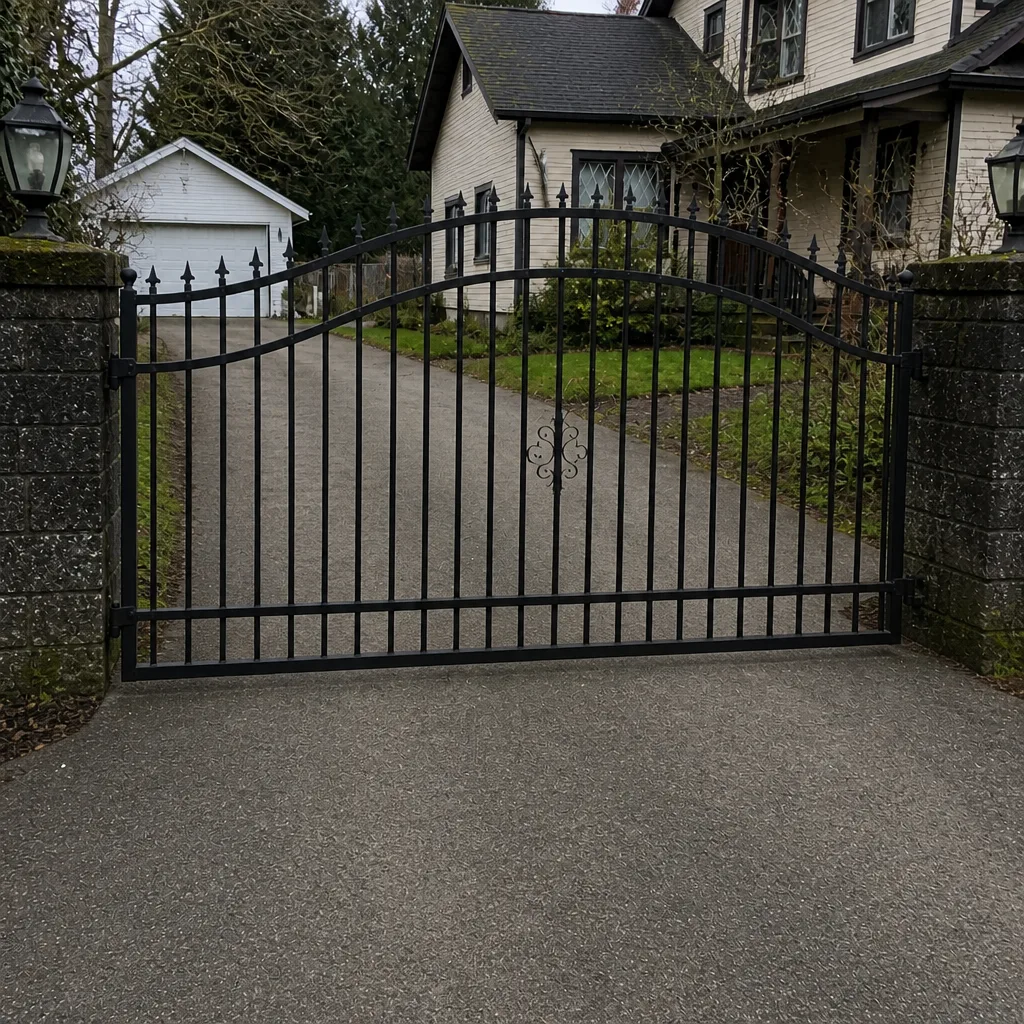 After
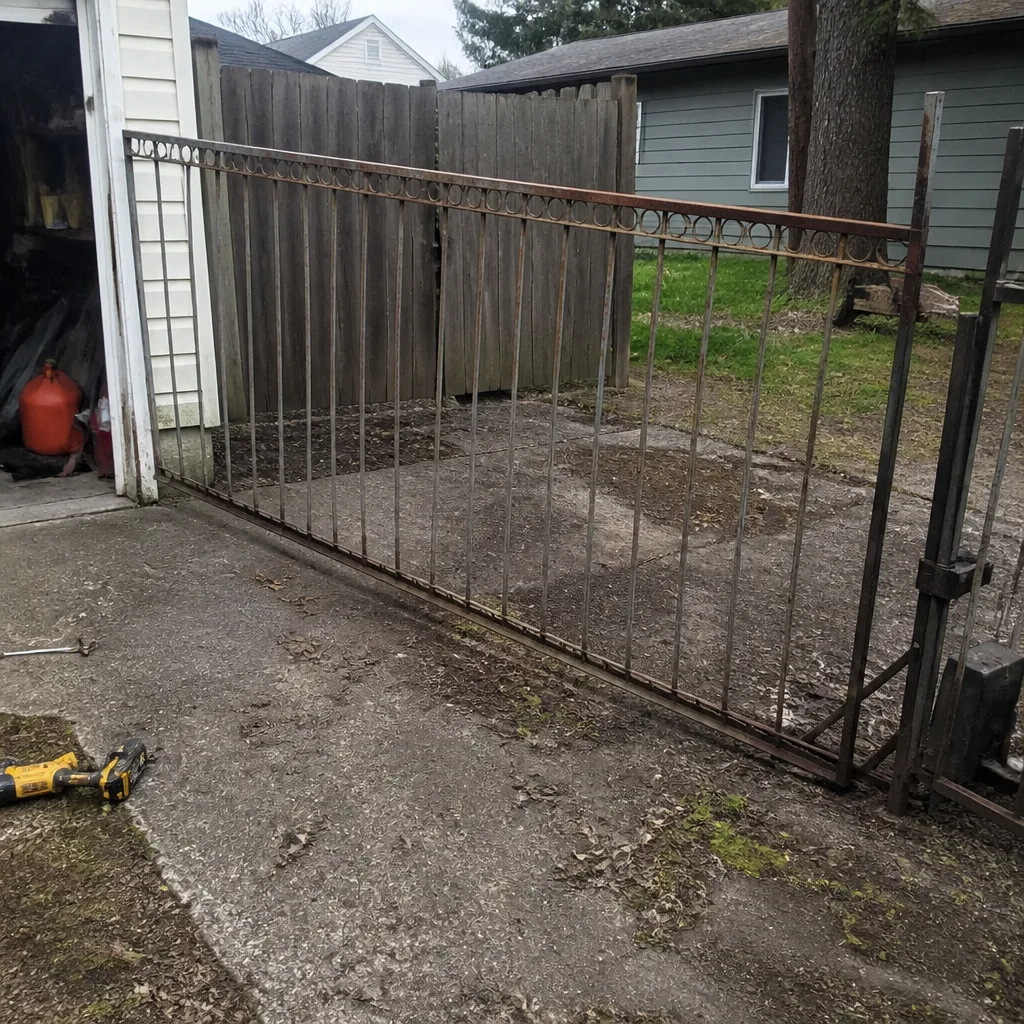 Before
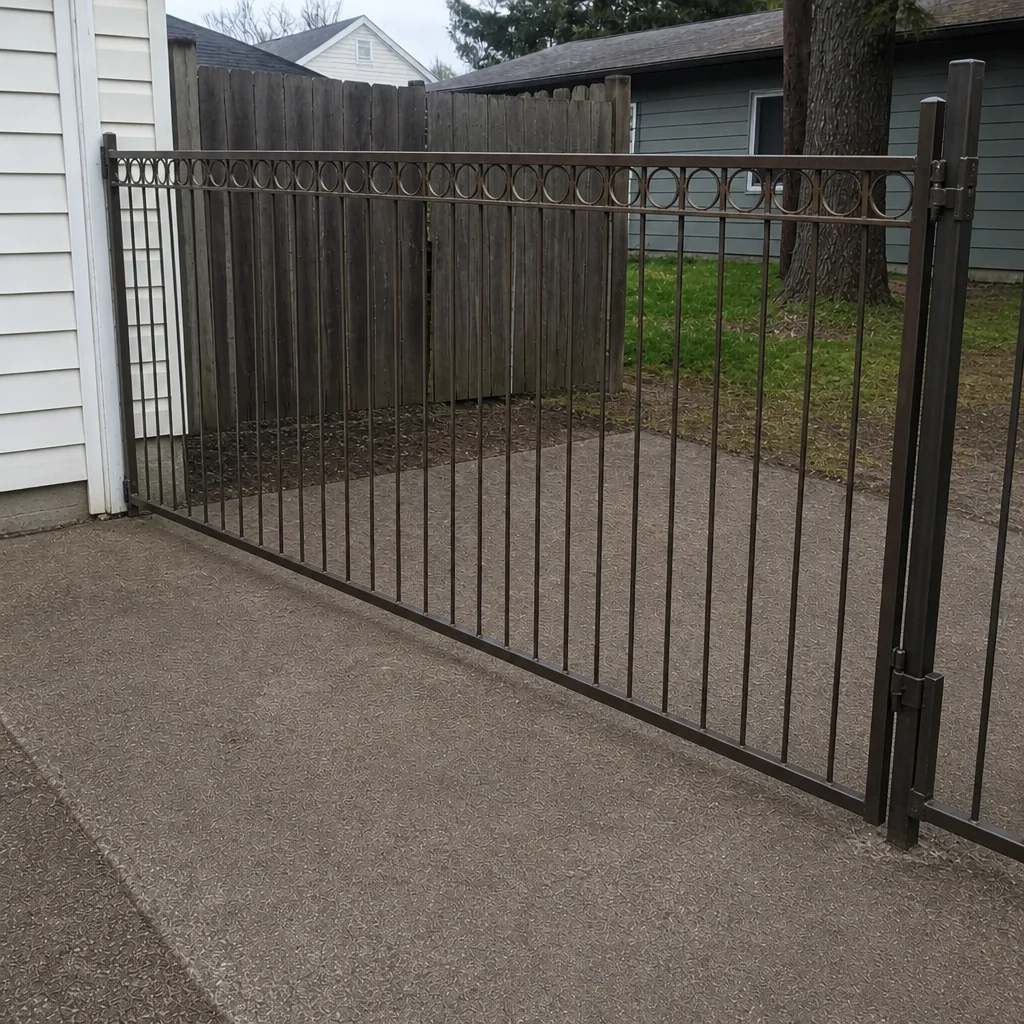 After
When to Call a Professional
Some seasonal checks are clean, and some are warnings. Call a gate specialist when the gate hesitates or strays from normal in cold, when a south-facing operator glitches or resets on hot afternoons, when you see any sign of water inside the operator housing, or when the gate sags, stops partway, or reverses without obstruction. Call before the wet season if your hinges or track are already stiff, because a gate that’s binding in September is much harder to keep moving in January.
Gate Repair Portland offers free estimates in Portland – call (855) 473-7281. We answer 24/7. Fast dispatch from 7am to 7pm, Sunday through Friday. We’ll diagnose the actual system, quote the work before anything starts, and get your gate moving again through the right season.
Frequently Asked Questions
September is the best single moment to schedule gate maintenance in Portland, because it’s the last clear window before the October-to-March wet season puts the heaviest load on your system. A second check in spring catches the damage winter caused before summer hides it. If the ideal dates pass, schedule the next opening rather than waiting for an emergency – a free estimate tells you what the gate actually needs. Call (855) 473-7281 to book a seasonal inspection.
Portland sees roughly 36 inches of rain a year, and about 70% of that falls between October and March. That concentration is why the wet season drives most of the failures we see: hinges, gates, tracks, and operator housings all take six months of moisture in a narrow window. The effect is cumulative, not one big storm. Wiping down and lubricating in September does more for your gate than any single repair later. Call (855) 473-7281 for an exact assessment.
Some slowdown in a freeze can be normal, but a gate that hesitates or strains is usually telling you its hydraulics, seals, or hinges were already at their limit before the cold. Portland’s freeze events are rare but disruptive, and a hydraulic swing operator is where they show first. Have the gate checked before winter so the cold exposes nothing new. Call (855) 473-7281 – estimates are free.
Yes, especially for south-facing control boards and keypads. July and August heat pushes electronics toward their thermal limits, and the first sign isn’t failure but erratic behavior – a gate that stops, re-arms, or ignores a command on hot afternoons. Checking enclosure placement and component condition in summer prevents bigger problems later. Call (855) 473-7281 for a diagnostic.
We work on the gate you have. That covers LiftMaster, FAAC, BFT, Linear, Viking, Ghost Controls, DoorKing, Elite, and Mighty Mule, among others, so a brand name won’t get you turned away or pushed into a replacement. Brand-agnostic diagnostics means we assess what’s on-site, not just what’s easy to stock. Call (855) 473-7281 to ask about your system.
Look for rust where water pooled, any sign of moisture inside the operator housing, sagging or drift in the gate leaf, loose anchors, and sensor misalignment. These are the near-misses that, if skipped in spring, quietly become full repairs by fall. A gate that still works can still be headed toward trouble, so a spring check catches it while it’s cheap. Call (855) 473-7281 for a spring assessment.
The Bottom Line
Portland’s gate care calendar isn’t a set of four equal quarters. The action that prevents most of the year’s failures happens in September, in the window before the wet season starts. The freeze check, the summer heat review, the spring damage assessment, and the weekly leaf clearing all support that central idea: get ahead of the seasons rather than reacting to them. Front-load your effort, fix small problems while they’re small, and treat a hesitating gate as a heads-up rather than background noise. A gate-only specialist can read your specific system through the whole year and protect what you have. Call (855) 473-7281 for a free estimate, and let’s get your gate through the seasons without a breakdown.
Written by the team at Gate Repair Portland.